300,000 visitors expected for Chile's rare desert bloom
El Niño rains triggered the largest floral display in three decades, drawing tourists to the Atacama before the plants fade.
By Alessia Desai ·
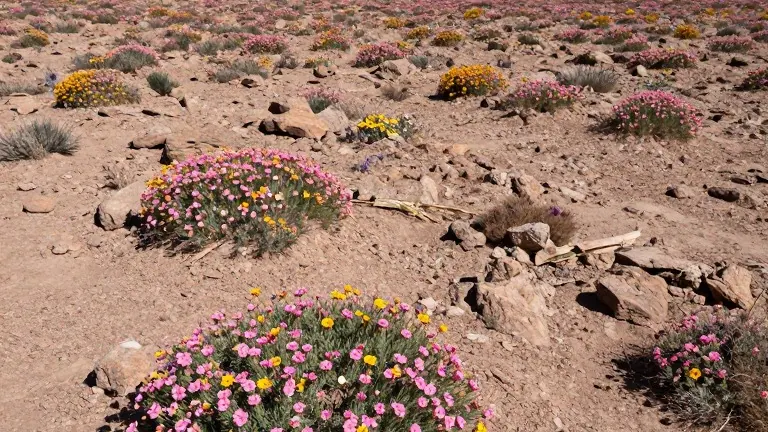
Chile’s Atacama Desert is currently covered in pink, yellow, lilac, and purple flowers following heavy rains from the El Niño super cycle. The precipitation caused flash floods in July and August, damaging dozens of homes and forcing hundreds of residents to evacuate. The water penetrated deeply into the ground, waking millions of seeds that had remained dormant for decades.
More than 200 plant species are now in bloom. Scientists report that flowers are appearing in areas where they have never been recorded previously, suggesting some bulbs have lain dormant since before the phenomenon was first studied in detail in 1997. Moisés Grimberg, the administrator of Llanos de Challe National Park, described the event as a natural seed bank becoming a living archive with the rains.
The biological window is brief. Grimberg noted that the species have roughly two to three months to complete their life cycles. The bloom is projected to last until mid-November. This year’s display is the largest and most colorful in 30 years and possibly ever.
Tourism to the region has surged. Llanos de Challe National Park, which covers 113,000 acres, typically receives about 10,000 visitors per year. However, 15,000 tourists visited the park over the last few weeks. Chile’s national tourism board expects the region to see around 300,000 overnight trips during the two-month bloom period.
Among the species blooming is the garra de león, a crimson flower with long green leaves that grows only along a few miles of the Atacama coastline. Biologists from INIA, the national seed bank, are collecting specimens to preserve genetic material and analyze unique adaptations, such as fine leaf hairs and waxy cuticles, that help plants harvest water.
Miguel Vargas, the governor of the Atacama region, is seeking UNESCO World Heritage recognition for the phenomenon. He stated that such recognition would strengthen special interest tourism and diversify an economy heavily reliant on mining. Vargas hopes to make the site Chile’s eighth World Heritage location within a couple of years.
A national park dedicated to the bloom was created in June 2023 to protect a 141,000-acre area. The transient ecosystem supports insects, lizards, bats, and guanacos. As the flowers fade, scientists will determine if this was the largest flowering event on record and if any unknown species were discovered.