Apple's Original iPod Turns 25 With a Legacy of Pocket Music
Two decades and five years ago, a sleek device with 5GB of storage changed how listeners carried their favorite songs, marking the start of a cultural shift in personal technology.
By Tomas Rahman ·
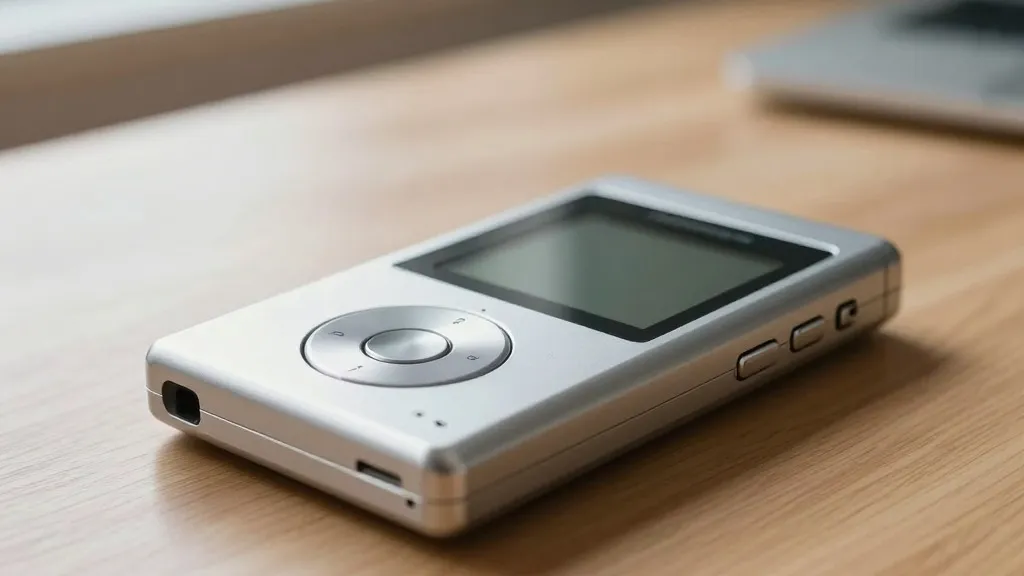
Apple's first iPod turned 25 years old on October 23, 2001. This specific date marks the day Steve Jobs unveiled the device to the public. The announcement shifted the landscape for portable audio. It created a new standard for how people accessed music on the go.
The device launched at a price point of $399. It featured 5 gigabytes of storage capacity. This allowed users to hold approximately 1,000 songs on a single unit. The physical form factor was the size of a standard deck of cards. It weighed only 6.5 ounces, making it lighter than most mobile phones of that era.
Jobs positioned the product as a breakthrough digital tool that was not a computer. He noted that the Mac could serve as the center of a digital lifestyle. This hub would connect cameras, video recorders, and DVD players. The iPod would complete this ecosystem as the portable component. He argued that music was a massive market without a clear leader at the time.
The hardware design relied on a specific component from Toshiba. This was an ultra-thin 1.8-inch hard drive. The thinness of this drive enabled the compact card-like shape of the player. The device included a piezoelectric clicker for the scroll wheel. This provided tactile feedback for navigating through playlists and artists with one hand.
Connectivity was a major selling point for the initial release. The iPod used a FireWire 400 cable for both charging and data transfer. Jobs claimed this connection was significantly faster than USB options available then. Transferring a full CD of music took only five to 10 seconds. Filling the entire 5GB capacity required roughly 10 minutes. USB transfers of the same data could take up to five hours.
The player supported various audio formats including MP3, WAV, and AIFF. It offered CD-quality sound and 20-minute skip protection. A rechargeable lithium-polymer battery powered the unit. Apple stated this battery provided 10 hours of continuous playback. Users could recharge an empty battery to 80 percent in one hour.
Software integration was central to the launch strategy. iTunes 2 debuted on the same day as the hardware. This version included features like MP3 CD burning and library syncing. The auto-sync function ensured that music libraries curated on a Mac always matched the content on the iPod. The device also functioned as an external hard drive when connected via FireWire.
The first iPod Touch arrived in May 2019. Apple officially discontinued the entire product line in May 2022. The iPhone launched in early 2007, eventually absorbing the music player function. However, the original 2001 device established the template for personal digital audio. It remains a defining moment in the history of consumer electronics.
Source: Tom's Hardware · original report published