Eisenkot Sets Eight-Day Deadline to Form Government as Coalition Talks Stall
Yashar leader Gadi Eisenkot accuses Likud of delaying unity talks, aiming to form a government before his mandate expires on December 6.
By Meera Fletcher ·
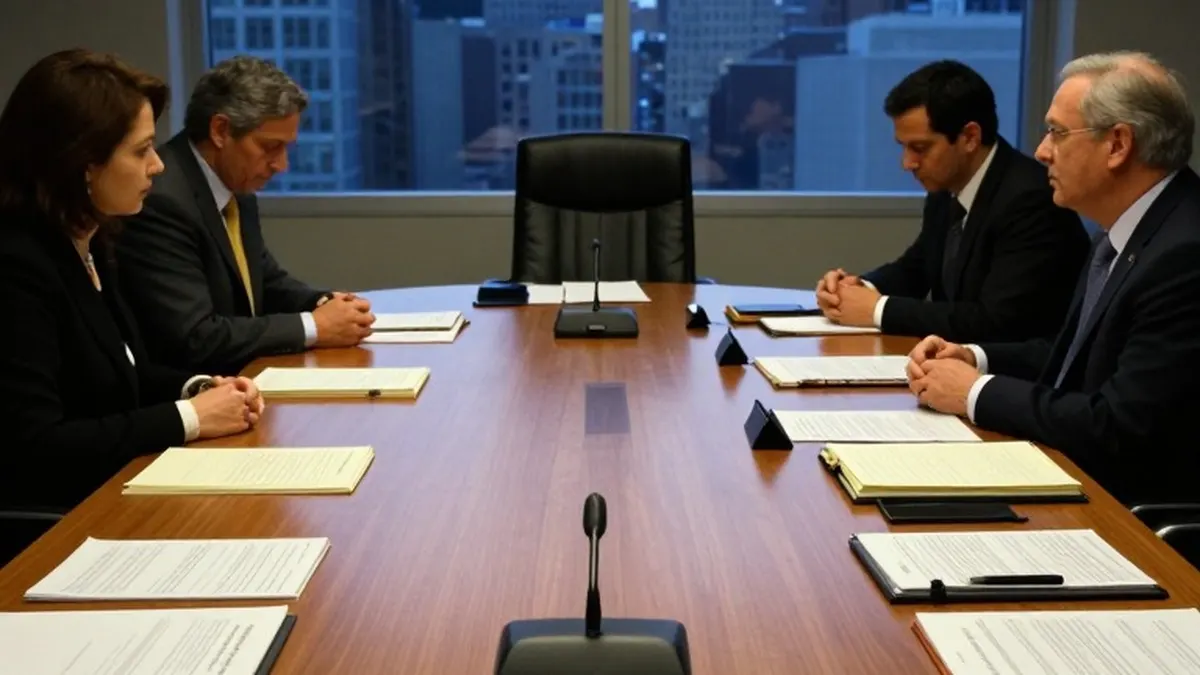
Yashar party chair Gadi Eisenkot announced on Friday that he intends to form a government within the final eight days of his mandate from President Isaac Herzog. Eisenkot accused Prime Minister Benjamin Netanyahu’s Likud party of stalling coalition negotiations in an apparent effort to trigger another election. His current mandate is set to expire on December 6, 2026.
Eisenkot has already secured coalition agreements with Yisrael Beytenu, led by Avigdor Liberman, and The Democrats, led by Yair Golan. These three parties collectively hold 36 seats in the 120-member Knesset. Even if former Prime Minister Naftali Bennett’s B’Yachad party joins them, the four-party bloc would only command 48 seats, falling well short of the 61-seat majority required for a stable government.
To bridge the gap, Eisenkot can rely on support from either two Arab-led parties or the two ultra-Orthodox parties. His preferred approach currently involves a combination of both, specifically a coalition that includes United Torah Judaism and Ra’am. While this arrangement contradicts campaign promises made by key bloc members who vowed not to govern with Arab or ultra-Orthodox parties, the inconclusive election results have forced these leaders to compromise to avoid a repeat election.
A unity government with Likud remains a final option. Eisenkot stated in a social media post that he is prepared to compromise for such a coalition but claimed Likud was unwilling to negotiate seriously. In response, Likud accused Eisenkot of secretly arranging a left-wing government and distributing cabinet positions while his teams were engaged in unity talks. The party later extended its hand for unity, stating it would do everything possible to achieve it.
Neither Netanyahu’s bloc nor the change bloc led by Eisenkot secured a majority in the October 27 election. President Herzog has the legal authority to extend Eisenkot’s mandate by up to 14 days. If Eisenkot fails, Herzog can assign the task to another lawmaker for 28 days or declare that no government is possible. If those efforts fail, at least 61 lawmakers have 21 days to request that another member be given the mandate for a final 14-day attempt.
Eisenkot noted that his team has met with Likud only five times in the past two weeks. He criticized Likud for refusing to agree to a state commission of inquiry regarding the October 7, 2023, attack, for keeping extremists in the government, and for ignoring legislation on universal military service. Eisenkot described Likud’s offer as a charade involving the same partners and no significant changes.
Bennett reiterated his preference for a unity government with rotating premiership between himself and Netanyahu. However, he signaled willingness to pursue an alternative if a deal becomes impossible. Bennett and Eisenkot are scheduled to meet on Sunday after postponing a previous discussion due to disagreements over military conscription for ultra-Orthodox men, a key issue in the recent election.
Yair Golan welcomed his party’s agreement with Yashar, which includes four ministerial portfolios and the right to chair key committees. He warned coalition partners against pursuing a unity government with Likud if it means keeping Netanyahu in power. Golan described such a move as a danger to Israel’s future and a squandered opportunity for change.
Channel 12 reported that Eisenkot has pledged to Liberman and Golan that he will not proceed with a unity government without their consent. Both leaders have ruled out serving under Netanyahu. A senior figure in the Eisenkot bloc argued that Netanyahu’s unity offers still include ultra-Orthodox allies, which undermines the goal of addressing the burden on military reservists.
Eisenkot pledged to continue working to expand any government he forms, aiming to bring Israel back to stability and a safe harbor. He emphasized that his door remains open for serious negotiations with Likud that include genuine compromise.