G7 Ministers Demand Seat at Table as Russia-Ukraine Talks Begin in Abu Dhabi
European leaders in Paris told U.S. Secretary of State Marco Rubio that any peace deal must include the continent, overlapping with scheduled negotiations in the UAE.
By Alessia Desai ·
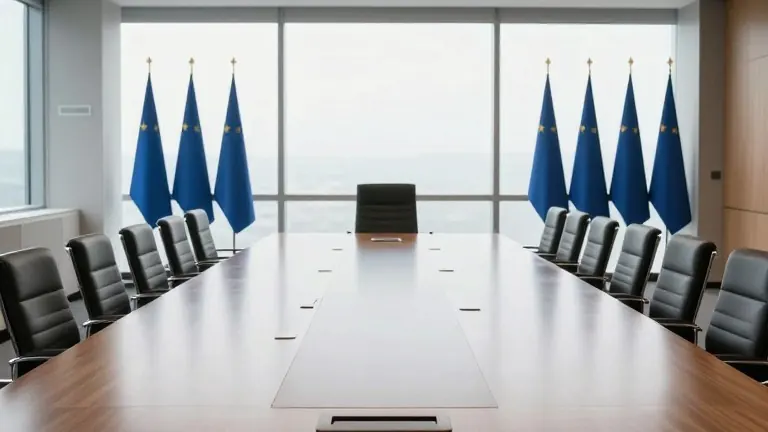
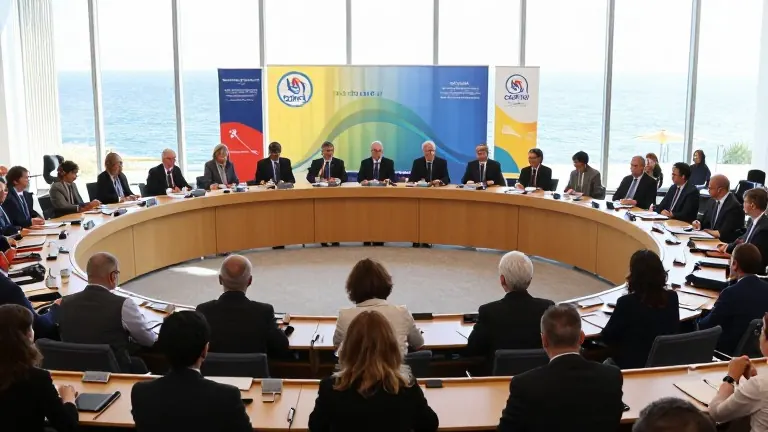
European foreign ministers met in Paris on Monday to tell U.S. Secretary of State Marco Rubio that the continent must have a voice in ending the war in Ukraine. The gathering occurred as peace talks mediated by the United States began in Abu Dhabi. Officials sought to secure a role in the process before final terms are set.
The meeting involved the Group of Seven, which includes Canada, France, Germany, Italy, Japan, the United Kingdom, and the United States. Rubio attended this gathering for the first time since last week’s midterm elections. In those races, President Donald Trump’s Republican Party faced major losses. The session offered allies a direct channel to voice concerns about Washington’s shifting stance on European security.
German Foreign Minister Johann Wadephul stated that changing Europe’s security framework is neither necessary nor appropriate. He emphasized that Europe belongs at the negotiating table. Wadephul argued that there can be no solution without Europe, only with it. These remarks came as the two-day Paris conference ran concurrently with the Russia-Ukraine talks scheduled for Tuesday and Wednesday.
Wadephul urged Moscow to drop maximalist demands and avoid treating the Abu Dhabi session as a negotiation show. He noted that Russian attacks on civilian infrastructure continue. He observed that Moscow has made no substantial contribution toward gaining momentum in the talks. Ukraine’s Foreign Minister Andrii Sybiha is set to join a session in Paris on Tuesday.
Sybiha warned that no one has the right to decide Ukraine’s fate behind its back. He made the comment before departing for the meeting. G7 members have expressed growing unease about U.S. policy. This includes Washington’s reduced support for Ukraine and its scaling back of sanctions on Russia.
Ministers from Saudi Arabia, Egypt, South Korea, and Brazil also attended the Paris meeting. Iran is expected to be a prominent topic of discussion on Tuesday. Western allies have voiced skepticism regarding the U.S. and Israeli war on Iran. They fear that further military action could deepen the crisis rather than resolve it.
Al Jazeera reporter Rebecca Collard noted that the first day ended with little clarity on U.S. policy following the midterms. The second day includes a session on instability in the Middle East. Discussions also address the future of multilateralism that has guided relations among these nations for decades.