Goldman Integrates AI Into Hebrew University Classes
An associate professor in Jerusalem is redefining how students interact with artificial intelligence by demanding transparency and critical analysis in their academic work.
By Camila Rodriguez ·
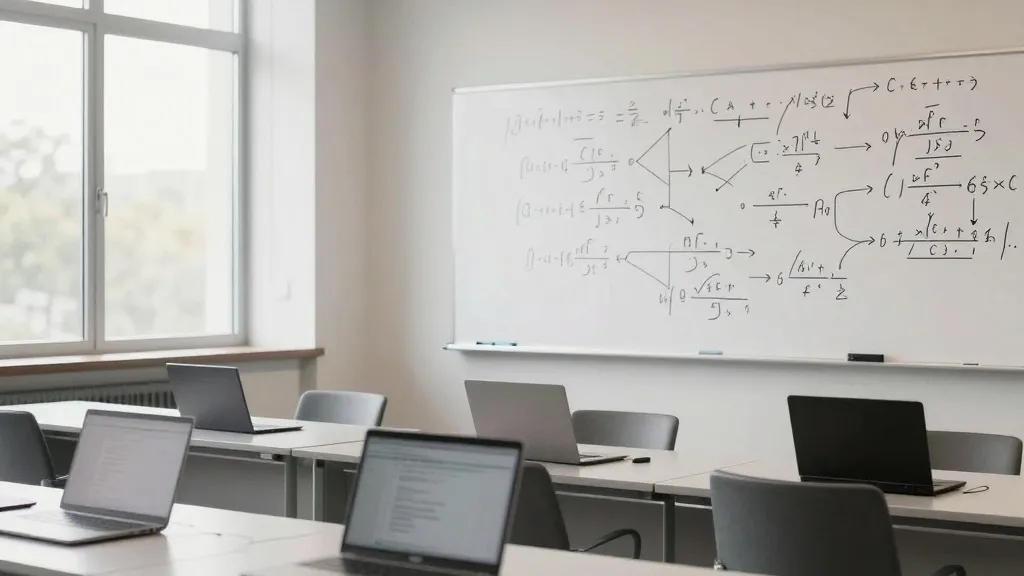
Claudia V. Goldman has taken a distinct approach to teaching artificial intelligence at the Hebrew University Business School in Jerusalem. Since joining the Data Science Department as an associate professor in July 2024, she has focused on using the technology to address practical issues. Her methodology challenges students to engage with AI tools while maintaining a rigorous standard of academic integrity and critical thinking.
Goldman’s path to the academy was shaped by her move from Argentina to Israel in 1984. She arrived at age 16 and completed her secondary education at Mae Boyer High School in 1986. Following military service, she returned to the Hebrew University to pursue three degrees in computer science and mathematics. She earned a BSc in 1991, an MSc in 1993, and a PhD in 1999 under the supervision of Jeff Rosenschein.
Before her current role, Goldman held research positions at Bar-Ilan University, the University of Massachusetts Amherst, and the University of Haifa between 1999 and 2005. She then transitioned to the private sector, leading a team at Samsung Telecom Research in Herzliya for three years. For the next 15 years, she served as a research scientist in General Motors' development organization. Her career includes 24 patents and more than 50 published academic papers.
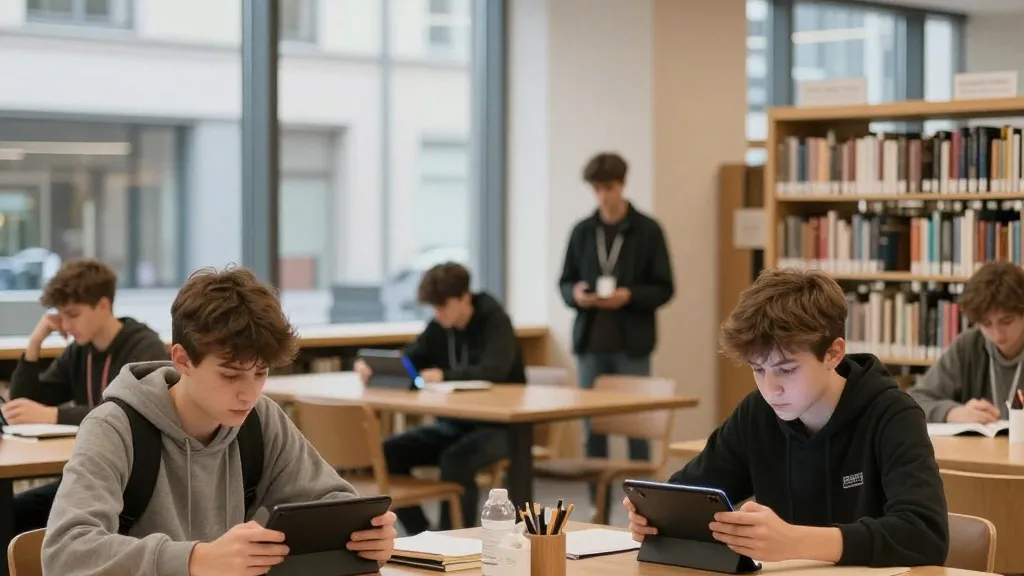
In a recent interview, Goldman explained her classroom rules regarding AI usage. She provides clear guidelines on when and why students may employ these tools. However, she requires them to disclose their use and explain the process. She stated that fully AI-generated answers are not accepted and that she can detect the technology in student writing.
Her teaching strategy encourages students to use AI for brainstorming while remaining skeptical. She asks them to verify information for bias and confirm the existence of cited sources. This approach ensures that students do not passively accept machine output but actively evaluate its reliability and context.
Assessment in her courses relies on a combination of classwork, presentations, and peer-organized activities. These in-person evaluations allow her to gauge student understanding directly. The curriculum also addresses human responsibility and professional values. Goldman believes it is important for students to consider what kind of researcher and person they wish to become in an automated world.
When asked about Bill Gates's concept of reserving certain jobs for humans, Goldman argued against a simple binary view. She suggested that the focus should be on understanding the specific benefits AI offers in various roles. She emphasized the need for critical skills to enhance human capabilities rather than just defining which professions remain human.
The Business School offers several courses in this field, including AI for Social Good and Responsible AI. The university also supports a Free Listener Program that allows senior citizens to audit classes. As the fall semester begins, these courses aim to prepare students for a workforce increasingly integrated with artificial intelligence.
Goldman’s professional background includes work on learning agents for vehicle user experiences at General Motors. This research aimed to help drivers focus on the road while better understanding autonomous functions. Her personal history also informs her perspective. Her grandparents emigrated to Argentina before the Holocaust, and she attended a Jewish school in Buenos Aires. She told her father in 1983 that she could only see her future in Israel. The family made aliyah six months later. She met her husband, Roy Shenhar, on the university campus in 1995 after a third unexpected encounter, leading to their marriage in 1999.
Source: The Jerusalem Post