Historian Tony Ballantyne argues Captain Cook is a story people tell, not a fixed fact
A 450-page book traces how the explorer’s legacy shifted from hero to villain in New Zealand public debate.
By Tomas Rahman ·
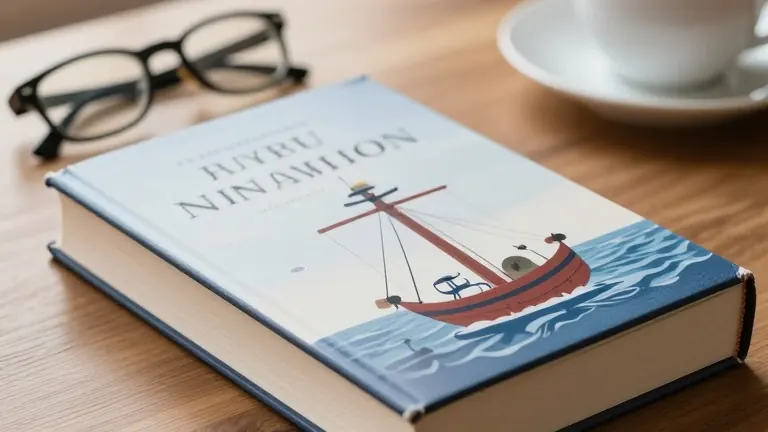
Tony Ballantyne spent the last two years writing a 450-page book that asks who Captain Cook really was.
The University of Otago historian published the work, titled 'Captain Cook and the Unsettled Afterlives of Empire,' with Bridget Williams Books on Nov. 20. The book is heavily illustrated and focuses less on the specific voyages and more on how people have remembered the 18th-century mariner.
Ballantyne cites Sellar and Yeatman’s '1066 and All That' to frame the project. He notes that history is not what you thought it was, but what you can remember. This idea drives the text, which examines how the Cook story has been transmitted, interpreted, and used for political and personal ends across centuries.
The narrative begins with a 1989 article in the Otago Daily Times. The piece featured Hawaiian scholar Haunani-Kay Trask, who described Cook and his crew as syphilitic, tubercular racists. That comment sparked a public debate in New Zealand, where Cook was traditionally viewed as the explorer who put the country on the map. The dispute eventually played out on the Holmes show, a popular television program that served as a forum for public opinion at the time.
Ballantyne traces how figures in Cook’s immediate circle shaped his reputation. The book details how Admiralty officials and Cook’s widow, Elizabeth, worked to mold the legend to their own advantage. It also covers the global scope of Cook’s explorations, including his time in the Pacific, Australia, the Americas, and Antarctica. While the book is a world history, it includes a deep dive into the local controversy in Gisborne. Specifically, it examines the debate over whether Young Nick’s Head was the first landmass Cook saw in New Zealand.
The text moves beyond academic historiography to include the role of artists and popular culture. Ballantyne argues that these interpretations are often more revealing than the dry facts of the voyages. He suggests that Cook’s identity has been fluid, shifting from a colonial despoiler to a national hero and back again depending on who is telling the story.
The book challenges the idea that there is a single, stable truth about the explorer. By looking at the afterlives of empire, Ballantyne shows that Cook’s legacy is defined by the memories and needs of the people who discuss him today.