Global Powers Intensify Competition for Africa's Mineral Resources
The United States, China, and Russia are expanding their strategic and economic initiatives in Africa to secure access to critical minerals and infrastructure.
By Alessia Desai ·
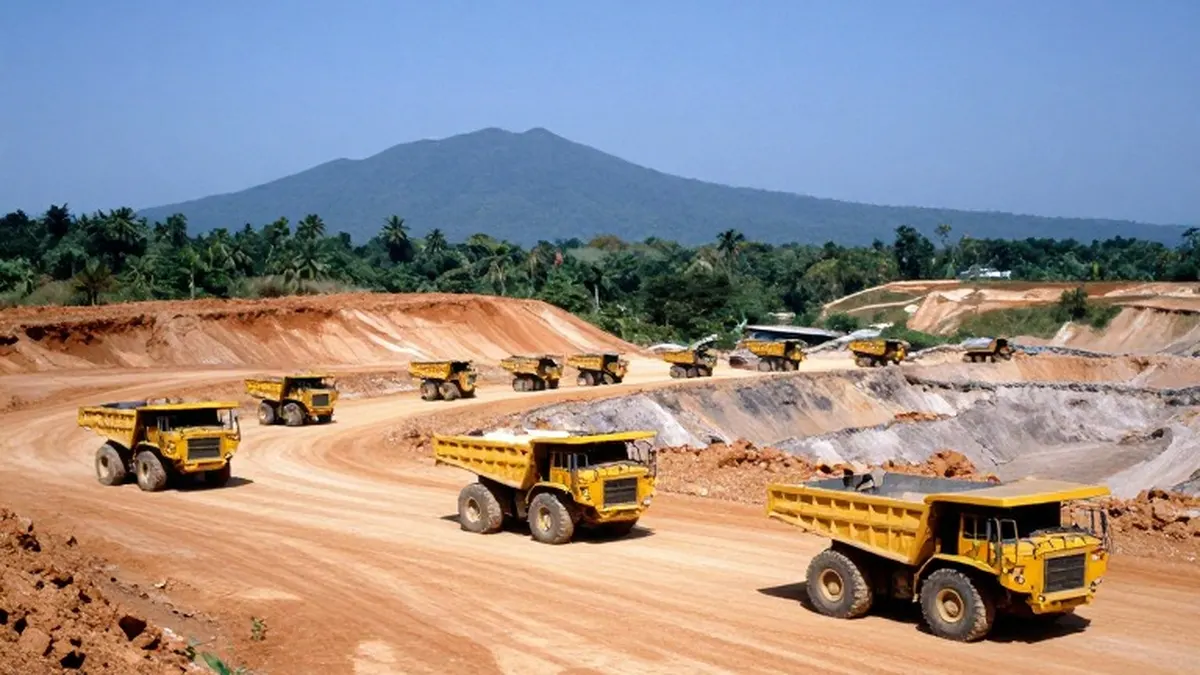
The mineral wealth of Africa has become a central arena for geopolitical competition among the United States, China, and Russia. From cobalt mines in the Democratic Republic of the Congo to lithium deposits in Mali and uranium reserves in Niger, these nations are vying for access to resources vital for electric vehicles, renewable energy, and defense industries. This rivalry extends beyond mining operations to include ports, railways, and trade routes that connect African resources to global markets.
China currently dominates several critical mineral supply chains and has invested heavily in African mining and infrastructure over the past decade. Trade between Beijing and the African continent reached a record $348 billion last year, solidifying China's position as the region's largest trading partner. In contrast, Russia's economic footprint is smaller, relying instead on military cooperation and security partnerships to expand its influence, particularly in the Sahel region where governments have distanced themselves from Western powers.
The United States is seeking to secure strategic resources through diplomacy, investment, and infrastructure projects to reduce its dependence on China. In February, President Donald Trump announced Project Vault, a $12 billion initiative designed to establish a strategic mineral stockpile for US industries. Washington is also working to challenge China's dominance in the Democratic Republic of the Congo, which accounts for an estimated 73 percent of global mined cobalt production in 2025.
Last December, the US and the DRC signed a strategic partnership agreement to expand American access to critical minerals. The accord allows US and eligible partner investors rights of first offer on designated mining projects identified by Kinshasa. However, DRC Economy Minister Daniel Mukoko Samba has urged Washington to translate the partnership into tangible investments. He emphasized that success should be measured by completed projects rather than signed agreements, with a focus on domestic processing and electricity access.
Infrastructure plays a crucial role in this competition, as control over supply chains depends on the ability to move resources to international markets. China has leveraged the Belt and Road Initiative to build infrastructure across the continent. The US, along with European and African partners, is backing the Lobito Corridor, a transport network linking Angola to the DRC with a planned extension to Zambia. This corridor aims to provide a more efficient route for mineral exports and reduce reliance on Chinese-dominated networks.
The Sahel region has become another focal point due to significant deposits of lithium, gold, and uranium. Following military coups in Mali and Niger, these countries strengthened security ties with Moscow. Russia's Africa Corps, established in 2023, has taken over much of the Wagner Group's former operations in the area. Meanwhile, the US is working to rebuild relations, with senior State Department official Nick Checker visiting Mali in February to signal a desire to reset diplomatic ties.
In Mali, which produced an estimated 9,400 tonnes of lithium last year, Chinese interests are involved in the Goulamina mine, while a Rosatom subsidiary holds an exploration license for the Bougoula project. In neighboring Niger, the US International Development Finance Corporation approved up to $414 million in financing for the Dasa uranium project this September. This move illustrates Washington's efforts to rebuild economic ties even as Russia maintains a security presence in the country.
For African governments, the growing competition presents opportunities to attract investment and negotiate better terms for their resources. However, it also carries risks, including dependence on raw material exports and potential benefits being limited by insecurity or weak infrastructure. The primary challenge for African nations is to ensure that international interest translates into jobs, domestic processing, and stronger local economies, rather than simply serving the strategic interests of foreign powers.