Kerch bridge damage cuts off key supply line to Crimea
Ukrainian forces used drones and cruise missiles to damage the structure, disrupting Russian logistics and blocking shipping lanes.
By Tomas Rahman ·
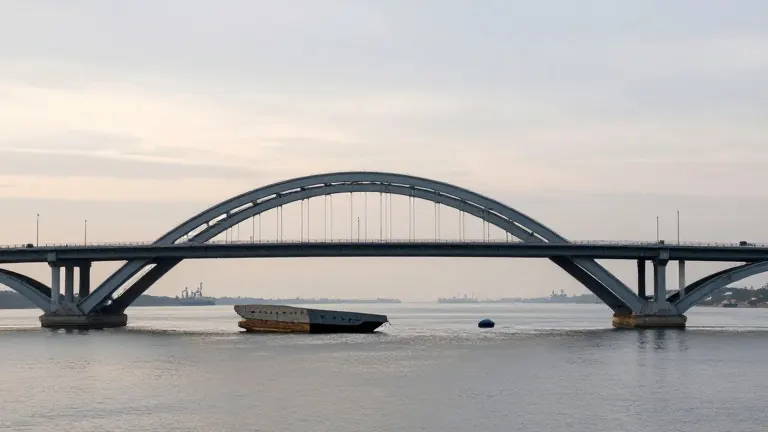
The primary road and rail link between Russia and occupied Crimea is partially closed, forcing Moscow to reroute military supplies through a land corridor that remains under active fire. The disruption has also blocked passenger ferries and isolated the occupied ports of Mariupol and Berdyansk from shipping routes through the Kerch strait. For Russian troops in the south, the loss of the direct sea crossing means ammunition, fuel, and equipment must now travel a longer, more vulnerable path through Zaporizhzhia and Kherson provinces.
The damage is the result of a coordinated overnight attack that began at 10 p.m. on Monday. Ukrainian forces launched hundreds of drones and several domestically made cruise missiles from multiple locations. The operation was designed to overwhelm air defenses and target the bridge's structural integrity. By Tuesday morning, a massive steel arch from the crossing lay in the water, alongside large sections of the concrete road deck.
The bridge has been a target since 2018, when Vladimir Putin opened the structure. He drove across it in a truck four years after Russian forces took control of Crimea. Previous attempts to damage it included a truck bomb in 2022 and a sea drone in 2023, but this latest strike marks the most severe damage to date. The timing was calculated to coincide with diplomatic meetings scheduled for this week.
Ukrainian military sources indicate the strike was timed to precede a Thursday meeting in Shenzhen, China. That summit brings together President Volodymyr Zelenskyy, President Donald Trump, and President Vladimir Putin on the sidelines of an APEC gathering. A source in the Ukrainian armed forces stated that destroying a symbol of Putin's rule sends a message to the other two leaders. The source added that the strike shows Putin cannot protect the pillars of his regime.
The operation involved a complex relay system to bypass recent technical limits on drone speeds. Ten days before the attack, restrictions were placed on Ukrainian drones using the Starshield network, capping their speed at 161 km/h. SpaceX claims there is no slowdown, a position President Zelenskyy disputes. To counter the limits, a second wave of drones acted as a relay for radio signals. This allowed a third wave of Flamingo cruise missiles to reach the target. Each missile carries 1,000 kg of explosives, and footage from onboard cameras captured the impact on the main arch.
The attacking unit, the 7th Deep Strike Centre, is part of a brigade named after Robert Brovdi, the head of Ukraine's unmanned systems forces. A participant identified as Leon described the operation as a well-coordinated, multi-stage plan. He noted that the soldiers were enthusiastic about the target, a shift from previous strikes on oil refineries. Leon said the team returned to headquarters jubilant and observed a minute of silence for fallen comrades before celebrating the successful mission.
The physical damage to the bridge has immediate practical effects on the region. Debris from the strike is obstructing the Kerch strait, a critical waterway for shipping. The occupied ports of Mariupol and Berdyansk are currently cut off from regular ferry services. Russian forces must now rely on a land corridor that passes through areas frequently targeted by Ukrainian artillery. This change in logistics creates new vulnerabilities for the Russian southern army, which has used Crimea as a fortified base and a launch platform for attacks on Odesa and other cities.