Motorcycle Raiders Kill at Least Ten in Eastern Nigerian Village
Discrepancies persist over the final death toll in Taraba State as survivors and rights groups report significantly more casualties than initial police counts.
By Rahul Mehta ·
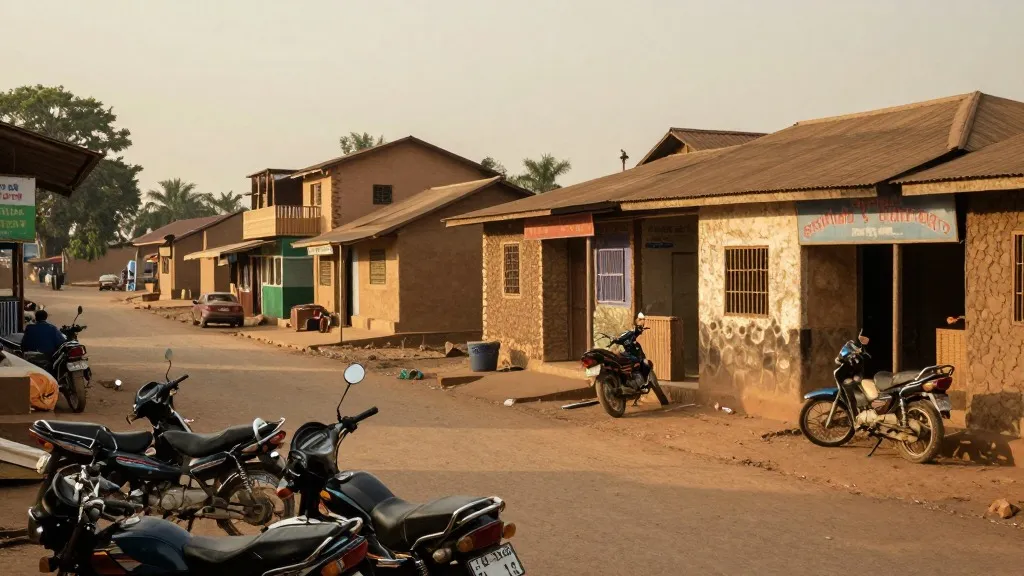
Violence continues to reshape the security landscape in eastern Nigeria, with a recent assault on a rural community highlighting the persistent threat posed by armed non-state actors in the region. The incident, which occurred in Taraba State, has drawn attention to the varying accounts of casualties and the ongoing challenges faced by local populations in areas with limited state presence.
Police officials confirmed on Saturday that ten bodies had been recovered by Friday evening following the attack. This official count serves as the baseline for current reporting, although other sources suggest the number of fatalities is significantly higher. The initial figures were released as part of a standard update on the situation in Binnari village, a location that has now become the focus of broader discussions regarding rural security in central-eastern Nigeria.
The discrepancy in the death toll is substantial when considering statements from survivors and advocacy groups. Residents of the village told the AFP news agency that at least twenty people had died in the raid. This figure aligns with the account of local resident Isiyaku Musa, who also estimated the toll at no fewer than twenty. The human rights organization Amnesty International provided an even higher estimate in a statement issued on Saturday, claiming that forty people were killed in the violence.
Amnesty International noted that while police initially confirmed ten deaths, additional bodies were discovered later on Saturday. This timeline suggests that the initial official count may have been a preliminary assessment taken before a full search of the area was completed. The organization emphasized that the true scale of the tragedy may be larger than the figures initially released by security forces indicate.
Eyewitnesses described the timing of the assault as particularly devastating for the community. Residents reported that the gunmen began firing their weapons just after the Friday prayers had concluded. Sa'idu Nuhu, a resident of Binnari, stated that after the attackers withdrew, the community counted more than twenty bodies. He further noted that some individuals remained missing at the time of his report, adding to the uncertainty surrounding the final headcount.
The method of attack involved a large number of vehicles, which allowed the assailants to surround and penetrate the village quickly. Malam Abubakar Saifullahi, a community leader, indicated that approximately fifty motorcycles were used in the raid. He described the formation of the attackers, noting that two men rode on each motorcycle. This coordination allowed the group to execute a swift and overwhelming assault on the village infrastructure and its inhabitants.
Beyond the loss of life, the attackers engaged in significant looting during their time in Binnari. The community leader detailed that the gunmen seized cash, foodstuffs, and other essential provisions from local shops. They also took motorcycles that had been abandoned by residents fleeing the sudden violence. This pattern of raiding and looting is characteristic of the bandit groups operating in the region, who often target rural economies for quick gains.
Amnesty International used the incident to critique the current approach of Nigerian authorities to rural security. The group stated that officials continue to leave communities in parts of the north vulnerable to gunmen who commit atrocities with impunity. This criticism highlights a broader concern that the state's response to banditry has not yet provided sufficient protection for the most isolated populations in the country.
The rise of banditry in northwest and central Nigeria has created a complex security environment where powerful gangs clash with police and military forces that are often stretched thin. Taraba State, located in the central-eastern part of the country, faces similar threats from these groups, which are not driven by a specific ideology. Instead, these gangs rely on raids, kidnappings for ransom, and informal taxes on farmers and miners to sustain their operations in areas where the government has a minimal footprint.
The attack in Binnari is part of a wider pattern of armed conflict in Nigeria, which has been battling a rebellion since the 2009 uprising by Boko Haram. In a separate development on the same Saturday, the Nigerian military announced that it had killed fifteen individuals described as terrorists during an air strike in Borno State, located in the northeast. This simultaneous action underscores the multiple fronts on which the country is currently engaged in military and security operations.
Source: Al Jazeera