Musk Rejects 22-Flight Lunar Fuel Target, Citing Six or Eight Tankers
SpaceX chief disputes NASA advisory panel's assessment of refueling risks for the 2028 Artemis IV mission.
By Alessia Desai ·
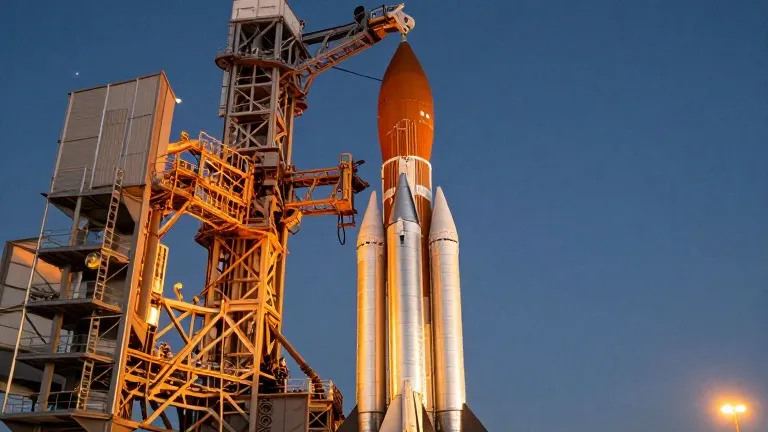
Elon Musk has publicly contradicted a NASA safety advisory panel regarding the number of rocket launches required to fuel a lunar lander. The disagreement centers on the logistical demands of Artemis IV, the mission scheduled to land astronauts on the Moon in 2028.
The conflict surfaced during the Aerospace Safety Advisory Panel's quarterly public meeting held on Thursday. Charlie Precourt, a former NASA astronaut serving on the panel, identified the fueling process as a primary risk. He stated that the most recent internal estimate for the number of required flights stood at approximately 22.
Musk responded to the figure shared on social media by Eric Berger of Ars Technica. In his reply, Musk argued that the 22-flight count was excessively high. He asserted that the actual number of tanker flights needed would be closer to six or eight.
The discrepancy arises from the physical constraints of the Starship vehicle. The rocket consumes nearly all its propellant to reach Earth orbit, making it incapable of proceeding to the Moon without external refueling. SpaceX's proposed solution involves an orbital depot. A Starship configured as a storage tank is launched first. Subsequent tanker flights dock with this depot to transfer their remaining propellant. Once the depot is full, the lunar lander version of Starship launches, docks, and departs for the Moon.
The total number of launches impacts both timeline and cost. Each tanker flight is a complete rocket launch, adding time and potential failure points before a crewed mission begins. Berger calculated that even with a launch rate of two Starships per week by late 2027, filling a depot at the 22-flight level would take roughly three months. The required count depends on how much propellant each tanker delivers and how much is lost to boil-off in the cold of space.
Musk's lower estimate assumes a more capable version of the vehicle than the one currently being tested. He has previously challenged similar figures, calling a 16-launch estimate "extremely unlikely" in 2021 and predicting a maximum of eight tankers. Precourt noted that Artemis IV involves a "large number of firsts," though he commended NASA Administrator Jared Isaacman for working to clear path obstacles for both SpaceX and Blue Origin.
The final count remains tied to hardware SpaceX has not yet fully demonstrated. The company intends to perform refueling operations with its upgraded V3 Starship. Until that vehicle is proven in orbit, the gap between the panel's conservative estimate and Musk's optimistic range persists.