Xpeng Predicts Household Robots Within Two Years
Xpeng co-president Brian Gu says the company's new humanoid robot could be deployed in homes within two years, following a successful commercial launch.
By Tomas Rahman ·
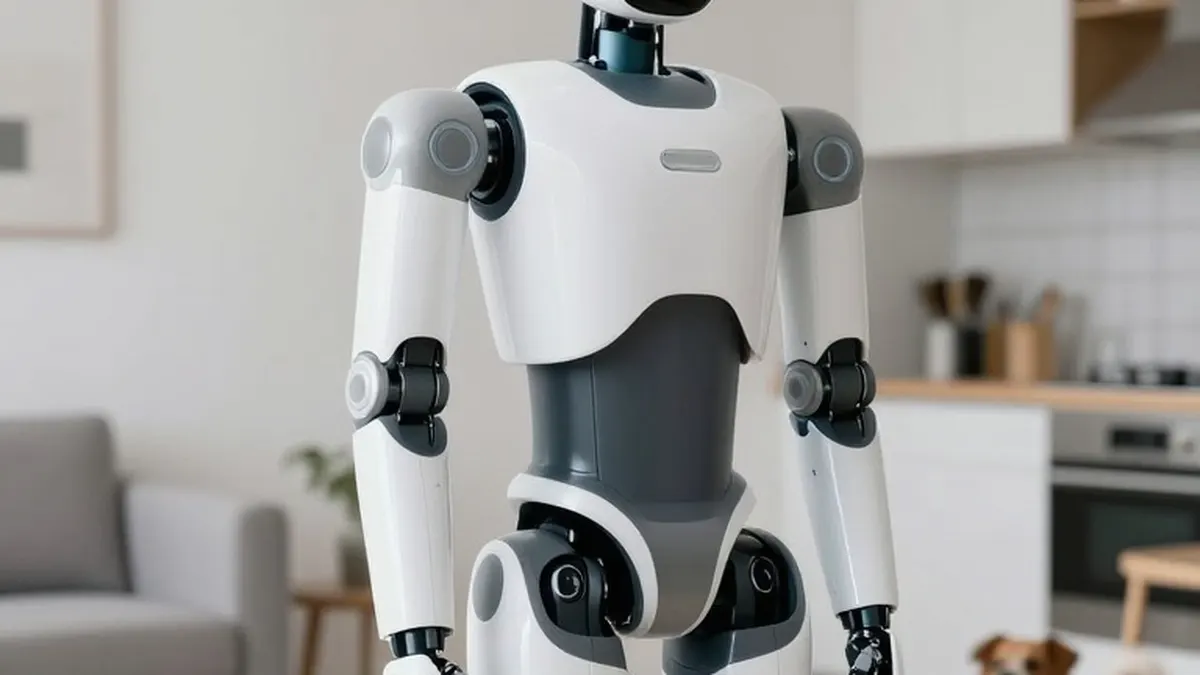
Chinese electric vehicle maker Xpeng has projected that its general-purpose humanoid robots could begin performing household chores within one to two years. Brian Gu, the company's co-president, shared this timeline in an interview with CNBC, noting that the technology is advancing at a rapid pace. He suggested that after the robots prove successful in commercial environments, a transition to home settings could follow quickly.
The company unveiled its latest model, Iron, on Wednesday. Xpeng plans to begin mass production in January of next year, with sales launching in the second quarter. Deliveries are expected later in the year. Before full retail availability, the robot will undergo training as a store assistant in the company's retail car locations starting in the first quarter.
Founded in 2014, Xpeng initially gained recognition for rolling out driver-assist technology in mainland China ahead of Tesla. The automaker has since expanded its portfolio to include personal flying vehicles, artificial intelligence chips, and robotics. In the first funding round for its robotics unit this summer, the division raised 900 million dollars at a valuation of 6.3 billion dollars, a round led by IDG Capital.
Despite these ambitious plans, investors have shown some caution. Xpeng shares, which are listed in both New York and Hong Kong, have fallen more than 55 percent this year. This decline aligns with broader downturns in the Chinese auto sector and heightened regulatory scrutiny on financing within the humanoid industry.
Gu emphasized that Xpeng’s approach differs from many competitors by integrating hardware, software, and real-life use cases. He described the complexity of requiring a robot to walk, answer questions, and perform tasks simultaneously without falling or becoming distracted. This holistic synchronization is a challenge that many startups, which often focus on specific components like hands or AI brains, may find difficult to master.
The company’s co-founder and CEO, He Xiaopeng, is a software engineer who initially believed software could solve most problems. However, his experience in the electric vehicle business taught him the difficulty of making hardware operate safely and consistently. This insight has shaped the current development strategy for the robotics division.
On the same day as the robot reveal, Xpeng announced its Turing Physical AI Architecture. This system utilizes AI and real-time decision-making technology to control both cars and humanoids. Gu noted that the robotics development relies on driver-assist chips already produced by the company, suggesting that U.S. restrictions on advanced Nvidia chip sales will have a limited impact on their supply chain.
The shift toward robotics is also driven by financial incentives. Gu stated that the robotics business is projected to become profitable as soon as next year, which is faster than the automotive division. He expects robotics to become a meaningful part of Xpeng's overall business within two to three years. The transition from commercial to residential use is expected to dramatically increase the value of these machines.
However, operating in a home presents unique challenges compared to commercial spaces. Robots must act safely around elderly people, children, and pets while also reacting to emergency situations. These requirements place higher demands on battery power and performance consistency, according to Gu.
More News · National news · Report a business · Got a Story?