US, China, Russia Leaders to Meet in Shenzhen for Nuclear Talks
White House confirms a trilateral summit planned for Thursday during the APEC gathering, focusing on nuclear stockpiles and the Iran conflict while excluding Ukraine.
By Tomas Rahman ·
The White House confirmed on Friday that President Donald Trump, Chinese President Xi Jinping, and Russian President Vladimir Putin will convene for a joint meeting Thursday. The leaders are scheduled to gather on the sidelines of the Asia-Pacific Economic Cooperation summit in Shenzhen, China. This gathering brings together the heads of the world’s three largest nuclear powers in a single room for the first time in recent history.
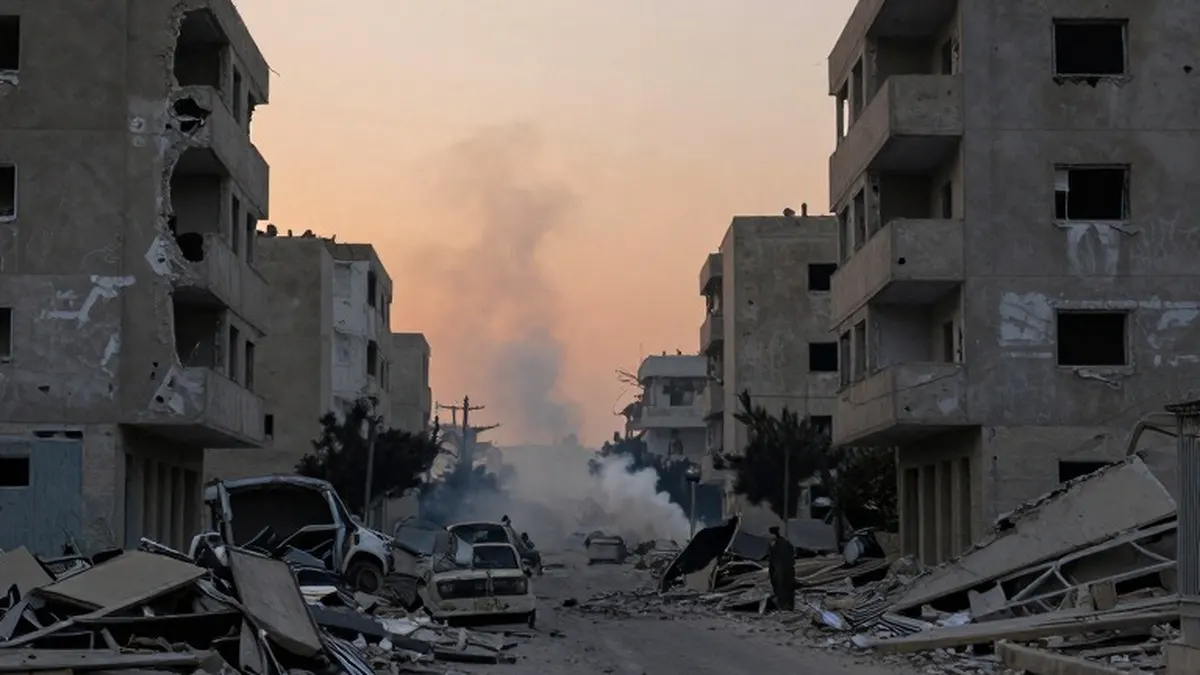
U.S. officials stated that the primary agenda for the session will be the war in Iran and the goal of establishing a new agreement on nuclear arms control. The administration plans to use the meeting to initiate trilateral talks on these issues. However, a senior U.S. official briefed reporters on the condition of anonymity and said the president intends to steer the conversation away from the war in Ukraine.
The last nuclear arms pact between the United States and Russia, known as New START, expired in February. That expiration removed the caps on the two largest atomic arsenals for the first time in more than 50 years. When the treaty lapsed, Trump rejected a Russian request to extend the two-country deal. Instead, he called for a new, modernized agreement that includes China.
Analysts suggest that while the meeting is symbolic, major breakthroughs are unlikely. A senior U.S. official noted that no agreements are expected to be announced during the session. The disparity in nuclear capabilities complicates the talks. Pentagon estimates place China’s arsenal at more than 600 warheads. In comparison, the United States and Russia each hold more than 5,000 warheads. China has shown little interest in developing a nuclear pact due to its smaller stockpile.
Beijing hosts the APEC summit, which brings 21 economies to Shenzhen. The city has transformed from a small fishing village into a global technology hub in a few decades. Hosting the trilateral meeting offers Xi Jinping an opportunity to demonstrate China’s growing prestige. For the Kremlin, the meeting provides a chance to position Russia as a superpower on par with Washington and Beijing.
Edgard Kagan, a former U.S. ambassador to Malaysia and analyst at the Center for Strategic and International Studies, observed that the meeting signals Russia’s desire to engage with the other two powers. Kagan noted that this dynamic suggests the three leaders are making decisions regarding Ukraine, a view that Ukrainians and Europeans often oppose. The trilateral gathering could overshadow the main APEC agenda, which focuses on free trade and economic cooperation.
Hoo Tiang Boon, a professor of Chinese foreign policy at Nanyang Technological University, said the meeting could muddy China’s argument against Western Cold War mentality. He argued that gathering with Russia and the U.S. runs counter to Beijing’s support for multilateralism. China has previously criticized the U.S. for undermining international institutions through its actions in Iran.
The three leaders have met in pairs frequently. Putin and Xi have met more than 40 times since 2013, referring to each other as dear friends. Trump and Putin have met on seven occasions, most recently in Alaska in August 2025. Trump and Xi have held face-to-face talks on eight occasions, including a state visit by Xi to Washington in September.
U.S. President Volodymyr Zelenskyy expressed concern that the meeting could serve as a platform for discussing a Ukraine deal without Kyiv’s participation. Kremlin spokesman Dmitry Peskov dismissed comparisons to the 1945 Yalta Conference, where the leaders of the U.S., Britain, and the Soviet Union divided Germany. Peskov stated that any vision for a global order should be based on mutual benefit and respect, rather than imposed by one group.
China has become Moscow’s No. 1 trading partner since 2022. Beijing increased purchases of Russian energy and became a principal supplier of high-tech components for Russian weapons. Trump recently waived sanctions against Russia to allow the sale of millions of tons of diesel fuel. He blamed surging energy prices on Ukrainian attacks on Russian refineries, although analysts attribute the rise in global crude prices mostly to the Iran war.