Ukraine claims drone strikes on Russian vessels in Libya
President Zelenskyy has officially attributed the recent destruction of the Russian corvette Merkury and damage to the cargo ship Angara in Benghazi to a coordinated Ukrainian naval operation.
By Tomas Rahman ·
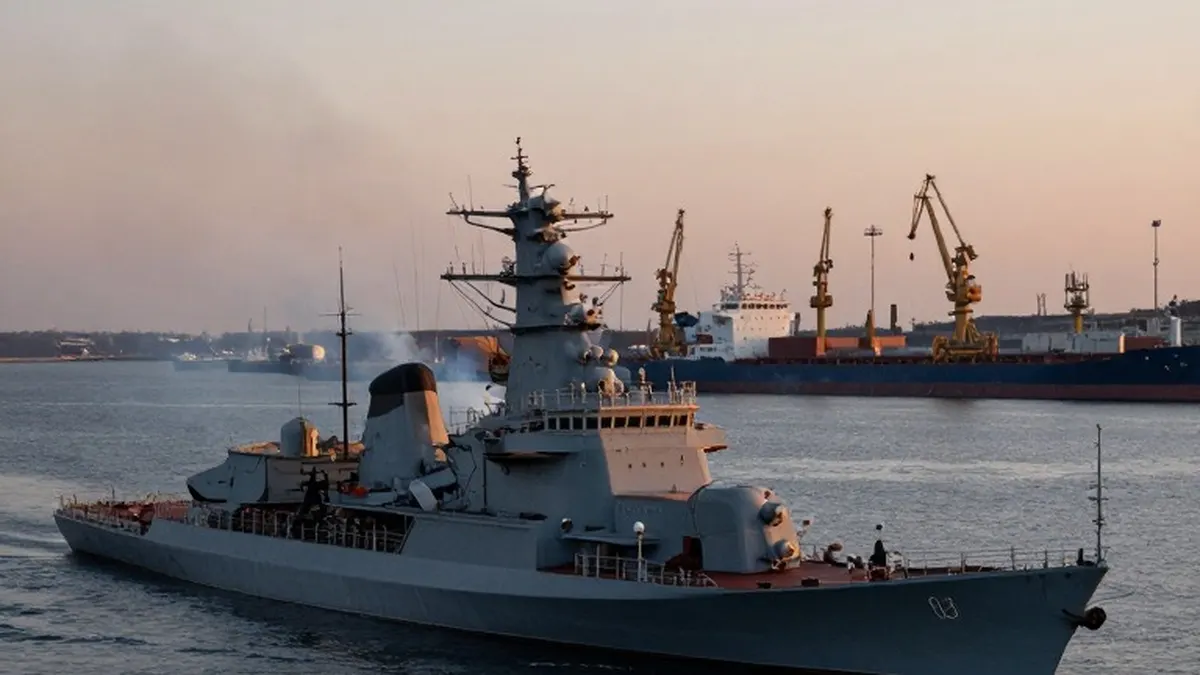
Ukrainian President Volodomyr Zelenskyy has taken responsibility for the drone attacks that struck two Russian ships near the coast of Libya. In a statement released on Monday, the Ukrainian leader described the incident as an exemplary operation conducted in direct response to Russia’s ongoing war. He confirmed that his forces successfully sank the Russian corvette Merkury, one of Moscow’s most recently commissioned naval vessels.
According to Zelenskyy, the sinking of the Merkury was achieved after seven naval drones made in Ukraine were launched against the target. The attack also resulted in the destruction of a KA-27 combat helicopter that was present during the engagement. The President emphasized that Ukraine intends to continue launching operations in designated maritime areas as a countermeasure to Russian aggression while continuing to develop its own domestic weapons systems.
In addition to the corvette, Ukrainian forces targeted the MV Angara, a dry cargo ship that Zelenskyy stated was being utilized by Russia to transport weapons. This second attack adds to the complexity of the situation in the region, as the vessel was reportedly docked for maintenance and resupply rather than active combat duty.
Libyan authorities in the eastern region provided their own account of the events. An official statement from the administration noted that an explosion occurred on board a Russian ship docked in the port. Officials clarified that the vessel was on its way back to Russia and had stopped only to refuel and resupply. The statement suggested that the ship was attacked by drones, although the eastern administration did not explicitly identify the attacking party.
Local sources speaking to Al Jazeera late on Sunday indicated that the exact number of Libyan and Russian nationals killed in the attacks had not yet been determined. The ship was moored inside the civil sea port of Benghazi. The eastern health ministry confirmed that all crew members had been rescued and were currently receiving medical treatment.
The United Nations Support Mission in Libya, known as UNSMIL, has expressed serious concern over the developments. The mission called for an immediate, independent, and transparent investigation into the drone attacks. In a post on the social media platform X, UNSMIL warned that Libya cannot afford to become a battleground for foreign conflicts, highlighting the delicate balance of the region.
Tallha Abdulrazaq, a Middle East security and defence expert, provided analysis to Al Jazeera suggesting that Ukrainian intelligence services were likely behind the operation. He referenced reports from the end of last year indicating a potential deal between Ukrainian intelligence and the Tripolitan government. Under such an arrangement, Ukraine would establish a military and intelligence presence in Libya, while the Tripoli government would receive Ukrainian military expertise in return.
The eastern administration maintained that Libya is not a party to the Russian-Ukrainian war, despite the attacks occurring within its territorial waters. The country has been divided since the overthrow of longtime ruler Muammar Gaddafi in 2011, with a government based in Tripoli and a rival administration governing the east. This division continues to complicate diplomatic and military responses to international incidents in the region.
As the situation unfolds, the international community is watching closely to see how the two rival Libyan administrations and the global powers involved will navigate the aftermath. The attacks mark a significant escalation in the maritime dimensions of the conflict, with Ukrainian forces reaching into the Mediterranean to target Russian assets.
The confirmation by President Zelenskyy brings a degree of clarity to what was initially reported as a mysterious explosion. It underscores the growing range of Ukrainian naval capabilities and their willingness to project power beyond the Black Sea. The coming days will likely see further statements from both Moscow and the various factions in Libya as they assess the strategic implications of the strikes.