Arab Israeli voters turn out in record numbers to challenge Netanyahu
Historic participation rates reflect a shift in political strategy after four years of far-right rule, potentially determining the next government.
By Tomas Rahman ·
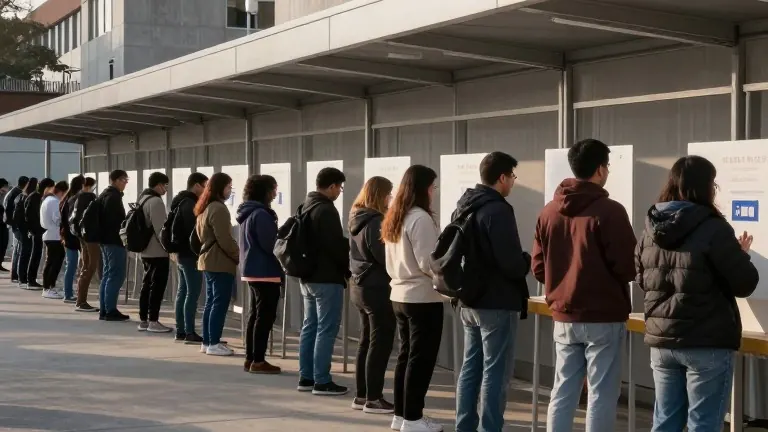
Arab citizens of Israel are casting ballots today in numbers not seen since the late 1990s, creating a pivotal moment for the nation's political balance.
Prime Minister Benjamin Netanyahu warned throughout the campaign that high Arab voter participation threatened his hold on power, a concern that now appears grounded in reality. The outgoing leader has long cited the demographic shift as a danger to his rule, yet the current turnout suggests the alarm was justified for once.
The last comparable surge in Arab voting occurred in 1999, during one of Israel’s few direct elections for the prime ministerial post. At that time, Arab voters backed Ehud Barak almost unanimously, helping to oust Netanyahu for the first time. That victory opened the door to Barak, who remains the last left-wing prime minister the country has had.
Since then, October 2000 has remained a defining memory for the community. Police under the Barak government opened fire on Arab demonstrators protesting Ariel Sharon’s visit to the Temple Mount, killing twelve citizens. A subsequent commission of inquiry confirmed grave failures in how the state treated Arab residents, though no police officer was ever charged. That event solidified a sense of distance from the Israeli mainstream, keeping many Arab citizens home in elections for decades.
The political landscape has shifted under the current coalition, described as the most radical in the country’s history. Over the past four years, the government has implemented policies that imported West Bank realities into Israel proper. Critics argue that this administration left Arab communities vulnerable to criminal gangs and state absence while media figures fueled incitement against Arab doctors, journalists, and elected officials.
This treatment has changed the calculus for voters. While the Arab political establishment is often viewed as a closed club recycling the same faces, the current turnout does not signal a simple rally behind those parties. Many voters chose Jewish-led lists or voted for Arab lists without enthusiasm. The participation is driven by a sense of citizenship and shared responsibility, similar to the solidarity shown by Arab citizens during the October 2023 crisis.
The community is asserting its place within the state, rejecting narratives that brand them as an enemy within. They are voting to defend a democracy that has not always defended them, extending trust despite historical grievances. In 2021, the Arab party Ra’am provided the majority for the first government to unseat Netanyahu in over a decade. It was the first Arab party to join an Israeli coalition, though the opposition often acted as if it should apologize for the partnership.
Leading opposition figures have been reluctant to state explicitly that they would govern with an Arab-Israeli partner. However, Arab citizens know they hold the key to breaking the current deadlock. They have put aside doubts to show up for the ballot, betting that their voice will matter in the coming coalition talks.
The choice now falls to the opposition. It must decide whether to treat an Arab party as a legitimate partner or risk confirming the lessons of October 2000. If the new government acts as though the vote counts only when convenient, it may hand the outgoing coalition the deadlock it needs to stay in power. The decision determines whether Israel continues as a democracy where every vote counts or slides toward an isolated ethnocracy.
The hand has been extended to the Jewish-majority opposition. They can take it and lead the country toward a different future, or they can confirm the suspicions that have kept Arab voters away for years. The outcome of this election rests entirely on that decision.
Source: The Jerusalem Post