Cross-party endorsements surge ahead of November votes
Officials in Alaska, Kansas, and Texas back opposing party candidates, though researchers suggest the impact on final tallies will likely be limited.
By Alessia Desai ·
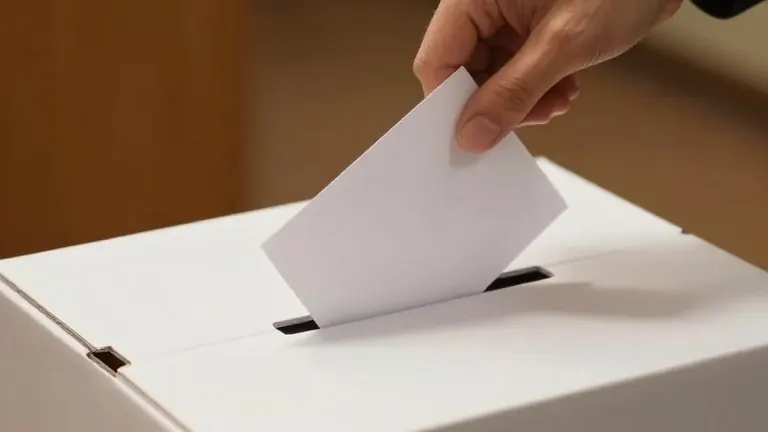
Over two dozen former Republican officials have backed James Talarico, the Democratic candidate for U.S. Senate in Texas. This figure represents the largest cluster of cross-party support reported this cycle, according to his campaign team.
The push for bipartisan appeal has accelerated in recent weeks as midterm elections approach. In Alaska, Republican Senator Lisa Murkowski endorsed Democratic gubernatorial candidate Jonathan Kreiss-Tomkins on Tuesday. In Kansas, former Republican governors Bill Graves and Mike Hayden announced their support for Democratic Senate candidate Adam Hamilton in September and October, respectively.
Kel Seliger, a former state senator from the Republican Party, added his name to the list of Talarico supporters this week. He chose the Democrat over his party’s candidate, Attorney General Ken Paxton. Seliger explained his decision by noting he has served with both men. He stated that Talarico is honest and direct, adding that the senator’s actions will prioritize Texas over the interests of Elon Musk.
Republican leaders assert they are seeing similar crossover activity in their favor. Natalie Baldassarre, the national press secretary for the Republican National Committee, pointed to the race in Michigan between Mike Rogers and Abdul El-Sayed. She also cited the existence of the coalition known as Democrats for Mike Rogers as evidence of this trend.
Joshua Blank, Research Director for the Texas Politics Project, cautioned that such voting patterns usually affect only a small segment of the electorate. He described cross-party voting as an idiosyncratic behavior rather than a mass movement. Blank noted that while the effect is typically small, it could influence the outcome if specific races remain statistically tied.
Recent polling indicates that several midterm contests have tightened in the final stretch. Experts suggest that in these close scenarios, the small groups of voters switching parties may determine the final margin.
Source: WWSB