Energy prices spike as Iran targets US fleet and war risks reignite
Rising fuel costs and new military threats mark a sharp escalation in the regional conflict this week.
By Tomas Rahman ·
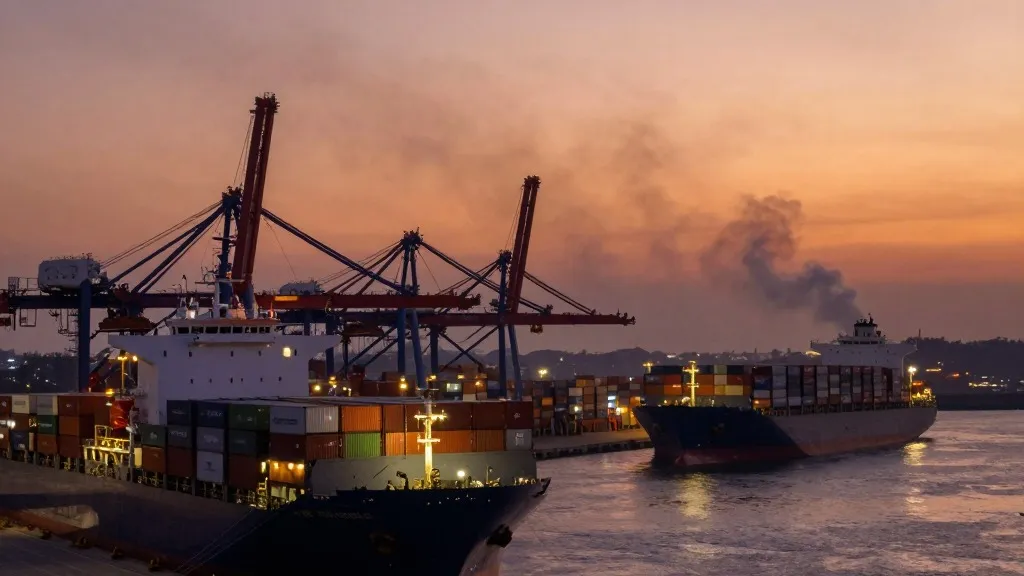
Households facing higher energy bills and travelers watching news alerts this week are seeing the ripple effects of a rapidly escalating conflict. With Brent crude oil prices climbing to approximately $117, the market is reacting to renewed fears of a broader war. This surge represents the highest level for the benchmark price since April, directly impacting the cost of goods and services for consumers across the globe.
The driving force behind this economic shift is a series of fresh military threats from Tehran. President Donald Trump signaled on Friday that the United States has not yet decided on its next major move. Speaking at a rally in Florida, he noted that the American military might launch another major bombing campaign, referencing the intense strikes used to open the war. He weighed the option of a decisive, massive attack against the strategy of maintaining a naval blockade and economic sanctions to pressure the Iranian government.
In response to these signals, the leadership of Iran’s armed forces issued a stern warning on Saturday. Ali Abdollahi, the chief of general staff, stated that the United States Navy is barred from re-entering Iranian territorial waters. He claimed that Iranian forces can target any vessel operating in the region, suggesting that American troops and ships entering the Persian Gulf are merely a fantasy for the US president.
Abdollahi also criticized what he described as contradictory American messaging. He argued that Washington claims have largely destroyed Iran’s military capabilities, yet the US has been hesitant to move its aircraft carriers and support vessels closer to Iranian territory. He declared that Iranian forces aim to pull the US and Israel into a deep and difficult conflict, a retaliation for the surprise attacks on February 28 that started the current eight-month war and destabilized the area.
Shipping lanes around the Strait of Hormuz continue to face significant threats. The Islamic Revolutionary Guard Corps reported that seven tankers were attacked or hit mines between Wednesday and Thursday. On Friday, the group claimed that two supertankers were also struck by mines. The IRGC stated that its military doctrine has shifted toward a more offensive posture, increasing the risk to commercial maritime traffic.
Beyond the Gulf, other fronts remain active. The Iran-allied Houthis in Yemen attacked Riyadh on Saturday, following recent strikes on Dammam’s international airport and the Shaybah oilfield. Saudi forces retaliated by bombing areas held by the Houthis, including Marib and Taiz. In southern Lebanon, Israeli air strikes hit the area around Nabatieh, while artillery fire landed near Zawtar ash-Sharqiyah. In the West Bank, Israeli Prime Minister Benjamin Netanyahu ordered a lockdown after a Palestinian attack killed two soldiers in Hebron, just days before his October 27 election.
Diplomatic efforts have stalled, with mediated talks between Tehran and Washington yielding no progress. On Friday, senior diplomats from Turkey, Saudi Arabia, Pakistan, and Egypt met with counterparts from the UK, France, Germany, and Italy in Istanbul. Neither the US nor Iran attended. Turkish Foreign Minister Hakan Fidan warned that a new attack on Iran would widen the war, noting that no one currently endorses such a move. German Foreign Minister Johann Wadephul blamed Iran and the Houthis for the instability, while the four regional ministers cited Israeli occupation as the primary source of regional tension. They supported the June Islamabad memorandum and demanded free passage through the Strait of Hormuz.
Iranian state media and analysts suggest that Tehran has activated a contingency plan known as the dead hand doctrine. This strategy would allow attacks on US, Israeli, and regional interests to continue from all 31 provinces even if senior leaders are killed again. The IRGC has also threatened to target seabed internet and communication cables if civilian infrastructure is hit again. US intelligence indicates that Iran has significantly increased its efforts to strike American officials in the Middle East and beyond. Reformist papers in Iran suggest that a new intense round of fighting is approaching, with analysts arguing that Iran will no longer negotiate while under bombardment.
Source: Al Jazeera