European Flights Disrupted by Hoax Bombs, Fridge Hackers Target Food Supply
At least 25 flights faced emergency diversions while a cyberattack raised temperatures in supermarket refrigerators across seven countries, prompting fresh scrutiny of infrastructure security.
By Alessia Desai ·

A wave of coordinated disruptions struck European aviation and food supply chains this week, forcing emergency landings and threatening the integrity of cold storage systems in multiple nations.
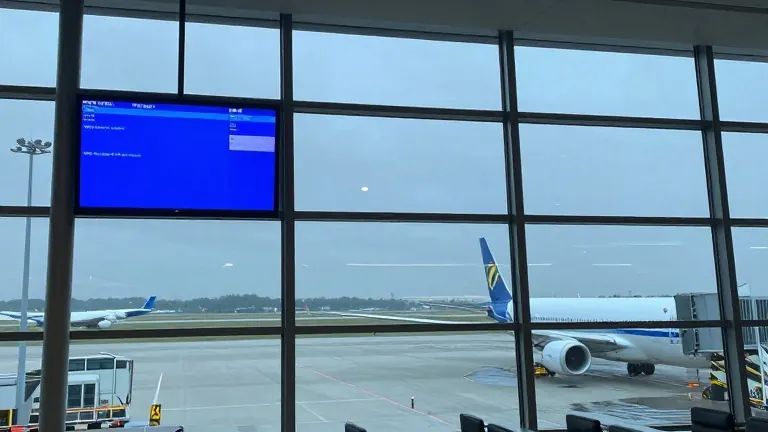
Investigators reported that at least 25 commercial flights across Europe were disrupted by hoax bomb threats on Thursday, with some aircraft required to make emergency landings. This followed similar incidents on Tuesday, when seven planes were searched or diverted after receiving malicious alerts. Aviation experts told The Guardian that airlines treated these threats as credible, suggesting a potential level of coordination among the actors involved. No hostile state or terror group has been confirmed as the source, though investigations remain active.
Simultaneously, a cyberattack targeted supermarket fridges and freezers in seven European countries, including Belgium, Sweden, and the United Kingdom. In some cases, thermostats were remotely cranked up to 50C. The attack also hit the cold storage facilities of France’s national blood service. Dan Milmo, The Guardian’s global technology editor, noted that two primary candidates remain for such hacks: criminal gangs or nation states. He added that a tertiary category of troublesome teenagers, such as the group Scattered Spider, is emerging as a distinct threat.
Security officials describe the current environment as a grey zone between routine peace and conventional military conflict. Dan Sabbagh, the paper’s defence and security editor, stated that terrorism aims to scare rather than necessarily to cause physical violence. He noted that MI5 currently tracks about 3,000 active subjects of interest, with a focus on serious threats to life. Lower-level activities, such as online surveillance or minor sabotage, are harder to detect due to resource constraints within public services.
The disruptions come as aviation security faces sharper scrutiny following the flydubai incident, where a pilot fought off a knife-wielding colleague. Tech expert Azeem Azhar warned that the internet is experiencing a moment similar to the early days of the Covid pandemic, with AI enabling bad actors to hunt for system flaws. Aisha Down, a global technology reporter, explained that many hacks occur through edge devices, which are networked but lack the processing power to be primary security targets. She cited Finland’s national cybersecurity centre, which recorded 21,000 incident reports this year, up from 18,000 the previous year, partly due to a growing criminal hacking ecosystem with links to Russia.
Governments across Europe are advising citizens to build up non-perishable larders as part of broader resilience initiatives. In the UK, the Be Ready initiative suggests stockpiling 72 hours’ worth of emergency supplies. A European cybersecurity official told The Guardian that there is an average vulnerability in every 1,500 lines of code. While the psychological impact of these attacks is designed to generate fear, officials emphasize that such cyber incidents are opportunistic. Unlike a physical attack on a power station, these digital disruptions are unlikely to leave systems offline for months, though the frequency of these events continues to rise.