Kyiv Drone Maker Automates Final 500 Meters of Combat Flight
The Fourth Law's Lupynis-10-TFL-1 uses onboard AI to guide first-person-view drones toward selected targets, reducing the time between human decision and impact.
By Meera Fletcher ·
Ukrainian defense firms are integrating artificial intelligence into first-person-view drones to automate the final phase of combat flights.
The company The Fourth Law produces the Lupynis-10-TFL-1, an autonomous drone used by dozens of Ukrainian military units. The system combines a small, affordable FPV drone with an onboard computer running a deep-learning neural network. This computer takes control of the aircraft during the last 500 meters, or 0.3 miles, of its trajectory toward a target.
Yaroslav Azhnyuk, a 37-year-old computer scientist, leads The Fourth Law and Odd Systems. He previously founded Petcube, a company that sold one million AI-powered pet cameras in the United States. Azhnyuk relocated to Ukraine and shifted his focus to defense technology after Russia's full-scale invasion began in 2022. He stated that the new drones utilize cameras that fling explosives rather than treats, marking a pivot from consumer electronics to military hardware.
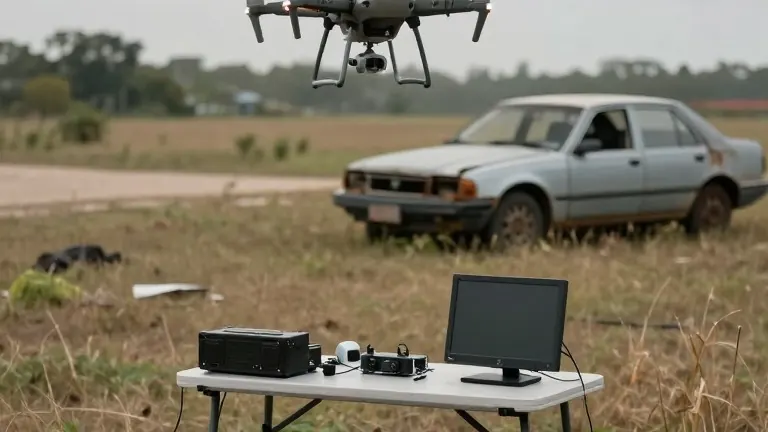
The drone's AI recognizes vehicles, light-armored vehicles, tanks, and flying objects using hours of combat footage. In a field test outside Kyiv, a pilot known by the call sign Professor manually guided the drone until it locked onto a target car. Upon seeing a red flash on the monitor, Professor released the control stick. The drone then flew itself to the vehicle, with the onboard microcomputer running algorithms to maintain course. Stab, the head of the test and integration team, noted that the drone performed all actions independently once the lock was established.
Azhnyuk explained that the technology provides an asymmetric advantage when facing opponents with higher capabilities. He described the AI as simple tools for image recognition that allow the drone to navigate or choose a target without continuous human input. He distinguished this system from large-scale data center AI used in self-driving cars or large language models. The company named the drone after Anatoliy Lupynis, a 20th-century Ukrainian poet and political activist who endured Soviet imprisonment.
Russia is also deploying AI-enabled drones against Ukraine. President Volodymyr Zelenskyy has warned that AI could lead battlefield decisions as soon as next year. Azhnyuk acknowledged these concerns but argued that the potential for misuse is not unique to AI. He compared the technology to fire or steel, stating that humans ultimately decide how to use the tool. Stab said the drones are difficult to jam and that safeguards prevent them from going rogue, as humans remain responsible for selecting the target.
Azhnyuk argued that Ukraine must adopt AI to defend against Russian offensive systems that make decisions in microseconds. He noted that human control often takes minutes, hours, or days to respond. He stated that if Ukraine refuses to use AI in a defensive scenario while adversaries use it offensively, Ukraine would lose the conflict. He emphasized that the primary goal is survival, noting that ethical debates become secondary if the country ceases to exist.
The Fourth Law tests the Lupynis TFL-1 drones daily. The company continues to refine its autonomous guidance systems for frontline deployment.
Source: WUSF Public Media