Inside France's Black Block: The Ultra Left at the Heart of the Unrest
A BBC investigation explores the motivations and methods of the radical left protesters fueling France's ongoing social crisis.
By Tomas Rahman ·
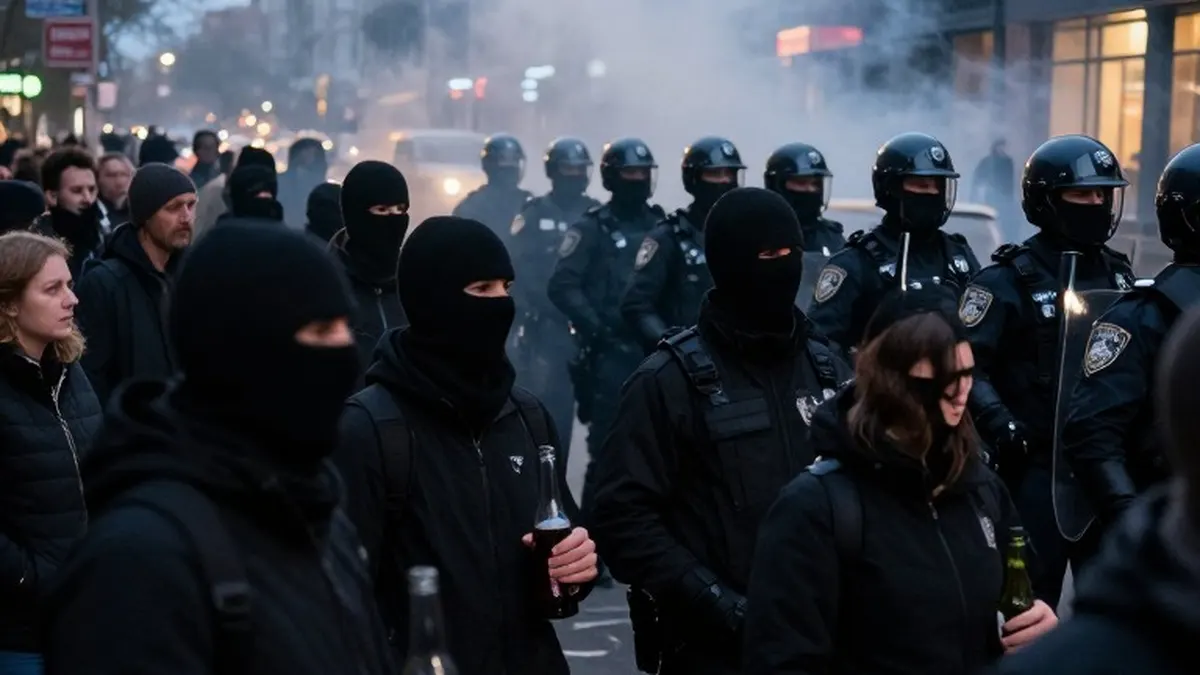
France is currently experiencing a period of intense social turmoil, driven by high public debt, a president with only six months remaining in office, and widespread unrest that began with student demonstrations. For six consecutive weekends, citizens have taken to the streets to protest rising prices, deteriorating public services, and perceived police brutality. While the level of violence has decreased from the previous month, it remains a significant feature of the demonstrations.
President Emmanuel Macron has publicly attributed the riots to delinquents and ultra-left groups, claiming their objective is to dismantle the French Republic. This assertion has turned the unrest into a major political issue ahead of next year's presidential and parliamentary elections. The left blames the center and right for the cost-of-living crisis, the far left is accused of fomenting violence, and the nationalist right promises to restore order if elected.
The ultra-left groups in question often participate in protests as part of the Black Block, a quasi-uniform strategy involving black clothing and masks to conceal identity from police. These individuals typically emerge from side streets as daylight fades and riot police deploy. French intelligence initially underestimated the scale of the anger, leading to significant injuries and property damage. The French Insurers Federation estimated that damages to shops and private property on the day of the biggest riots in October alone amounted to approximately 207 million euros.
During recent protests, reporters attempted to engage with members of the Black Block. An 18-year-old named Nas, who requested anonymity, explained that the group is not a single organization but a tactic. He stated that they come from the banlieues, the sprawling housing estates on city outskirts associated with deprivation. Nas argued that without violence, the voices of the marginalized would not be heard, and that the current system fails to deliver on its promise of equality.
Another 17-year-old activist, known by the codename Starflix, detailed the specific tools used in the protests, such as homemade paint bombs made from eggshells and paint. He described throwing these at police visors to force officers to lift them, causing them to inhale their own tear gas. Starflix noted that while some participants use violence to push for government reform, others are opportunists who exploit the anonymity of the group to steal items.
Social media platforms like Signal and Telegram play a crucial role in coordinating these groups. Various left-wing organizations post advice for protesters, suggesting they keep phones at home to avoid tracking and move through crowds like water. This tactic was previously used by protesters in Hong Kong. While the activists insist they are not being directed by these online groups, the prevalence of such advice raises questions about the level of organization behind the chaos.
In the countryside, more organized elements of the ultra-left are involved in eco-activism and sabotage. One notable incident involves a fire at Limoges Town Hall last month, which has become a symbol of the nation's current state. A 34-year-old suspect remains in custody, though he claims innocence. A 39-year-old local activist, who has been involved in the movement for over two decades, expressed a sense of duty to act, stating that the state's use of brute force against students justifies their response.
Despite the rhetoric, experts suggest the radical left does not possess the means to seriously threaten the state. Michel Klein, a retired police commissioner, believes that while the anarchists have the will to destroy the Republic, they lack the resources. He sees a greater risk of clashes between far-left and far-right groups ahead of the election than a full-scale civil war.
Polls currently predict a runoff between nationalist candidate Marine Le Pen and anticapitalist candidate Jean-Luc Mélenchon. Far-right vigilante groups have begun appearing at protest edges, claiming to protect the streets. As France remains deeply polarized, the combination of social and political unrest creates a volatile atmosphere with little indication of immediate calm.