Pirate Jones Linked to Beach Namesake
New documents suggest Thomas Jones, the Long Island landowner behind Jones Beach, helped Captain Henry Every evade capture after a major 1695 raid.
By Meera Fletcher ·
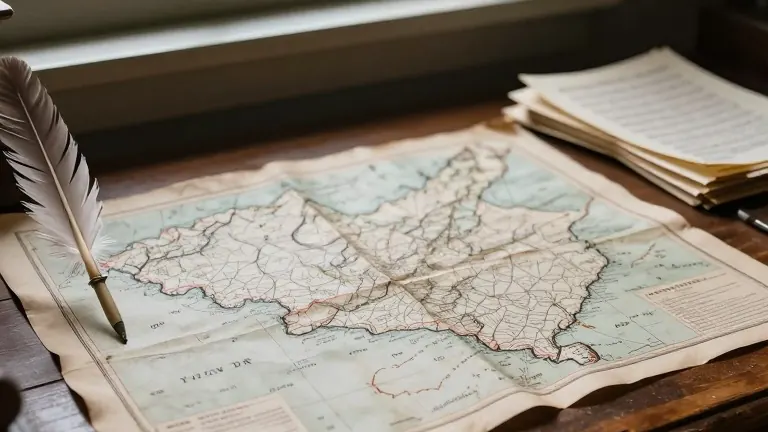
James Bailey found a paper trail connecting a Long Island landowner to a famous pirate.
The 1695 raid on the Ganj-i-Sawai in the Red Sea resulted in the theft of tens of millions of dollars in gold and silver. The crew of Captain Henry Every tortured and killed many aboard the royal Indian ship. This event triggered the first global manhunt. Some pirates were executed, but Every vanished. Bailey, an amateur historian who previously found coins linked to Every, has spent five years reviewing colonial records. He argues these documents prove Thomas Jones, the namesake of Jones Beach, acted as a driver for the crew. Jones helped the pirates escape authorities with the loot.
Bailey recently retired from the Rhode Island corrections department. He grew up hearing stories about Jones but found the details sparse in local histories. Jones was a former major in the English military who settled in Rhode Island before moving to New York. By 1696, his father-in-law, Thomas Townsend, gifted him and his wife a large tract of land on the south shore of Long Island. Bailey says this property gave Jones a fresh start away from pirate-friendly New England. Jones built a homestead and raised a family on the land that now hosts a popular state park.
Colonial Governor Richard Coote investigated Jones in 1698. Coote wrote that witnesses placed a barrel of money at Jones' house. Jones testified that he knew nothing about the barrel. The governor described Jones as formerly a pirate. John Hanc, author of Jones Beach: An Illustrated History, says Bailey's work fleshes out a past long rumored in local lore. Rumors persisted after Jones died in 1713. His mansion was reported haunted, and robbers dug up his grave looking for treasure. A 1906 family history called these stories improbable fictions and slander.
Meagan Schulman, a doctoral candidate at Fordham University specializing in 17th century piracy, notes that privateers often became pirates when wars ended. She says Jones can be called a pirate by some, though he likely did not see himself that way. Richard Blakemore, a maritime history professor at the University of Reading, cautions that Thomas Jones is a common name. He says the findings are compelling but not yet conclusive. Kevin McDonald, a history professor at Loyola Marymount University, points out that piracy built generational wealth in the Northeast. He says this evidence challenges the popular image of pirates as outcasts. The documents show how connected early colonies were to the trade.
Source: WDIV ClickOnDetroit