124,000 New Arrivals Strain Taiz as Houthi Siege Cuts Water
Yemen's third-largest city faces a severe humanitarian crisis as fuel shortages and blocked roads limit access to essential supplies for over one million residents.
By Malcolm Davis ·
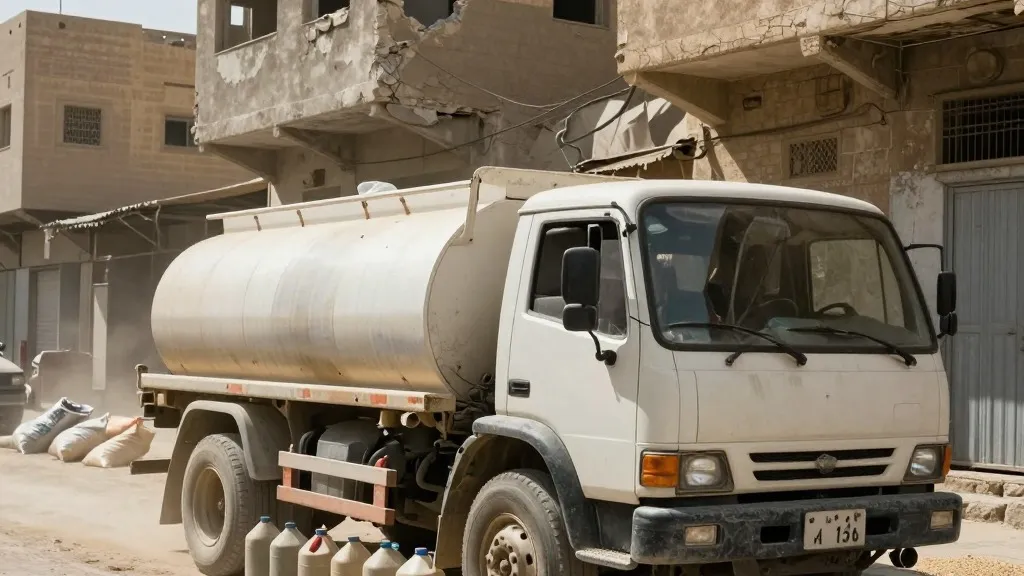
Water is vanishing from Yemen's Taiz as a tightening siege forces families to ration every drop.
Aid groups report that the needs of the city's more than 1 million residents are barely being met. Access to wells is restricted, and desalination plants are running low on fuel. Water trucks are largely blocked from entering, leaving the population dependent on dwindling supplies. This situation follows a decade of scarcity, but recent weeks have pushed the problem to crisis levels.
Local families are stretching resources to survive the shortage. Hadil al-Shahid, who supports two young children, used to consume about 10 liters of bottled water daily. That same amount now lasts her family approximately four days. She noted that they have stopped drinking coffee and tea to conserve water. The cost of bottled water has risen by as much as 75 percent in recent weeks, forcing some households to buy supplies on credit. These financial pressures are part of a broader squeeze on daily life in the city.
The strain extends beyond water to food and public health. Grocery shortages have driven up food prices, while scarce fuel hampers hospitals and sanitation services. Amnesty International has urged Houthi forces to open roads immediately, warning that Taiz is nearing a severe humanitarian disaster. The siege has also complicated resupplying government forces, who face stiff resistance in the surrounding hills, particularly to the east of the city.
The city has absorbed a massive influx of displaced people since August. Approximately 124,000 individuals from other parts of Yemen have settled in Taiz province. Jens Laerke, a UN emergency aid spokesperson, stated that some displaced families live in makeshift shelters and survive on one meal a day. Cooking gas prices have more than quadrupled, according to Hani Bafaqih of the aid group CARE. Some families now burn wood, charcoal, or cardboard for fuel. These shortages create a cycle that increases the risk of disease, including cholera, as families use unprotected wells. Flour and rice costs are about 50 percent higher than in the summer.
Residents like Ahmed Abdel Gaber, who is displaced with nine relatives, report unstable incomes. He said his family relies heavily on assistance and donations for food. Al-Shahid had to close her hair salon as customers prioritized buying food and water. Her children now eat mostly rice, bread, and cheese. The Houthis recently captured the port city of Mokha, which is vital for Red Sea shipping, before advancing on Taiz. Analysts say controlling Taiz is key for the rebels if they want to push south toward Aden and Lahj. Ahmed Nagi of the International Crisis Group warned that any attempt to seize parts of the city would likely result in a prolonged and costly battle.
Civilians remain in direct danger despite the logistical challenges. Houthi missiles hit a residential area earlier this week, killing two teenage girls. Abdel Gaber hears explosions daily from fighting about five kilometers away. He said his family will not return to their mountain village for safety reasons. Al-Shahid cannot afford to leave her home. She described staying as inevitable, whether it is a matter of life or death.
Source: NPR