Student List Targets 40 Percent Vote in Serbia's High-Stakes Election
Polls suggest the student-backed bloc could capture nearly half the vote, challenging the Serbian Progressive Party's 14-year hold on power.
By Alessia Desai ·
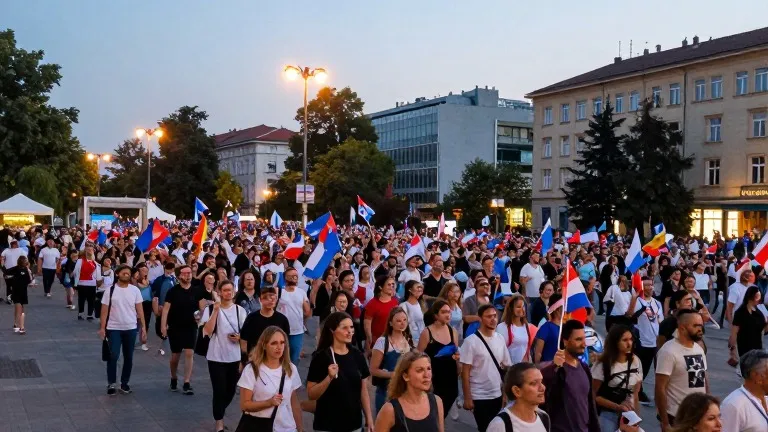
Polls indicate that the Student List, a political group formed by a student movement, could secure more than 40 percent of the vote in Serbia's parliamentary election. This projection marks the most competitive outcome for the Serbian Progressive Party (SNS) in the 14 years since it first took power. The election, held on Sunday, is widely described by analysts as the first with an uncertain result since Aleksandar Vucic came to power in 2012.
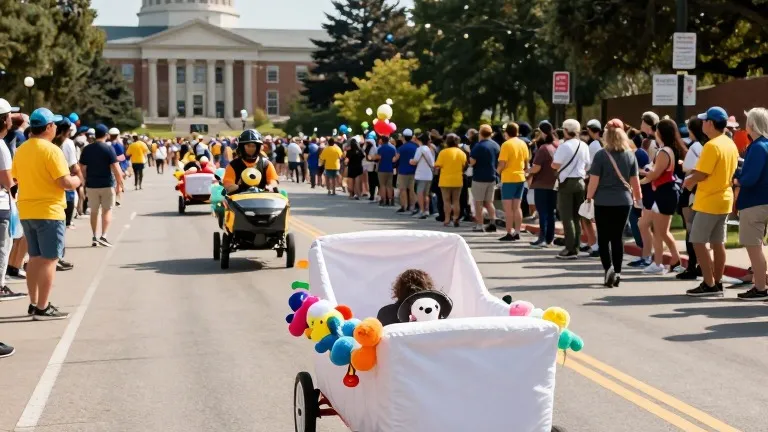
The campaign concluded on Thursday evening with thousands of supporters gathering in Belgrade for the Student List's final rally. Many attendees had traveled to the capital by walking from various regions across the country. Arsa Stojanovic, a biology student, addressed the crowd, stating that the walkers had crossed the nation, visited local communities, and found widespread support. Aleksandar Cupic, a transport engineering professor and candidate on the list, described the atmosphere as smelling like freedom. The event ended with a traditional circle dance.
The movement's political push follows a specific incident that galvanized public discontent. In November 2024, a concrete canopy collapsed at the Novi Sad railway station, killing 16 people. Students framed the disaster as a symbol of institutional failure and used it to demand accountability for corruption. The group aimed to transcend traditional ideological, social, and foreign policy divisions that have historically defined Serbian political competition.
Political scientist Dusan Spasojevic noted that the current election differs from previous contests under the SNS. He stated that the student movement has generated substantial support and hope among voters. While the Student List targets a 40 percent share, Spasojevic warned that polls point to a narrow margin between the leading factions. He suggested that a decisive victory for either side would be the optimal outcome, but a close result would likely trigger a post-election crisis.
The opposition faces a challenging campaign environment marked by reported irregularities. The independent monitoring group CRTA recorded 116 incidents of physical violence or verbal threats in the final week of the campaign. These incidents included physical confrontations, attacks on campaigners, and attempts to seize campaign banners. CRTA also reported that opposition activists, particularly those linked to the Student List, faced surveillance and police questioning. The group concluded that the campaign was neither free nor fair, citing a narrowing of freedoms and deepening inequality.
Media coverage has skewed heavily in favor of the ruling party. CRTA found that almost three-quarters of airtime on national television was allocated to government representatives. In contrast, more than 80 percent of coverage regarding the Student List was negative. The Balkan Investigative Reporting Network published testimony from a former SNS member describing pressure on public-sector employees to deliver votes for the party. Anonymous sources also reported that voters were offered between 30 and 150 euros, and in some cases holiday packages, to support the SNS.
Meanwhile, the SNS held its own closing rally a few kilometers from the student event. The party emphasized stability, continuity, and prosperity as the benefits of voting for the incumbent. Its message portrayed the election as a battle for Serbia's future and sovereignty, accusing opponents of serving foreign interests. Former President Vucic told supporters that opponents had tried to destroy the country on foreign orders and had attacked the party with billions of euros.
Tensions have risen in the days leading up to the vote. Authorities warned for weeks that students, allegedly aided by foreign intelligence services, were preparing for street violence. Several individuals have been arrested on suspicion of plotting disturbances for election night. The student movement has vowed to defend every vote cast. Spasojevic indicated that a narrow SNS victory would almost certainly be contested by the opposition.
International observers are watching the process closely. An EU Commission spokesperson stated that key recommendations for improving Serbia's electoral framework remain unimplemented. The spokesperson stressed that democracy and the rule of law are central to Serbia's accession process, as the country has been an EU candidate since 2012. The European Union's response could influence whether authorities accept the results and manage potential protests.
The election results will determine whether the Serbian Progressive Party maintains its grip on power or if the student-led bloc succeeds in reshaping the government. The outcome will also signal the direction of Serbia's political trajectory in the context of its ongoing efforts to join the European Union.
Source: Deutsche Welle