U.S. lifts oil sanctions and buys Russian diesel
A proposed three-way summit with China and Russia next month forces Canada to rethink its security strategy and alliance options.
By Alessia Desai ·
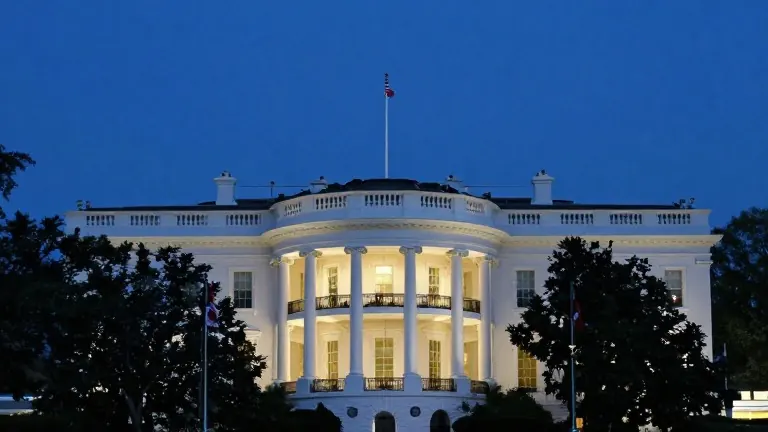
The United States lifted sanctions on Russian oil on Oct. 9 and announced a direct deal to purchase diesel from Moscow. This move occurred just days after U.S. Secretary of State Marco Rubio invited Russian President Vladimir Putin to the G20 summit in Miami in December. The actions mark a sharp shift in American policy toward Moscow, a development that has raised alarms in Ottawa.
The diplomatic pivot follows Prime Minister Mark Carney's recent trip to the European Parliament. Within six weeks of that visit, top European Union officials are scheduled to arrive in Montreal for a joint summit. The timing places Canada at the center of a widening gap between Washington and its traditional allies in Europe.
Vincent Rigby, a national security and intelligence adviser to the prime minister until 2021, described the U.S. move as a serious strategic concern. He stated that this is not a casual exchange between leaders but a fundamental change in posture. Rob Huebert, director of the Centre for Military, Security and Strategic Studies at the University of Calgary, argued that the U.S. is actively trying to cause Ukraine to lose the war through a series of tactical decisions.
These decisions include a one-sided energy ceasefire where Ukraine stopped hitting Russian refineries while Russia continued to strike Ukrainian electrical plants. The U.S. also slowed Starlink and Starshield services and cut off warnings of incoming ballistic missiles. Ukrainian President Volodymyr Zelenskyy said these actions make it harder for his country to access Patriot missiles.
Maria Popova, an expert on Russia at McGill University, noted that the second Trump administration has worked to make the U.S. a more neutral party in the conflict. She believes the trajectory is moving toward an open alliance with Putin. Popova warned that the end result would be the U.S. directly helping Russia's war effort.
A proposed summit between Trump, Putin, and Chinese President Xi Jinping is being prepared for next month. Kremlin foreign policy aide Yuri Ushakov confirmed on Sunday that preparations have begun for the meeting on the sidelines of the APEC summit in Shenzhen, China, scheduled for Nov. 18 and 19. Huebert said this aligns with a long-standing Russian pitch for superpower spheres of influence, where major powers agree to stay out of each other's backyards.
Popova called this potential arrangement a travesty, noting that the next meeting among the three leaders would likely determine the fate of Canada or Taiwan. Rigby said the closeness between Washington and Moscow raises immediate fears about Arctic sovereignty. He warned that in a worst-case scenario, the joint Canada-U.S. partnership known as NORAD could be dismantled.
Canada is responding by pursuing new alliances and rearming while keeping the temperature low with its northern neighbor. Rigby suggested that Canada must reach out to Europe to strengthen its sovereignty. He pointed to the need for deeper integration of defense-industrial bases, greater technology exchanges, and the creation of a payments system less vulnerable to U.S. interference.
Canada lacks the geographic advantage Ukraine holds, as it does not share land borders with four EU nations for easy resupply. In the event of real threats from the U.S., Canada would be mostly on its own. However, Rigby noted that Trump's hostility toward Canada is not shared by most Americans, including many Republicans who dislike the trade war.
Rigby expects the next 26 months to be tumultuous. He stated that Canadians should expect a president who is more reckless, less restrained, and more aggressive in the coming period.
Source: CBC News