Deutsche Bank leaks expose dealings with Trump, Epstein and Russian billionaires
A cache of more than 15 million leaked internal records has put Germany's biggest bank under renewed scrutiny over suspicious transactions linked to Donald Trump, Jeffrey Epstein and Kremlin-connected clients.
By Alessia Desai ·
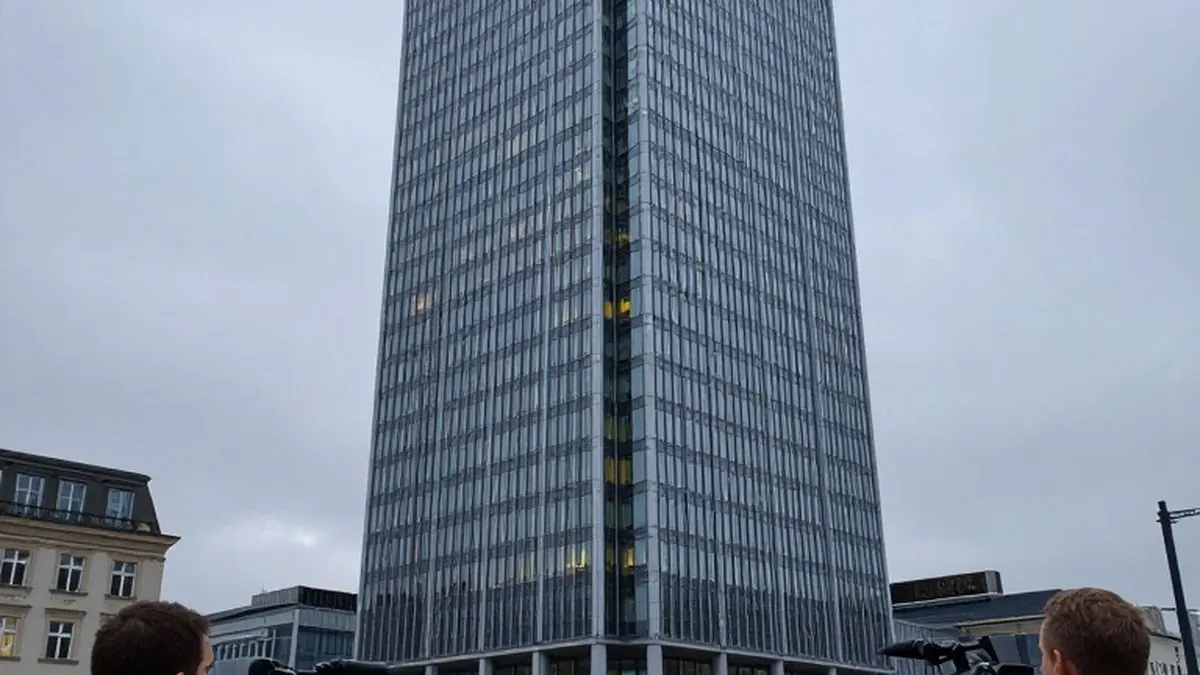
A leak of more than 15 million internal records from Deutsche Bank has shed new light on the German lender's dealings with United States President Donald Trump, the late sex offender Jeffrey Epstein and other powerful figures.
The Inside Deutsche Bank investigation, published on Tuesday by a consortium of international news outlets, has put Germany's biggest bank back in the spotlight after years of trying to rebuild its reputation following its failures to prevent money laundering.
Two whistleblowers, whose identities and links to the bank have been withheld for their protection, said they believed the institution was engaging in criminal activity and that releasing the documents was in the public interest, according to Le Monde, one of the participating outlets.
An Indian journalist and a South African journalist obtained the cache and shared it with more than 230 reporters from about 50 news organisations, including Der Spiegel, the Financial Times and The New York Times. The trove includes some nine million emails, meeting minutes, due diligence reports and financial crime reports dating to the early 2010s. The whistleblowers also passed the data to US prosecutors and financial crime authorities and could be eligible for a reward if Washington prosecutes the bank; Le Monde said they were not paid and set no conditions.
Deutsche Bank said the concerns raised "date back many years" and that it has since strengthened its controls, adding that it does not expect any meaningful financial impact. Its chairman reaffirmed the board's support for chief executive Christian Sewing, who has run the bank since 2018. "Deutsche Bank is a different bank today," the statement said.
The files identify more than $3m in transactions involving Trump-owned companies, including payments linked to suspected Russian and Azerbaijani money laundering networks. Deutsche Bank lent to Trump for years despite a string of bankruptcies and defaults at his businesses from the early 1990s, and by January 2021 it was his biggest creditor, with about $340m in loans outstanding. It cut ties with him that month, after the January 6 assault on the US Capitol by protesters seeking to stop the certification of Joe Biden's election victory, according to the New York Times.
The Financial Times reported that the bank inadvertently sent a Trump tax document to another client's accountant in 2017 and never told him. Asked about the disclosure on Tuesday during his visit to Manila for the ASEAN summit, Trump said: "They shouldn't have done it. It's illegal for them to do it." Deutsche Bank declined to comment on his remarks.
On Epstein, the files list about $582m in transactions flagged internally as suspicious, more than double the amount US Senate investigations had previously identified as overlooked or unreported. Epstein became a Deutsche Bank client in 2013, five years after pleading guilty in Florida to procuring a minor for prostitution, and remained one until 2018. He died in a New York jail in 2019 while awaiting trial on sex trafficking charges. Internal emails indicate senior executives approved him despite his conviction and kept his accounts open after warnings about Ghislaine Maxwell, his former girlfriend and associate, who was convicted in 2021 and is serving a 20-year sentence.
Payments linked to wealthy Epstein associates, including private equity billionaire Leon Black and financier Glenn Dubin, also appear in the files. A review commissioned by Black's firm previously found he paid Epstein $158m between 2012 and 2017 for tax and estate planning advice; Black has repeatedly denied wrongdoing or any knowledge of Epstein's abuse. The bank has already paid more than $200m over the relationship, including a $150m regulatory fine in 2020 and a $75m settlement in 2023 with women who alleged abuse.
The documents also detail Deutsche Bank's business in Russia until Moscow's full-scale invasion of Ukraine in February 2022, including undisclosed internal warnings about wealthy Kremlin-connected clients despite sanctions and money laundering concerns. Those named include Russian billionaires Roman Abramovich and Oleg Deripaska, both sanctioned by the United Kingdom in 2022, and Suleiman Kerimov, sanctioned by the US in 2014 and 2018. Transactions linked to Rifaat al-Assad, the uncle of former Syrian president Bashar al-Assad who died in January and was convicted in France in 2020 of acquiring property with funds diverted from the Syrian state, also appear, as do files on figures tied to the Sarkozy-Libya affair, in which former French president Nicolas Sarkozy was convicted in 2025 of criminal conspiracy over Libyan funding of his 2007 campaign.