Oregon sees fourfold rise in combined heat and smoke days
A new state report details how extreme weather events have increased and how existing programs are helping residents adapt to a warming climate.
By Meera Fletcher ·
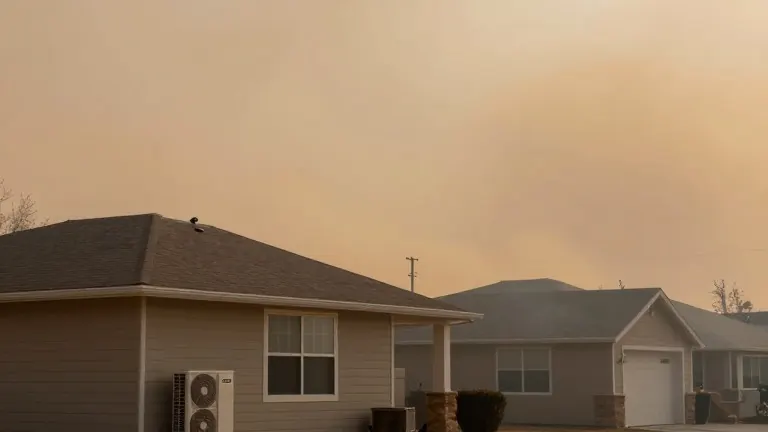
Oregon experienced nine days in the most recent five-year period where extreme heat and wildfire smoke occurred simultaneously, according to a report released this month by the Oregon Health Authority. That figure represents a fourfold increase compared to the two days per year recorded in the 2006 through 2010 period.
The report compares data in five-year intervals, starting with 2006 through 2010 and ending with 2021 through 2025. During the earlier period, the state averaged 12 days of extreme heat annually. By the 2021 through 2025 window, that number had doubled to 22 days per year. Wildfire smoke levels saw an even sharper rise, tripling from an average of 11 days per year to 33 days over the same timeframe.
Kelly Juarez moved from Reno, Nevada, to Linn County in 2024, seeking a cooler climate. During her move, temperatures reached 95 degrees, and her air conditioning unit failed. Her daughter, Sissy, who was 22 at the time and has a heart condition requiring indoor temperatures of 75 degrees or less, faced a health risk. The family stayed with friends until the heat subsided.
"I was feeling sick to my stomach," Juarez said. "Moving is tough enough, but when you add the stress of your AC going KAPUT at the end of summer, the pressure and stress can be overwhelming."
The Oregon Health Authority report identifies Southern, Central, and Eastern Oregon as the regions most impacted by extreme weather, with rural areas suffering the most. Gabriela Goldfarb, the environmental public health manager for the agency, noted that the trends are eye-opening. She explained that both heat and smoke affect multiple organs, including the heart and cerebrovascular system, not just the respiratory tract.
In 2025, the state recorded nine heat-related deaths, continuing a trend of higher mortality since 2021. The year was the third warmest on record since 1895. Unusual heat in June 2025 broke temperature records and contributed to a spike in heat-related illnesses. The state's average temperature has risen by approximately 2.4 degrees Fahrenheit since 1970.
Ben Brint, senior climate program director with the Oregon Environmental Council, described the impacts as being in full-on acceleration mode. He called for a coordinated effort involving state agencies, the nine federally recognized tribes in Oregon, local health authorities, and community organizations. "We all need to be working in lockstep to try to both adapt to, but ultimately mitigate these challenges," Brint said.
State programs are currently helping residents adapt. The Healthy Home Grant has awarded nearly $25 million in competitive grants to 34 organizations. Between 2024 and 2025, the program served 481 households across 25 counties. The Oregon Department of Energy also offers programs for heat pump installations, which have been popular enough to exhaust available funding in recent years.
Juarez installed a new heat pump in her home after learning about a program through the nonprofit Seeds for the Sol. The upgrade helped her family stay comfortable and reduced energy bills. However, she remains cautious about the shifting climate. "I may live in Oregon now, but I absolutely don't feel 'safe' from potential fire," she said. "Heat and fire threaten every community, here is the worst thought about it, it's becoming the new normal."
A statewide survey of 11th graders found that 71 percent of students experience stress about the future due to climate change. Nearly 40 percent reported that these feelings negatively affected their lives. Goldfarb noted that the data suggests the state cannot shield its youth from the reality of a changing climate. The report indicates that more funding is needed to sustain these adaptation programs.
Source: KOPB-FM