Scottish rappers fake American identity to sign record deal
Gavin Bain and Billy Boyd disguised themselves as Silibil N' Brains for four years before the truth emerged.
By Alessia Desai ·
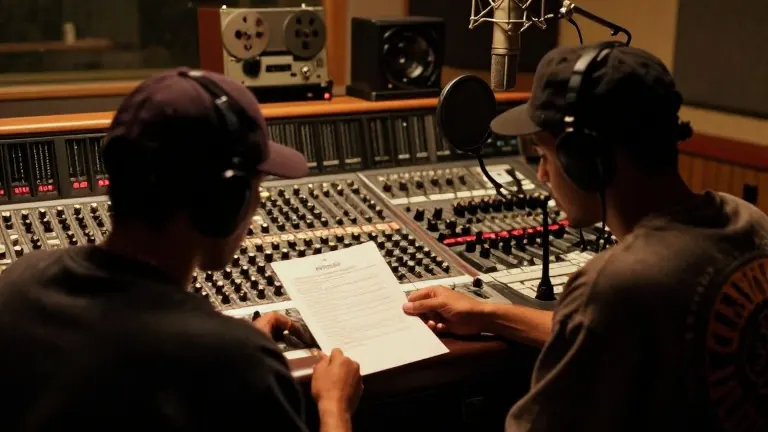
Gavin Bain and Billy Boyd, two men from Dundee, Scotland, successfully deceived the recording industry by pretending to be American hip-hop artists for four years. The pair, known professionally as Silibil N' Brains, told labels and fans they were from Huntington Beach, California, and claimed to have met at a rap battle in San Francisco. They adopted thick American accents and a nasally vocal style to mimic the Beastie Boys, a strategy that led Sony UK to sign them in 2001.
The fabrication originated from a failed audition at Polydor Records in London. Bain and Boyd performed in their native Scottish dialects and were dismissed as "the rapping Proclaimers." Determined to secure a deal in a market eager for the next Eminem, they reinvented themselves as brash, white emcees. At their peak, the duo opened for the rap group D12 at London's Brixton Academy. They maintained the illusion for executives, managers, and romantic partners, though the constant performance took a physical and mental toll.
Bain told NPR in 2010 that the pair eventually could not step out of character. "It was complete insanity," he said. The pressure contributed to increased drug use and drinking, leading to internal conflicts. In June 2005, a dispute caused Boyd to return to Scotland, ending the duo's active collaboration. Bain continued the American persona for another two years while attempting a solo career before revealing his true identity on stage in 2007.
The story has gained renewed attention with the U.S. release of a feature film directed by James McAvoy. The movie is based on Bain's 2010 memoir. Boyd has publicly disagreed with Bain's account of events, describing the history as layered with contradictions. In a recent interview with a British newspaper, Boyd stated, "I think Gavin is still chasing something, still looking for his identity in that. And that's great for him, it's a great marketing ploy."
The incident occurred in an era before extensive digital footprints made it easy to verify an artist's background. Critics note that the duo's success highlights how fabricated authenticity can appeal to industry executives. The pair's ability to sustain the lie for years depended on the lack of immediate online verification tools that characterize the current music landscape.
Bain and Boyd have continued to dispute the details of their partnership in the years since the breakup. Their conflicting narratives add complexity to the historical record of the Silibil N' Brains era. The upcoming film will present one version of these events to a new audience, keeping the debate over their legacy alive.
Source: KNKX Public Radio