Exiled Artist Returns to Tehran Amid Deepening Crisis
Parastou Forouhar reflects on the heavy atmosphere in Iran as she marks the anniversary of her parents' political murders.
By Tomas Rahman ·
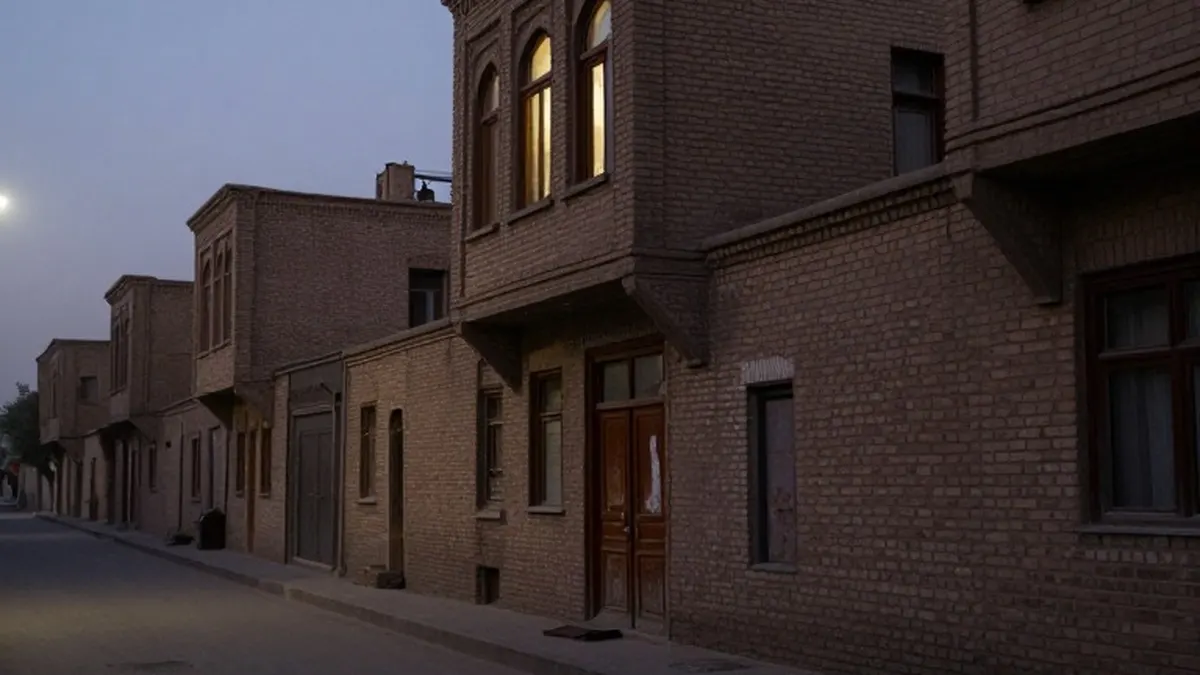
Parastou Forouhar, an Iranian artist currently living in Germany, returned to Tehran this week to mark the annual anniversary of the political murder of her parents. Speaking to RFE/RL’s Radio Farda on November 23, she described a pervasive sense of despair in the capital, noting that society appears to be crushed under the weight of war, sanctions, and economic hardship.
Forouhar highlighted the visible effects of the economic crisis, stating that poverty and the daily struggle to maintain a modest existence are apparent in every move people make. She characterized the environment as one where the pressure of current times is inescapable, creating a heavy atmosphere that hangs over the city.
The artist’s visit came one day after she held her annual gathering at her family home in Tehran. It was in this residence that her parents, Dariush Forouhar and Parvaneh Eskandari, were stabbed to death in 1998. The couple had led a small political party opposed to Iran’s clerical authorities, and their killings occurred during a significant wave of executions targeting dissidents and intellectuals.
Since the deaths, Forouhar has persisted in hosting this annual event despite facing intimidation and harassment from the authorities. She has previously noted that she continues the tradition despite fears of arrest or being barred from returning to Germany. This year’s visit follows the 12-day war between Iran and Israel last year and occurs amid an ongoing conflict with the United States that began with air strikes on February 28.
Forouhar expressed surprise at the high turnout for the anniversary ceremony, given the difficult conditions. She noted that attendees included people from various generations and backgrounds, including political and social activists. She specifically mentioned that young people have become the backbone of the ceremony, representing a broad spectrum of ideological views.
The authorities had warned Forouhar and others not to gather this year, citing a speech she gave last year calling for justice for political crimes. Forouhar is a long-time critic of the Islamic Republic, frequently exhibiting political art at galleries and exhibitions around the world. Her stance has made her a prominent figure in the diaspora’s advocacy for accountability.
Forouhar is also a vocal critic of the US and Israeli military strikes on Iran. While acknowledging that Tehran might use her position for political gain, she emphasized the importance of speaking out. She reported that the gathered crowd repeatedly emphasized principled positions against foreign aggression, rejecting the notion that such aggression serves as aid to the people's struggle for freedom.
US and Israeli officials have presented various objectives for the military action, focusing primarily on Iran’s nuclear program but also referencing regime change and support for the mass demonstrations in January. These protests, driven by acute economic stress, were met with brutal force, resulting in thousands of deaths, beatings, and arrests. Since then, Iran has tightened its grip on dissent, with human rights groups reporting a surge in executions of political prisoners.
Although military action has largely ceased, Washington has maintained pressure through a naval blockade that prevents Iranian oil exports. US Secretary of State Marco Rubio stated on November 10 that the blockade and sanctions are devastating the economy, arguing that the Iranian people deserve better than a third-world status. He attributed this trajectory to the country's leadership.
The economic fallout is severe, with war damage to energy facilities leading to a braced winter gas shortage. The collapse of the economy has forced rationing of subsidized bread in some areas, while fuel shortages have created long lines at gas stations and restrictions on electricity. Forouhar noted that the sanctions are having a corrosive effect on every cell of society, from access to medicine to daily life, describing the situation as bitter and heavy.