Unbriefed Announcement at 1989 Press Conference Opens Berlin Wall
A miscommunicated memo from East German leader Egon Krenz to spokesman Günter Schabowski led to the immediate opening of border crossings on November 9, 1989.
By Tomas Rahman ·
For 28 years, the Berlin Wall served as the primary physical barrier between communist Eastern Europe and capitalist Western Europe. On the evening of November 9, 1989, a procedural error during a government news conference effectively dismantled that divide.
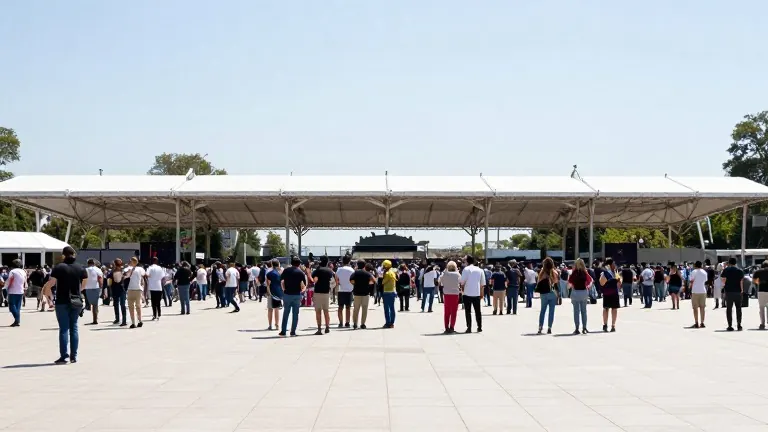
The daily press conference was scheduled to cover routine items, including party vote results and regional committee changes. Just before the session began, Egon Krenz, the leader of the East German communist party, handed a memo to spokesman Günter Schabowski. The document outlined a new policy allowing citizens to leave East Germany without proving a family emergency or urgent need. Applications were to begin the following morning.
Schabowski had not participated in the decision-making process or received prior briefing. Nevertheless, he read the memo aloud to reporters during the live broadcast. When asked about the start date, Schabowski paused and shrugged. He stated, “To my knowledge, this takes effect … immediately … without delay.”
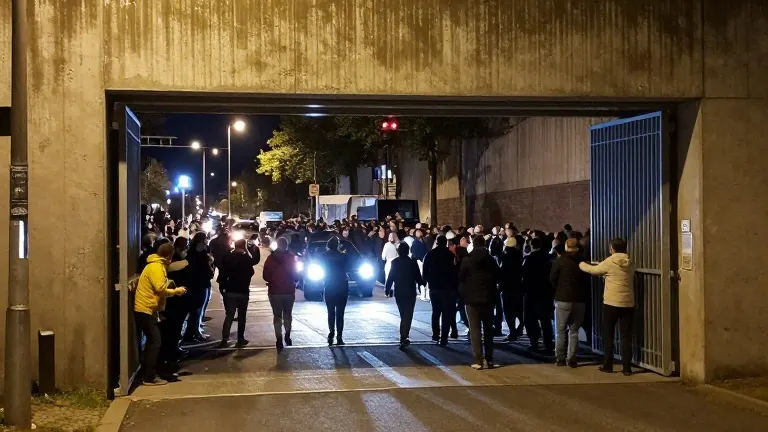
This impromptu declaration reached a tens of thousands of East Germans who had been demanding an open country. The immediate instruction to begin accepting applications triggered a surge of people toward the wall. At the Bornholmer Straße border crossing, Stasi Major Harald Jäger faced a critical decision while on his dinner break.
Jäger had been listening to the broadcast and reportedly nearly choked on his sandwich upon hearing the announcement. Standing orders for the nine border crossings still required guards to capture or eliminate trespassers. However, thousands of citizens were already pushing against the gates at Jäger’s post. Fearing a crush and refusing to order lethal force, Jäger directed his guards to process individuals for passage.
When the queue did not ease, Jäger opened the gate. Over the next hour, an estimated 20,000 people crossed from East to West without inspection. Other crossings followed suit, transforming standoffs into celebrations. West Berliners greeted their eastern neighbors with champagne and flowers. The festivities continued through the weekend.
The wall, built in 1961, had officially been named the Anti-Fascist Protection Rampart. Officials claimed it stopped Western spies and prevented West Berliners from buying goods at subsidized prices in East Berlin. Its practical function was to stop the flow of professionals and skilled workers westward. Soldiers in watchtowers fired on those who attempted to breach it. At least 140 people died in the process, including Ida Siekmann, a 58-year-old nurse, in August 1961, and Winfried Freudenberg, a 32-year-old electrical engineer, in March 1989.
Western leaders had long used the structure to symbolize Soviet repression. West Berlin Mayor Willy Brandt called it the Wall of Shame. President John F. Kennedy declared “I am a Berliner” in 1963. President Ronald Reagan addressed Soviet premier Mikhail Gorbachev at the Brandenburg Gate in 1987, demanding, “Mr. Gorbachev, tear down this wall.”
The collapse of the wall accelerated the end of communism in the region. Bulgaria, Czechoslovakia, and Romania followed East Germany in transitioning their governments. The Soviet Union dissolved in 1991. The physical barrier was removed, city streets were reconnected, and Germany reunified within the year, restoring Berlin as its capital.