Pope Leo XIV calls for worker protection amid Argentina's spending cuts
The pontiff visited a disability home and addressed labor leaders, citing economic hardship and the need for social support.
By Alessia Desai ·
Pope Leo XIV visited a care facility for people with disabilities in Buenos Aires on Monday before addressing a joint audience of business and labor leaders. The visit marked the final day of his trip to Argentina, a country that had not hosted a pope for nearly 40 years. His schedule highlighted the tension between the government's fiscal policies and the social needs of the population.
The pope began his day at the Cottolengo Don Orione, a facility south of the capital that houses more than 400 residents with disabilities. Staff and residents wept as he arrived and embraced individuals in wheelchairs. He told the group that a nation's progress is measured by how it welcomes those with special needs. The home has struggled with funding since the government withheld money mandated by law last year.
Authorities recently paid the facility approximately $535,000 for medicine, diapers, and food. This payment covers four of the 12 months of outstanding debt, according to Fernando Montero, who oversees disability services for the institution. The Senate is expected to review legislation in the coming days that would secure funding for disability benefits in the upcoming budget.
Later in the day, Leo spoke to union leaders, industrialists, and informal workers at the Catholic University of Argentina. He cited the 'three Ts' of social justice: land, housing, and work. He warned that depriving a person of work wounds their dignity and pushes them into social exclusion. The audience included waste pickers, known as cartoneros, who hold a special place in local Catholic social teaching.
Leo stated that private property is always subject to a social mortgage. He argued that when a small group dominates the economy, workers are valued only for their efficiency. He also addressed the rise of artificial intelligence, warning that unregulated automation could put many jobs at risk. He called on governments to protect workers, a stance that contrasts with the preferences of President Javier Milei, who is seeking billions in AI investment.
Milei praised the pope's speech as outstanding but declined to discuss its political implications in detail. He said he did not want to use the address for political gain. Opposition leader Axel Kicillof, governor of Buenos Aires province, urged those who had ignored the message to listen. Union leaders viewed the speech as validation of their strikes against the government's austerity measures.
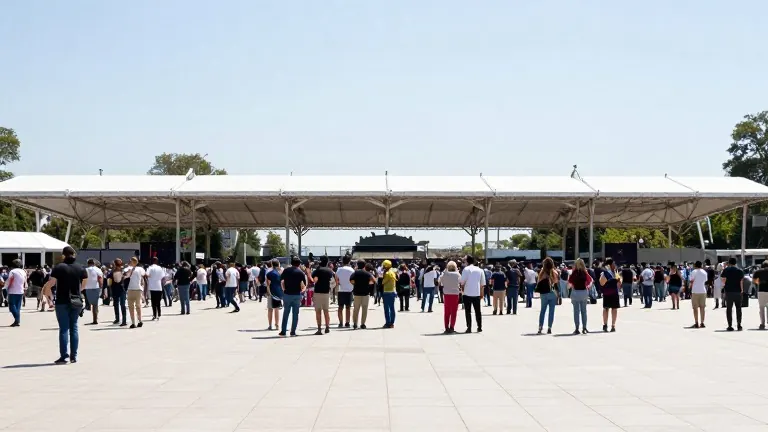
The pope concluded his public appearances with a Mass at the Monumento a los Españoles. The Vatican estimated that 2.5 million people attended, the largest crowd of Leo's papacy. The government declared a national holiday to allow citizens to attend. In his homily, Leo told Argentine families not to give in to those who call the Christian family outdated. He described the family as a pillar of stability amid current insecurities.