Afghan Farmers Lease 9,000 Hectares of Pakistani Land for Opium
Satellite data reveals a surge in poppy cultivation in Balochistan as growers bypass the Taliban's ban, shifting production to border regions in Pakistan and Iran.
By Tomas Rahman ·
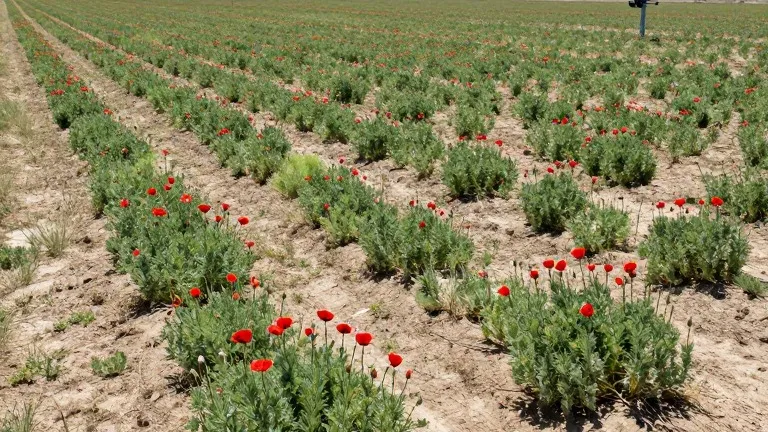
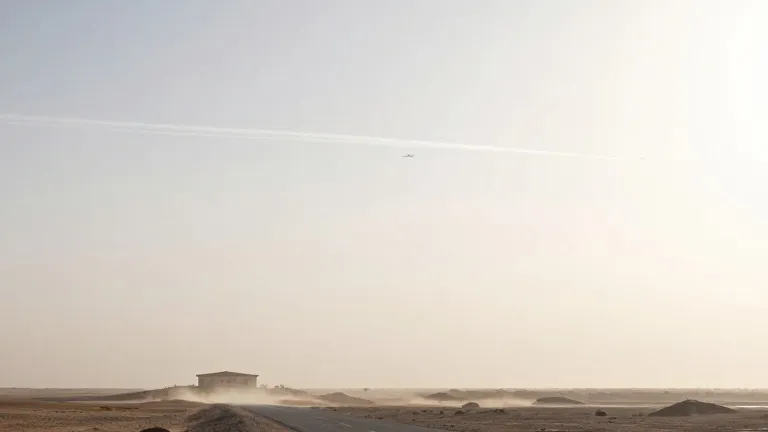
Afghanistan has been the world's primary source of opium for decades, but the Taliban's 2022 ban on illicit narcotics has forced a geographic shift in production. Satellite imagery and farmer interviews now indicate that cultivation is expanding rapidly across the borders into Pakistan and Iran. This movement has created a new hub for opium production in the tri-border region, according to recent analysis.
David Mansfield, a UK-based expert on Afghanistan's drug industry and author of A State Built On Sand, stated that the Taliban ban combined with instability in the area has driven this expansion. He described the remote borderlands as becoming a global center for opium production. Mansfield warned that cultivation could climb further in 2027, which would likely increase heroin supplies on international markets and generate income for armed groups.
The Pakistani province of Balochistan is at the center of this shift. It is the country's largest and poorest province, with a long history of insurgency by ethnic Baluch separatists. The Interior Ministry and provincial government in Pakistan denied reports of widespread cultivation, claiming that any crops found were destroyed. However, the United Nations Office on Drugs and Crime noted that sharp rises in eradication figures suggest spillover effects, even as it characterized production in Pakistan as marginal.
Alcis, a British satellite firm, identified more than 9,000 hectares of poppy cultivation in Balochistan alone in 2026. Most of this land is located in the districts of Loralai and Killa Abdullah. Abdul Qahar Wadan, a former National Assembly member from Killa Abdullah, said the growth is backed by senior military officials and power brokers who take commissions. Monawar Hussain, the district's chief administrative officer, rejected this claim, citing a decline in cultivation after an eradication campaign last year, but Alcis data showed no clear evidence of that reduction.
Local farmers cited economic pressure as a primary driver of the change. Lala Jan Kakar, a resident of Killa Abdullah, explained that insecurity, drought, and flash floods have devastated traditional fruit farming. He noted that the demand and income from poppies are much higher than from fruits. An anonymous farmer in the same district said growers pay bribes to local authorities through intermediaries. He alleged that officials sometimes allow poppies to be planted on barren land so they can be destroyed later for public display.
The expansion is largely driven by Afghan farmers from Kandahar and Helmand crossing the border to lease land. These growers bring capital and expertise, investing millions of Pakistani rupees in solar-powered wells and sharing profits with local landowners. Poppies can be harvested twice a year, and many farmers doubled their cultivated area in 2026. Mansfield called this a stark indication that higher cultivation levels should be expected in 2027.
A similar pattern is occurring in Iran's Sistan-Baluchistan province, where Afghan farmers work as tenants using family ties. Satellite imagery from 2026 shows extensive fields there, some using costly drip irrigation. This investment suggests growers who planted in late 2025 expected little risk of eradication. Mansfield noted a shift from mixed farming to large-scale poppy monoculture in these border regions. Iranian authorities, preoccupied with the war against the United States and Israel since late February, have been unable or unwilling to destroy the 2026 crop, and experts expect cultivation to rise further in 2027.
Source: RFE/RL