Gaza Death Toll and Netanyahu's 19-Year Rule Define Split Israeli Knesset Vote
With polls showing a near-even split among voters, the 120-seat election hinges on whether opposition leaders can secure a majority without relying on Arab parties.
By Meera Fletcher ·
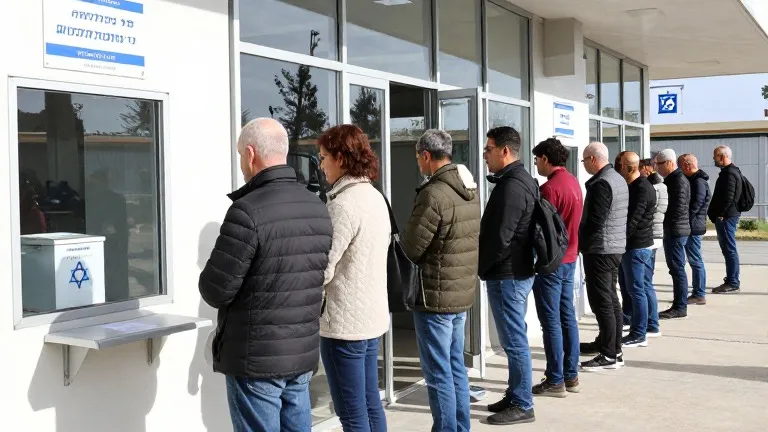
Israeli voters cast ballots on Tuesday in a contest defined less by ideological divides and more by a referendum on the tenure of Prime Minister Benjamin Netanyahu. After 30 years in public service, Netanyahu has held the premiership for 19 of those years. Current polling data indicates a tight race between a pro-Netanyahu bloc and a coalition of anti-Netanyahu parties, with neither side holding a clear advantage.
The Gaza war has become the central metric for evaluating the prime minister's performance. More than 70,000 Palestinians have died in the conflict, a figure that anchors the debate. Israel maintains that one-third of those casualties were Hamas combatants, yet the militant group remains intact despite the military campaign. The failure to eliminate Hamas, combined with the persistence of Iran's nuclear threat, has eroded Netanyahu's international standing and domestic support base.
The leading opposition candidate, Gadi Eisenkot, positions himself as a contrast to Netanyahu's political style. A former chief of staff of the Israel Defense Forces and the son of working-class Moroccan Jews, Eisenkot entered politics only four years ago. His party, Yashar, advocates for term limits to prevent the concentration of power. At a recent rally in Modi'in, attendees emphasized his pragmatic approach over rhetorical flair.
The opposition coalition includes former Prime Minister Naftali Bennett and Avigdor Lieberman, both of whom previously allied with Netanyahu before parting ways. On the far right, Yishai Fleisher of the Otzma Yehudit party argues that Netanyahu has drifted leftward. Fleisher proposes expanding settlements in the West Bank and Gaza, establishing a ministry to manage Palestinian departure, and implementing the death penalty.
Netanyahu has framed the election as a binary choice between the right and Palestine. His campaign posters juxtapose opposition leaders with the heads of two parties representing Palestinian citizens of Israel, who constitute approximately one-fifth of the population. This strategy aims to force anti-Netanyahu Jewish parties to choose between governing with Arab parties or remaining in opposition. Pro-Netanyahu media outlets, including Channel 14, have amplified this narrative to keep the opposition on the defensive.
The close nature of the race creates uncertainty regarding post-election coalition building. Many observers question how the opposition bloc will form a stable government if it falls short of a majority. Polls suggest the anti-Netanyahu parties may outpoll Netanyahu's bloc but will not secure 61 of the 120 Knesset seats on their own. This gap forces a calculation about whether to rely on mainly Arab parties for a governing majority.
Energy from the diaspora may tip the balance in a closely contested result. Many liberal and secular Israeli expatriates are traveling home to vote, a demographic that standard polling methods do not fully capture. These voters could determine the outcome if the final seat count is narrow. The election result will determine whether Netanyahu continues his tenure or faces a transition in leadership after nearly two decades in office.
Source: The Guardian