EU Plans Direct Greenland Internet Cable With Potential Route to Asia
The proposed Pan-Arctic Cable would establish the first direct subsea Internet connection between Europe and Greenland, with possible extensions through Canada toward Asia that bypass the United States.
By Alessia Desai ·
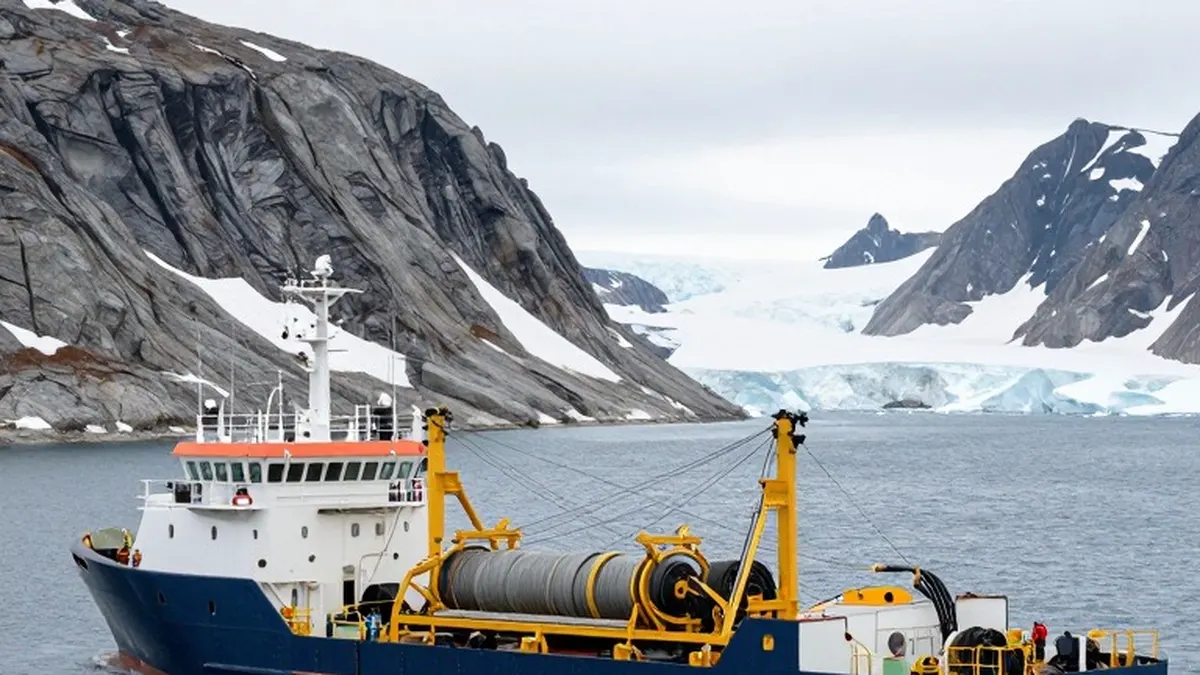
The European Union is planning its first direct undersea Internet cable connection to Greenland, a project that could eventually form part of a route linking Europe with Asia without passing through the United States. Known as the Pan-Arctic Cable, the proposed connection could extend to Canada and later reach Japan and South Korea.
The European Commission identified the cable as an EU flagship project in a joint communication published on October 20, 2026. The document sets out a new European strategy for the Arctic and backs a direct connection between Greenland and the EU built around sovereignty, security and resilience. It also identifies Canada as a potential partner that could serve as an intermediate point for further expansion toward Asia.
Elisabeth Braw, a senior fellow at the Atlantic Council who leads its Threats to the Global Maritime Order Initiative, told Ars Technica that the proposal reflected changing circumstances. A project of this kind would have appeared commercially unappealing five years earlier, she said. Its consideration now was “very much on trend and a sign of our times,” according to Braw.
Official support for the project follows a September 2026 security agreement involving the United States, Greenland and Denmark. That agreement settled repeated attempts by the Trump administration to claim Greenland. Under its terms, Greenland retains its status as an autonomous territory within the Kingdom of Denmark, while the United States gains expanded military access.
Despite that settlement, relations between Washington and its allies in Europe and Canada have become increasingly strained. President Trump has launched trade wars with multiple countries and adopted an increasingly pro-Russia position on the war in Ukraine. The cable proposal comes against that wider backdrop of deteriorating ties.
Europe’s interest in alternative Internet routes to Asia also reflects concerns about existing infrastructure in the Red Sea. More than 90 percent of communications between Europe and Asia pass through subsea cables in that region, according to TeleGeography, making it a major corridor for connections between the two continents.
Maintaining those cables has become more dangerous since open warfare between the Yemeni government and the Houthi faction resumed in 2026. Houthi forces have launched missiles and drones at commercial vessels in the Bab el-Mandeb Strait, a maritime chokepoint, and elsewhere in the Red Sea. Those conditions accompany Europe’s efforts to explore new cable routes toward Asia.
Source: Ars Technica
More News · National news · Report a business · Got a Story?