Brazilian Election: Lula Secures Fourth Term After Chaotic Vote Extension
Lula wins 51.8 percent of the vote in a runoff delayed by a Supreme Court ruling, keeping the region's largest economy independent from Washington.
By Meera Fletcher ·
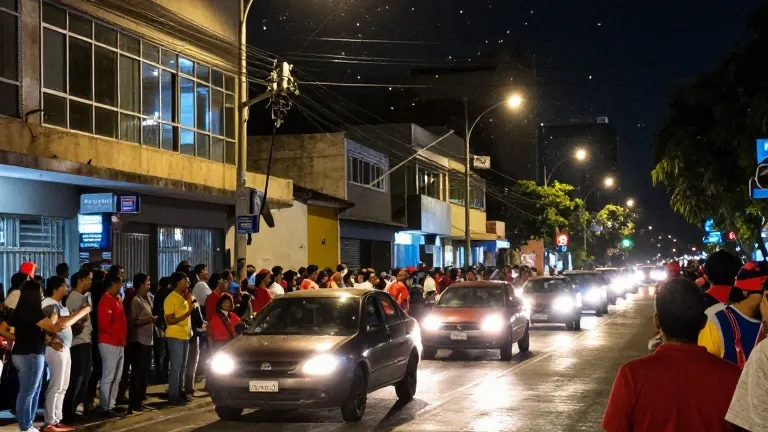
Brazilian President Luiz Inácio Lula da Silva won re-election on Sunday with 51.8 percent of the vote, a margin of nearly 4.4 million votes over challenger Flávio Bolsonaro. The electoral court confirmed the result after a two-hour extension of voting hours that disrupted counting across the country. Lula, who turns 81 on Tuesday, will serve a non-consecutive fourth term beginning January 5, 2027.
The path to this result involved a narrow loss in the first round earlier this month, where Bolsonaro led Lula by more than 2.2 million votes. In the runoff, Lula reorganized his campaign to target young voters and emphasized democratic values. He also launched government initiatives to address cost-of-living concerns that had hurt his standing. This victory marks the first time since the end of the military dictatorship in 1985 that the second-place finisher from the first round won the presidency.
Chaos defined the final hours of voting on Sunday. Justice Cristiano Zanin of the Supreme Court ruled three minutes before the scheduled closing time to keep polls open for two additional hours. The extension followed requests from both candidates. Lula cited transportation issues in São Paulo and Salvador, while Bolsonaro pointed to heavy rains in the south where he holds support. The decision delayed the tallying process and left many voters and volunteers uncertain about their status.
In Brasilia, volunteers at a school debated whether to remain after the announcement, with most leaving 15 to 20 minutes after polls closed. In Rio de Janeiro, voting machines had already been shut down and could not be restarted. It remains unclear how many polling stations stayed open past the original deadline. Bolsonaro’s ally Nikolas Ferreira noted that Zanin, who made the ruling, was formerly Lula’s lawyer.
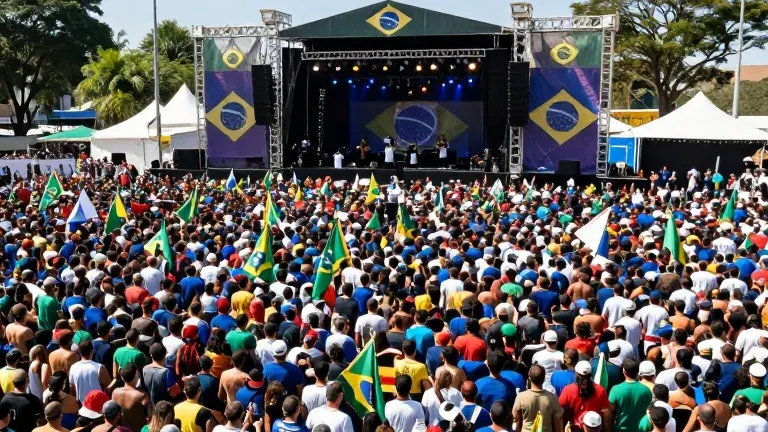
Bolsonaro stated that he wants the election annulled due to the extension. Lula addressed supporters in São Paulo, expressing gratitude and pledging to respect all Brazilians regardless of gender or religion. He criticized his opponent, saying, "This was a defeat for denialism and lies. I must confess that every time I attended a debate, I felt embarrassed." Lula also emphasized national sovereignty, declaring, "Either the homeland remains free or we die for Brazil. This country will not accept being anyone's backyard."
The result maintains a distinct political position for Latin America's largest economy. With a GDP of $2.6 trillion, Brazil remains independent of the United States despite increased tariffs imposed by President Trump. This outcome bucks a regional trend of right-of-center candidates allied with Washington winning power. Mexico and Brazil, the region's two most populous nations, now have left-of-center leaders. Lula joins Trump and Nicaragua's Daniel Ortega as the oldest presidents in the Americas, all aged 80.
Lula’s political career spans five decades, beginning in the 1970s as a union leader. He founded the Workers' Party and first won the presidency in 2002. After serving two terms, he was succeeded by Dilma Rousseff in 2010. Following Rousseff's impeachment in 2016, Lula was convicted of corruption in 2018 and jailed for 580 days. The Supreme Court later annulled his sentence after evidence emerged showing bias against him by the convicting judge. He narrowly defeated former President Jair Bolsonaro in 2022 to return to office.
Source: CBC News