NOAA loses 3,000 staff as historic El Niño threatens US winter
Former officials warn that sweeping cuts to the climate agency have left the country underprepared for extreme weather events.
By Alessia Desai ·
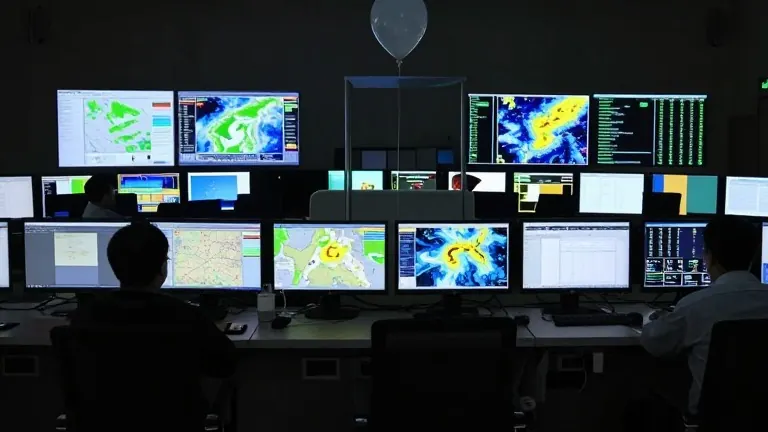
The National Oceanic and Atmospheric Administration faces its most severe stress test in a decade just as a powerful El Niño system builds in the Pacific. Former government officials and scientists warn that drastic reductions in NOAA’s workforce and research capacity have left the United States vulnerable to a cascade of winter hazards.
Since President Trump took office in January 2025, NOAA has shed roughly 20% of its personnel. Workforce data from the US Office of Personnel Management, last updated in August, shows the agency lost more than 3,000 employees. This decline represents the largest staffing drop in the past ten years. The cuts include hundreds of layoffs, voluntary departures, and incentivized retirements as the administration moved to shrink the federal government.
The National Weather Service, a key division within NOAA, has felt the strain directly. Hundreds of technical and meteorological positions remain vacant across 122 forecast offices. Weather stations have delayed data collection and reduced operating hours. Staffers in some locations worked double shifts to keep forecasting offices open, according to reports from the Washington Post. The agency analyzes 6.3 billion observations daily and issues up to 50,000 warnings per year, but it is doing so with a 2,500-person deficit after hiring only 525 new staff since January.
Tom Di Liberto, a former NOAA climate scientist and current media director at Climate Central, stated that the system has not been properly tested since the cuts occurred. He noted that the current El Niño event, characterized by warmer equatorial sea surface temperatures, is expected to strengthen through the autumn and winter. This phenomenon can fuel extreme weather globally. In the US, it may drive temperature spikes, intensify storms in the West, and raise sea levels in California by up to one foot.
Specific operational gaps have already emerged. The government accountability office found that staffing and funding cuts prevented the NWS from adequately providing multilingual weather alerts, placing 26 million people at higher risk. Other issues include delayed weather balloon launches that left parts of the Great Plains underprepared for tornadoes and limited flood warnings in Alaska, where more than 1,500 people were displaced earlier this year.
Research funding has also contracted sharply. The administration terminated dozens of grants, resulting in over $28 million in lost funding for states, cities, non-profits, and universities. Grant Witness, which tracks federal science grants, reported that climate research was most affected. Grant awards in fiscal year 2026 are 37% lower than the 2021 to 2024 average. The Trump administration has proposed cutting $1.6 billion from NOAA’s budget for next year, a 26% reduction.
Monica Medina, who served as principal deputy administrator of NOAA during the Obama administration, expressed concern about the nation’s ability to respond to coast-to-coast extremes. She described the current situation as a test of a hotter future that the country is likely to fail. Rick Spinrad, who served as NOAA administrator under President Biden, identified staffing, operations, and public engagement as the top three areas of concern. He noted that the agency was already short-staffed before the current administration took over.
The reduction in capacity has also limited the agency’s ability to gather critical data during the El Niño event. A decade ago, NOAA deployed planes, weather balloons, unmanned aircraft, and a research ship to collect information. This year, NPR reported that only a handful of unmanned watercraft will be deployed into the Pacific. Funding for a decade-long project using autonomous robotic devices called Biogeochemical-Argo floats will expire at the end of October. The administration has also shaved roughly $6 billion off investments in weather satellites, which could create gaps in satellite coverage.
Dr. Anna Zivian, a climate researcher and policy expert, described the agency as hollowed out, with staff having no time for tasks beyond the basics. She suggested that the worst outcomes from the loss of capacity have not yet appeared. Di Liberto added that employees are nervous about speaking out if their statements conflict with the administration’s anti-climate narrative. He compared the situation to being told the number six does not exist and then being asked to do math.
Requests for comment sent to NOAA and its parent agency, the Department of Commerce, were not returned before publication. The agency operates early warning systems for tsunamis, monitors seafood supply chains, and provides ocean data for shipping. Scientists worldwide rely on NOAA satellites and data-sharing arrangements for tracking severe weather in Europe, coordinating disaster response in the Caribbean, and monitoring deforestation in the Amazon.
Source: The Guardian