Toledo Rail Collision: 69 Dead as High-Speed Network Faces Scrutiny
A communications failure and human judgment errors led to a deadly crash, while unions blame understaffing and outdated safety systems.
By Alessia Desai ·
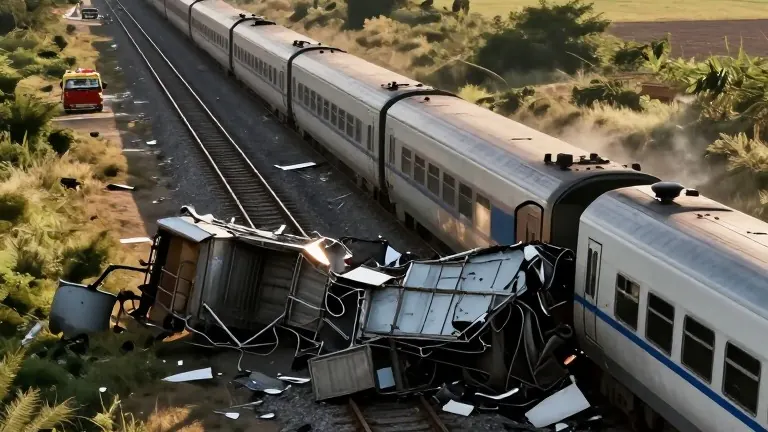
Spain’s high-speed rail network, long celebrated as a global model of industrial success, suffered its second fatal accident this year when two trains collided in Toledo province on Wednesday.
The crash killed 69 people, according to authorities. It occurred on the Madrid-Sevilla line, a route that has operated without a fatal incident since the network opened more than three decades ago. This marks the second major disaster on this corridor in 2026, following a January derailment that claimed 46 lives.
Transport Minister Oscar Puente quickly assigned primary blame to a human error made by a traffic controller. He described the decision to allow one train to resume full speed while another remained stopped as "inexplicable" and "erroneous." Puente stated at a press conference that the controller acted while a red signal remained active for the line.
The timeline provided by the government indicates the sequence began at 8:30 a.m. on Wednesday. The LZB communication system, which monitors train positions and can trigger automatic braking, failed. This forced human controllers in Madrid to manage all safety protocols for a 63-kilometer stretch of track. Authorities believe six trains were on that section at the time.
At 8:36 a.m., a controller instructed a state-owned RENFE train to return to normal speed. A private operator, IRYO, had a train 25 kilometers ahead on the same track. The IRYO driver attempted to move but could not cancel an automatic stop. The collision occurred at 8:53 a.m., derailling carriages and destroying parts of both trains. Investigators estimate the RENFE train was traveling between 160 and 200 kilometers per hour at impact.
Railway unions rejected the minister’s focus on individual error. They argued that systemic failures and deteriorating working conditions created a perfect storm for disaster. Raquel Ayllon, a spokesperson for the SCF railway traffic controllers union, told the Associated Press that blaming a single worker ignores the rising workload and aging infrastructure. "The human error is not incomprehensible. What is incomprehensible is that the safety system fails regularly," Ayllon said.
Diego Martin, a spokesperson for the SEMAF train drivers union, noted that the 30-year-old LZB system has failed repeatedly in the past. The union argued the system should have been replaced long ago. "It failed yesterday and it has fallen out of service on repeated occasions in the past," Martin said.
A judge and a special government commission are conducting independent investigations. Police with search dogs examined the wreckage on Friday morning. Investigators from the special committee removed the trains' black boxes late Thursday and handed them to the Civil Guard for inspection. King Felipe VI visited injured passengers in a Toledo hospital on Thursday and urged a thorough review of safety measures to prevent future tragedies.
The accident has intensified debate over the privatization of Spain’s rail network. The country opened its high-speed lines to private operators in 2021. Both this year’s accidents involved a RENFE train and an IRYO train. According to the SCF union, daily trips between Madrid and Barcelona rose from an average of 56 in 2019 to 89 in 2024. Joan Rodriguez, a union spokesperson, said this increased traffic has placed additional pressure on the railway infrastructure.
Railway workers joined a strike called on Thursday to demand the government meet its commitments to improve safety conditions following the January accident. Union representatives also criticized what they called the irresponsible leak of audio fragments from the control room and train drivers in the minutes before the crash.
Source: KVDA