Judge to decide if Trump arch construction halts
A federal judge will hear arguments on Friday regarding a preliminary injunction to stop a 250-foot structure planned between Arlington National Cemetery and the Lincoln Memorial.
By Alessia Desai ·
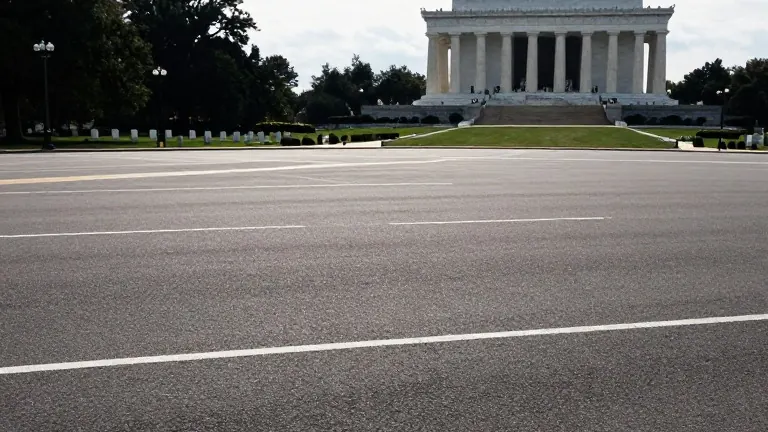
U.S. District Judge Tanya Chutkan will hear arguments on Friday in Washington, D.C., over whether to pause construction of a 250-foot arch proposed by President Trump. The structure is planned for a currently empty traffic circle between Arlington National Cemetery and the Lincoln Memorial. The outcome of this hearing will determine if work can proceed before a final ruling is issued.
Court filings indicate that construction could begin as soon as Nov. 5. This timeline depends on the National Capital Planning Commission issuing final approval on that same day. The plaintiffs argue this rapid schedule leaves little time for judicial review. They fear the administration will start work to create a fait accompli before the court decides the case.
A group of Vietnam War veterans sued earlier this year to stop the project. Their attorneys claim the process was rushed and lacks proper congressional approval. In court papers filed ahead of the hearing, they stated that the public interest leans heavily against allowing the defendants to proceed. They asked Chutkan to block the project quickly to prevent the administration from taking irreversible steps.
Shaun Byrnes, one of the plaintiffs, told CBS News earlier this year that his opposition is a duty to colleagues who died in Vietnam. He described the arch as disrespectful to the soldiers who did not return home and to those buried in Arlington. Byrnes said he feels a responsibility to stand up against the project regardless of who is in charge.
The plaintiffs also argue the arch would disrupt a symbolic connection between the Lincoln Memorial and the Robert E. Lee Memorial. They describe this sightline as a carefully considered design meant to convey unity after the Civil War. The group contends that building the structure would break this historical visual alignment.
President Trump said in a Truth Social post in September that the arch would help create a top grade military complex. He noted the structure would be equipped with snipers and drones. The administration has emphasized the defensive utility of the project in its legal arguments.
The Justice Department called the plaintiffs' motions breathless and urged Chutkan to follow recent precedent. Government attorneys argued the challenge should be dismissed because the plaintiffs lack proper legal standing. They cited a Supreme Court decision regarding the White House ballroom to support their position on injury.
According to the Justice Department, the first six months of construction will focus on below-ground and foundation work. The department argued this phase would not interfere with the plaintiffs' claims of irreparable harm related to the sightline between the memorials. They stated that aesthetic and emotional displeasure does not establish a concrete injury under controlling law.
Two sworn declarations were submitted by top Cabinet officials to support the administration's position. Secretary of Homeland Security Markwayne Mullin and Secretary of Defense Pete Hegseth stated the arch would allow military and Secret Service units to defend the capital against drone attacks. Hegseth described the project as a generational national defense opportunity to stop future threats.
Arlington County, which borders the site, filed a separate suit in federal court in Virginia. The county argues the arch would require changes to flight paths at Ronald Reagan International Airport. They asked a judge in Virginia to order an environmental review. The administration responded that the structure would not pose a hazard to flights despite these concerns.
Source: CBS News