Trump's $5,000 Dividend: A Costly Promise Now Up for Scrutiny
With Democrats controlling Congress, the 'Trump Dividend' faces new hurdles, but the promise remains a key part of the administration's narrative on economic success.
By Alessia Desai ·
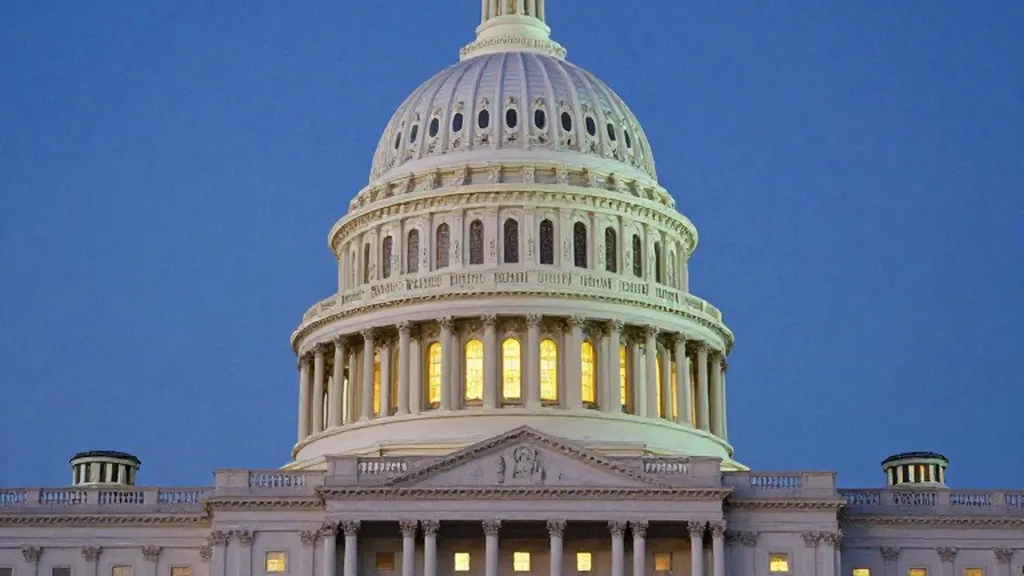
President Donald Trump's pledge to send $5,000 to every American adult if Republicans retained control of Congress was a central theme of the recent midterm campaign, but the election results have left the promise in a state of flux. The plan, which could cost more than $1 trillion, was introduced at the Republican Midterm Convention in Dallas, where Trump argued that the country's economic success justified the payout. While the administration framed the dividend as a reward for voters, the shift in power to Democrats in both chambers of Congress has changed the landscape for its implementation.
During his speech in Dallas, Trump declared that if the Republicans won the House of Representatives and the United States Senate, he would issue a dividend to every adult citizen for $5,000. He described this as the 'Trump dividend,' comparing it to successful companies distributing cash to shareholders. The president cited the administration's decision to give military members checks for $1,776 in December as a precedent, suggesting that the broader payout was a logical next step for a government he characterized as highly profitable.
However, the mechanics of the proposal have drawn significant skepticism from fiscal experts and bipartisan lawmakers. PolitiFact found that the biggest payment is far from certain, noting that the White House has announced no formal plan for how the checks would be distributed. The publication highlighted that while Trump cited tariff revenues as a potential funding source, lawmakers did not include a separate tariff dividend in the One Big Beautiful Bill Act tax and spending law. This lack of a clear legal path has led to questions about whether the administration has the authority to spend such a large sum without explicit congressional authorization.
House Speaker Mike Johnson, who has since lost his majority, stated on Sunday that the proposal needs congressional approval. Johnson told reporters that he assumed the president would need Congress to act on the idea, calling it a 'creative' proposal. Despite the election outcome, Johnson pledged to try to make it happen, saying, 'He's the big ideas president. We're going to try to implement everything we can.' This statement underscores the tension between the executive branch's desire to deliver on campaign promises and the legislative branch's constitutional role in appropriating funds.
The potential cost of the dividend is staggering, with the U.S. Census Bureau estimating there are about 245 million U.S. citizen adults. Giving each of them a $5,000 check would cost approximately $1.2 trillion. This figure puts further strain on the country's nearly $1.8 trillion annual budget deficit. Kenneth Rogoff, a former chief economist at the International Monetary Fund and a Harvard University economics professor, warned that such spending would blow up the deficit further and increase the odds of a debt crisis in the next five years.
Vice President JD Vance offered a different perspective, telling Fox News that some of the money would come from tariff revenue. He specified that the payments were intended for the 'American middle class' and 'American workers,' which could imply that the check might not go to every adult citizen as initially stated. This nuance is important because the number of eligible recipients would determine the total cost. If the check is limited to certain tax brackets or excludes high-income earners, the total expense could be lower, though still substantial.
Despite the challenges, Trump has remained steadfast in his commitment to the payout. He told reporters before boarding Air Force One in Ireland that 'The 5,000's going to happen, 100%.' The president argued that the United States is taking in so much money from tariffs that it can easily handle the payments. This confidence stands in contrast to the concerns raised by the Tax Foundation, which estimated that the new tariffs are projected to bring in revenue over a decade that would be almost entirely consumed by the cost of the checks.
Democratic leaders have seized on the promise as a way to highlight what they see as the administration's reliance on one-time payments rather than structural economic improvements. With control of Congress, Democrats are expected to use their oversight powers to scrutinize the administration's financial decisions, including the funding sources for the dividend. The promise has also been compared to previous payouts, such as the $2,000 tariff dividends Trump proposed last November, which never went out, and the 'DOGE dividend' endorsed by Elon Musk, which also failed to materialize.
The legal framework for the dividend is another point of contention. Election law professor Rick Hasen of UCLA noted that while the president would likely have a strong First Amendment defense if a state tried to prosecute him for making the promise, the actual execution of the plan requires congressional action. Hasen compared the promise to other campaign pledges, such as tax cuts or social program funding, which are common in political rhetoric but require legislative backing to become law.
As the new Congress convenes, the 'Trump Dividend' will be a central issue in the budget negotiations. Democrats, who cite cost of living and inflation as top concerns for voters, will likely question how a $1.2 trillion payout aligns with fiscal responsibility. The administration, meanwhile, will argue that the dividend is a fair share of the economic gains generated by its policies. The outcome of these debates will determine whether the 'Trump Dividend' becomes a reality or joins the list of unfulfilled campaign promises.
In the end, the promise serves as a snapshot of the administration's approach to economic policy, one that emphasizes immediate financial relief for voters over long-term budget balancing. Whether the dividend is implemented in full, modified, or dropped will depend on the balance of power in Congress and the administration's ability to navigate the complex legal and fiscal landscape.