57 Million Early Votes Cast as Both Parties Bet Heavily on Ground Game
With polls open, party chairs say everything hinges on turnout, while voters in battleground states weigh the cost of living against the administration's war with Iran.
By Tomas Rahman ·
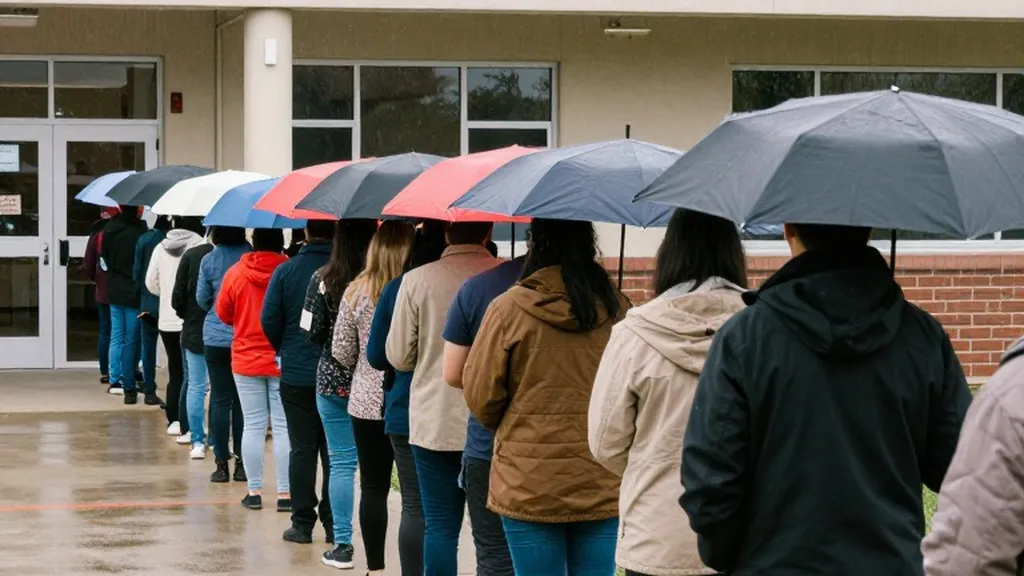
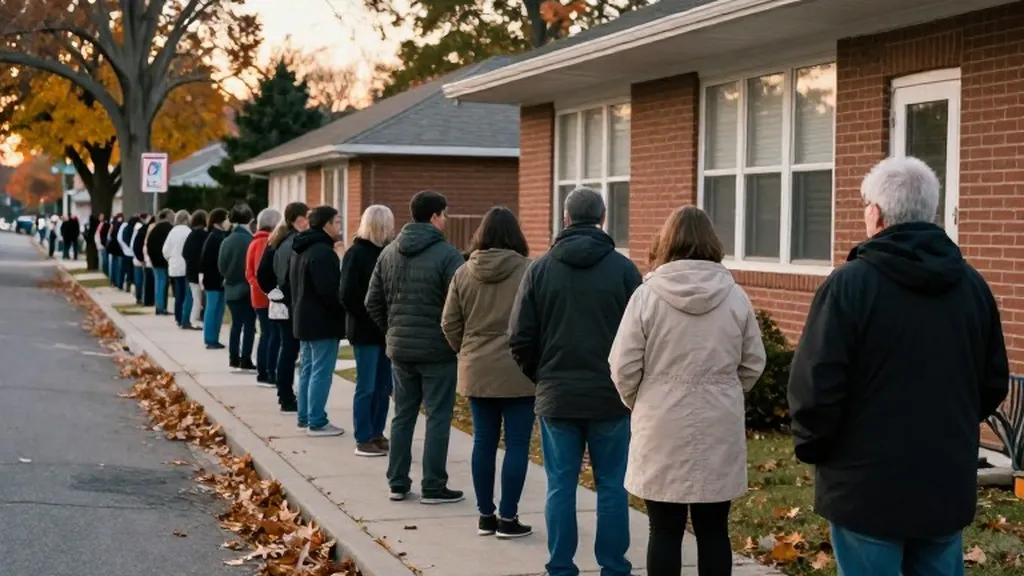
Voters across the country have begun casting their ballots for the 2026 midterm elections, a contest that will determine which party controls Congress for the final two years of President Donald Trump's second term. The Associated Press reports that more than 57 million people had already voted as of Monday, surpassing the early vote totals of four years ago in many closely watched states. This surge in early participation sets the stage for a day where ground games and voter mobilization are expected to be as critical as the campaigns' television advertisements.
Republican National Committee Chairman Joe Gruters emphasized the importance of getting supporters to the polls, stating, "Everything depends on turnout. If we turn out our voters, we win, and that's what we've been planning for." His comments reflect a party strategy focused on protecting its Senate majority and limiting losses in the House. Republicans hold 218 seats in the House and 53 seats in the Senate, and they can afford to lose no more than two House seats or two Senate seats to maintain their majorities.
Democratic Congressional Campaign Committee Chair Rep. Suzan DelBene countered with a message centered on public dissatisfaction, saying, "The American people are angry. They want change." Democrats hold 214 House seats and 45 Senate seats, with two independents who caucus with them. To gain a majority in the House, Democrats need a net gain of three districts, while they must win a net gain of four Senate seats to control that chamber. The Associated Press describes the Democratic mood as cautiously optimistic, with the party bracing for a potential fight over oversight and investigations if they win either chamber.
The election is being viewed as a referendum on the president's performance, particularly regarding the economy and the unpopular war with Iran. AP-NORC polling indicates that 35% of U.S. adults approve of Trump's job performance, while about seven in ten say the country is heading in the wrong direction. Most of those polled blame the president for high prices. In Raleigh, North Carolina, James Moore, a 57-year-old librarian, told the Associated Press, "I'm paying more taxes. I'm paying more for my healthcare. I'm paying more for everything." These personal accounts highlight the cost-of-living concerns that are driving voter sentiment.
Financial dynamics are playing a significant role in the races, with the 2026 elections likely to be the most expensive in history. Republican committees have outraised and outspent their Democratic counterparts, aided by Trump-affiliated groups and Elon Musk. However, at the candidate level, Democrats have outraised their opponents. An AP analysis of AdImpact data shows that 88.1% of Republican general election television ad spending went to states and districts that Trump won in 2024. This heavy spending in safe Republican territory contrasts with the focus on battleground areas, where both parties are concentrating their ground game efforts.
Redistricting has also reshaped the political landscape, with six states using new congressional maps after mid-decade redistricting. California, Florida, Missouri, North Carolina, Tennessee, and Texas are voting under these new maps, along with Ohio. Republicans initially hoped to use redistricting to beat the typical midterm pattern where a president's party loses seats. However, new districts in places like Florida may not vote as drawn, adding uncertainty to the Republican strategy. The Associated Press notes that one or two seats could tip either chamber, making the competition for these newly drawn districts particularly intense.
President Trump has been active in campaign efforts, holding dozens of rallies and ending his weekend schedule in Salina, Kansas. There, he told supporters, "I really want you to pretend I'm on the ballot." His schedule included stops in Mississippi, South Carolina, and Texas. Despite his visibility, many Republican candidates have kept their distance from the president, who has continued to make claims about voting fraud, including that noncitizens vote in large numbers. His administration has sued in Alaska and California, and Democrats fear interference as the Justice Department threatens to prosecute local election officials.
Election administration has faced legal challenges as well. A federal judge temporarily barred the Trump administration from carrying out a plan to prevent noncitizen voting, while another judge ordered the administration to stop demanding that California officials segregate ballots from suspected noncitizens. These rulings aim to protect eligible voters and state authority over elections. The U.S. Postal Service has added hours, staff, and special lines to ensure mail ballots are counted on time, a crucial step in states where mail voting is prevalent.
In the Senate, 35 seats are up for election, including 33 regular seats and two special elections for the terms of Marco Rubio and JD Vance. Republicans hold 20 of the regular seats up for election, while Democrats hold 13. Key battlegrounds include Maine, which is a toss-up on all major ratings, and Georgia, which leans or is likely Democratic. In Maine, economic strain and tariffs have made the state competitive, according to the Associated Press. Sen. Susan Collins is facing Democratic former state Senate President Troy Jackson in a race that could determine Senate control.
Voters are also deciding on 36 governorships, with Democrats hoping to hold a majority of governorships for the first time in two decades. Republicans have held the governor's office majority since 2010. In competitive states like Ohio, Republican Vivek Ramaswamy faces Democrat Amy Acton, a race that has drawn attention due to campaign ads featuring Acton's estranged mother. In Georgia, former Atlanta Mayor Keisha Lance Bottoms is challenging Republican health care executive Rick Jackson. These races are critical for both parties, as governorships influence state-level policy and future federal appointments.