Governor races split 18 to 18 as nine battlegrounds decide state control
Nineteen open seats and a narrow margin mean Democrats need just two wins to reclaim a nationwide majority in a historic midterm contest.
By Alessia Desai ·
The map of American governorships stands at a precise equilibrium on Election Day, with the Associated Press and Ballotpedia confirming that Republicans and Democrats each hold eighteen of the thirty-six offices currently on the ballot. This parity creates a razor-thin path for the Democratic Party, which requires a net gain of only two seats to secure a nationwide majority. Such a majority has eluded the party since 2010, making today’s outcome a critical test of their ability to reverse the recent trend in state executive power. The stakes are elevated by the fact that this midterm election occurs halfway through President Donald Trump’s second term, where results will determine the balance of power in Congress for his final two years.
Nineteen of the thirty-six governor races are open seats, a number that significantly increases the volatility of the night. Fifteen of these races are open because the sitting governors are term-limited, a structural rule that prevents them from seeking another term. In the remaining four open contests, the choices were made by the incumbents themselves. Iowa Governor Kim Reynolds, Minnesota Governor Tim Walz, and Wisconsin Governor Tony Evers chose not to run again, while Rhode Island Governor Daniel McKee lost his primary election. This high volume of open seats means that voters are not simply deciding on a candidate’s performance but are instead casting a broader judgment on the direction of their state government.
Nine states are identified as battlegrounds for governor, according to Ballotpedia. These include Alaska, Arizona, Georgia, Iowa, Kansas, Michigan, Nevada, Ohio, and Wisconsin. The Associated Press has specifically highlighted Texas, Florida, and Iowa as competitive governor races, adding to the list of states where the outcome is closely watched. In Georgia, Republican health care executive Rick Jackson faces Democratic former Atlanta Mayor Keisha Lance Bottoms in a race to succeed Brian Kemp. In Nevada, Republican Governor Joe Lombardo is pitted against Democratic Attorney General Aaron Ford.
Democrats are defending five governorships in states that Donald Trump won in the 2024 presidential election. These states are Arizona, Kansas, Michigan, Pennsylvania, and Wisconsin. In Pennsylvania, Governor Josh Shapiro is seeking re-election, while in Arizona, Katie Hobbs faces a challenging environment. The Associated Press notes that Democrats hope to hold a majority of governorships for the first time in two decades, a goal that depends heavily on their performance in these defensive races. The party’s strategy relies on turning out voters who are concerned about the cost of living and health care, issues that have dominated the national conversation.
Republicans are defending two governorships in states that Kamala Harris won in 2024. These are New Hampshire and Vermont. In New Hampshire, Governor Kelly Ayotte is running for re-election, while in Vermont, Governor Phil Scott seeks another term. The Associated Press describes the election as a referendum on Trump’s second term, with voters struggling with high prices and anger over an unpopular war with Iran. AP-NORC polling indicates that thirty-five percent of U.S. adults approve of Trump’s job performance, while twenty-five percent approve of his handling of the economy. These figures suggest a volatile electorate that could influence the outcome in these defensive Republican races.
In Ohio, the governor race features Republican Vivek Ramaswamy against Democrat Amy Acton. Ramaswamy’s campaign has faced backlash over an ad featuring Acton’s estranged mother, a development that has drawn national attention. The Associated Press reports that many Republican candidates have kept their distance from President Trump, who held dozens of rallies to support his party. Trump ended his rally schedule on Sunday in Salina, Kansas, where he told voters, "I really want you to pretend I'm on the ballot." His recent schedule included stops in Mississippi, South Carolina, and Texas, indicating a focus on key states where the governor races are closely contested.
Financial dynamics play a significant role in these governor races, with the 2026 elections likely to be the most expensive in history. Republican committees have outraised and outspent Democratic committees, aided by Trump-affiliated groups and Elon Musk. However, at the candidate level, Democrats have outraised their opponents. An AP analysis of AdImpact data shows that eighty-eight point one percent of Republican general election TV ad spending went to states and districts Trump won in 2024. This spending concentration suggests that Republican resources are heavily weighted toward states where the party has a stronger base, potentially limiting their reach in the open governor races where Democrats are looking to make gains.
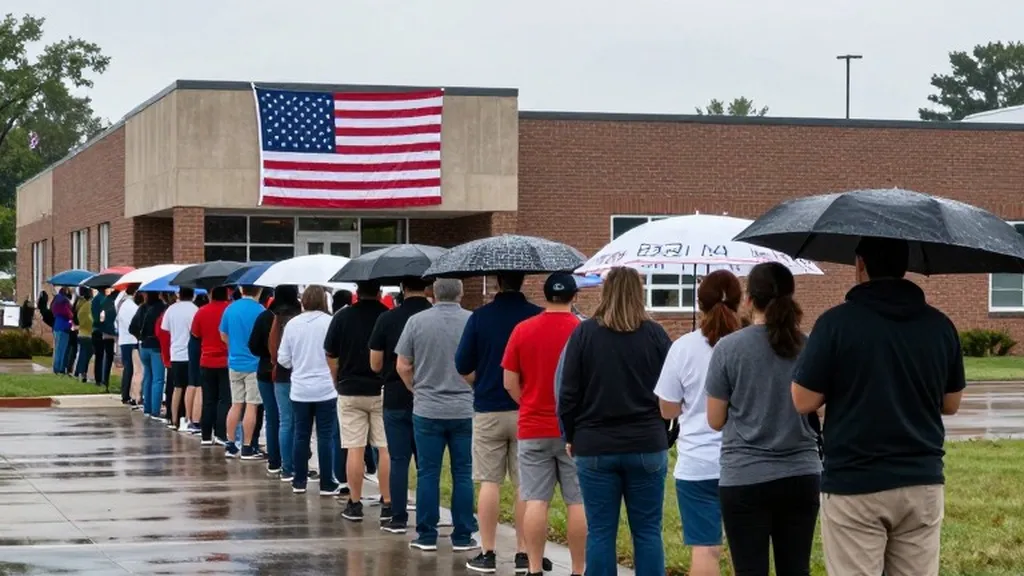
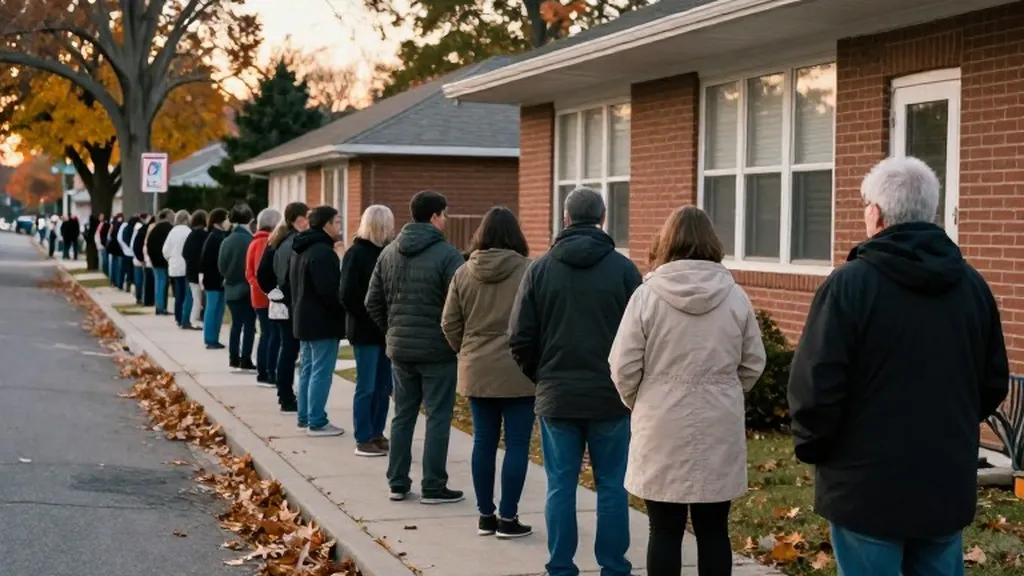
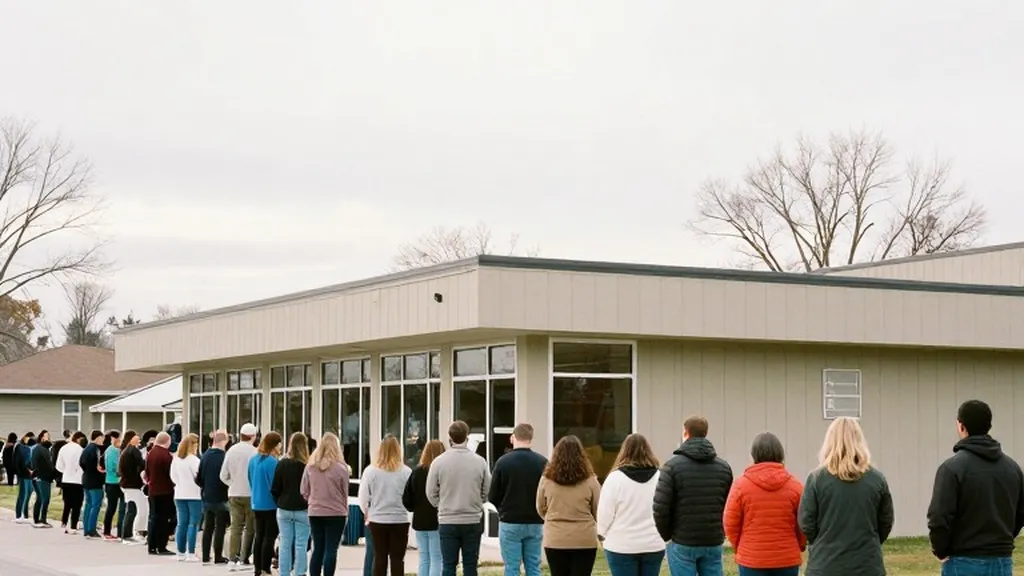
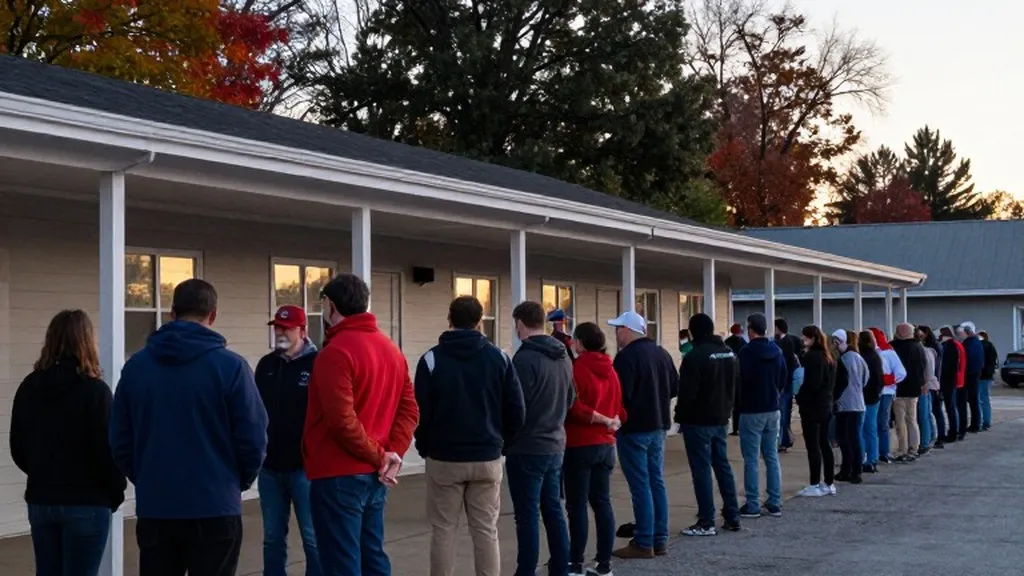
The mood among voters is characterized by a mix of anxiety and determination. More than fifty-seven million people had already voted as of Monday, surpassing the early vote totals of four years ago in many closely watched states. Voter James Moore, a librarian in Raleigh, North Carolina, told the Associated Press, "I'm paying more taxes. I'm paying more for my healthcare. I'm paying more for everything." These personal accounts reflect the broader economic concerns that are driving voter turnout. The Associated Press notes that Democrats are cautiously optimistic, while Republicans are bracing for potential losses in the House and fighting to hold the Senate.
Election administration has been a focal point of concern, with a federal judge temporarily barring the Trump administration from carrying out a plan to prevent noncitizen voting. Critics argue that this plan risks disenfranchising eligible voters and infringes on states' authority over elections. The U.S. Postal Service has added hours, staff, and special lines to ensure that mail ballots are counted on time. These logistical efforts are crucial in states where mail voting is prevalent, such as California, Colorado, and Oregon. The smooth administration of these races will be key to ensuring that the will of the people is accurately reflected in the final counts.