Trump's Rallies and Fraud Claims Shape a Divided Midterm Election
With approval ratings low and candidates distancing themselves, the President's active campaign strategy contrasts with a quieting of Republican candidates.
By Meera Fletcher ·
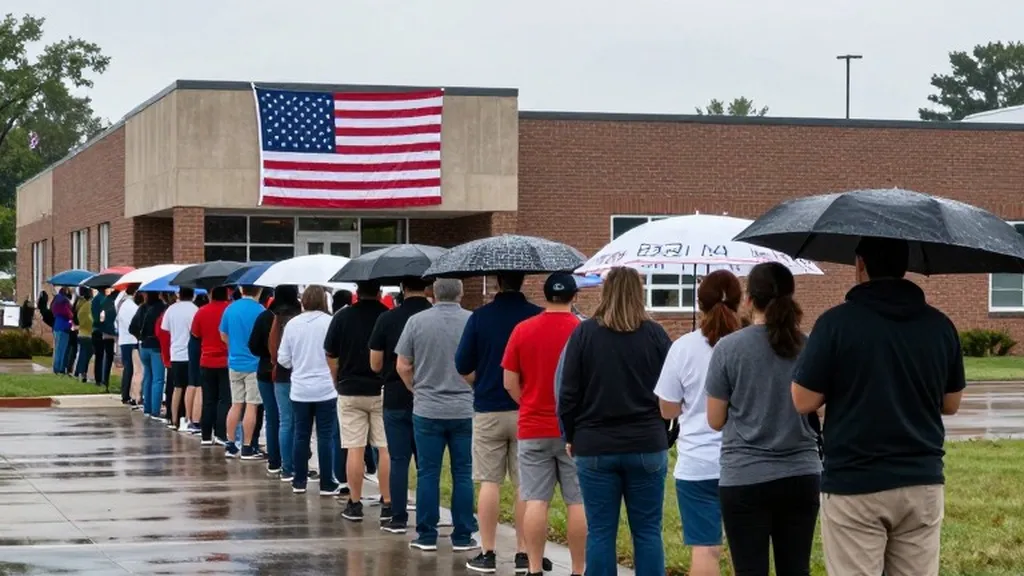
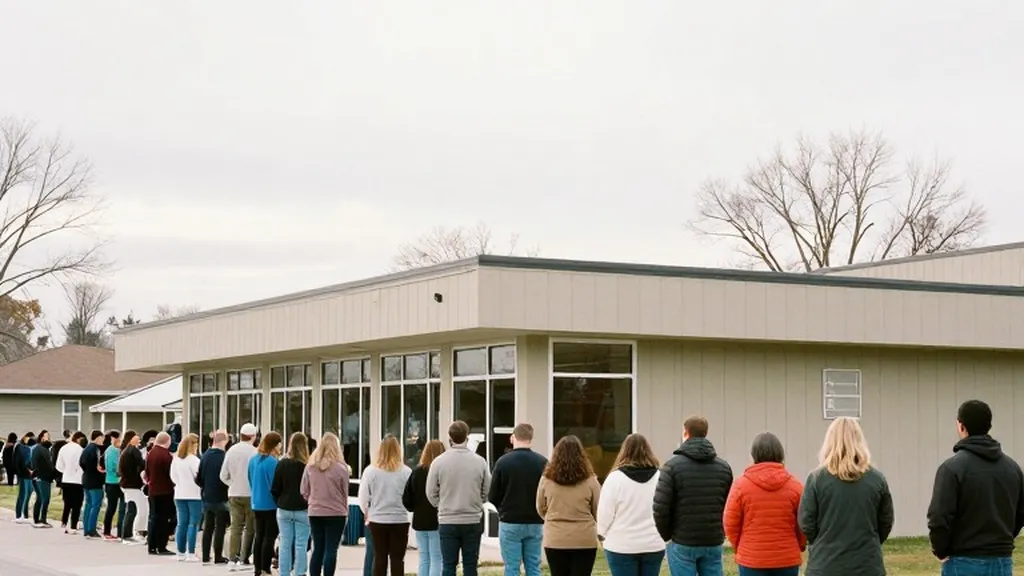
The atmosphere on Election Day is defined by a stark disconnect between the President and many of his own party's candidates. President Donald Trump has maintained a grueling schedule, holding dozens of rallies across the country to energize the base. His most recent appearance took place on Sunday in Salina, Kansas, where he urged the crowd to focus on his leadership. In a direct address to the voters, he said, 'I really want you to pretend I'm on the ballot.' This sentiment captures the central tension of the 2026 midterms, where the President is not a candidate but is treated by many voters as the primary figure in the political landscape.
The President's active campaigning stands in sharp contrast to the behavior of many Republican candidates. According to the Associated Press, numerous Republican nominees have kept their distance from Trump in recent weeks. This distancing is a calculated risk. It allows candidates to appeal to moderate voters who may be wary of the President's polarizing presence, while still benefiting from his name recognition. The strategy reflects a party that is bracing for potential losses in the House while fighting to hold the Senate. The Republican National Committee Chairman, Joe Gruters, emphasized that everything depends on turnout, stating that if they turn out their voters, they win.
Underpinning the Democratic strategy is a set of polling numbers that suggest the President's approval is a significant liability. An AP-NORC poll indicates that only 35 percent of U.S. adults approve of Trump's job performance. His approval on the economy is even lower, standing at 25 percent. About seven in ten Americans say the country is heading in the wrong direction, and most of them blame the President for high prices. These figures are central to the Democratic message, which focuses on the cost of living, health care, and the unpopular war with Iran. Democrats are describing themselves as cautiously optimistic, buoyed by the idea that voters are angry and want change.
The President has also continued to make claims about voting fraud that many experts describe as false. He has argued that noncitizens vote in large numbers, a claim that has intensified in the days leading up to the election. His administration has filed lawsuits in Alaska and California related to election certification and ballot handling. Democrats fear that these legal moves, along with threats from the Justice Department to prosecute local election officials, could lead to interference and intimidation. A federal judge temporarily barred the administration from carrying out a plan it says would prevent noncitizen voting, a move critics say risks disenfranchising eligible voters.
The financial landscape of the election is another area of significant divergence. The 2026 elections are likely to be the most expensive in history. Republican committees have outraised and outspent their Democratic counterparts, helped by Trump-affiliated groups and billionaire Elon Musk. However, at the candidate level, Democrats have outraised their opponents. This spending disparity has led to a heavy concentration of Republican advertising. According to an AP analysis of AdImpact data, 88.1 percent of Republican general election TV ad spending went to states and districts Trump won in 2024. More than 850 million dollars was spent in areas where he won by ten points or more, suggesting a strategy focused on consolidating the base rather than persuading swing voters.
Voters at the polls are expressing these concerns in their own words. James Moore, a 57-year-old librarian in Raleigh, North Carolina, told the Associated Press that he is paying more taxes, more for his healthcare, and more for everything. His sentiment mirrors the broader economic anxiety that is driving the Democratic message. In contrast, Mark Barker of Palm Beach Gardens, Florida, said he has been following Trump the whole time and really thinks he is doing an awesome job. These individual narratives highlight the deep division in the country, where the President's approval and disapproval are nearly equally intense.
The stakes for the Democratic Party are high. If they win even one chamber of Congress, investigations and possible impeachment proceedings become likely. House Democratic Leader Hakeem Jeffries, who would become the first Black speaker if Democrats take the House, has outlined a 100-day agenda focused on the cost of living and oversight of the administration. A strong Democratic night would also boost potential 2028 candidates like Gavin Newsom, JB Pritzker, and Pete Buttigieg. It could also complicate the path for Vice President JD Vance, who is seen as a key figure in the future of the Republican Party.
Republicans are trying to beat the historical midterm pattern, where a president's party almost always loses seats. They have relied on redistricting in states like Florida and Texas to create favorable maps. However, new districts may not vote as drawn, and the President's low approval ratings pose a challenge. The AP notes that one or two seats could tip either chamber, making the race extremely close. In the Senate, 35 seats are up for grabs, with Democrats needing a net gain of four seats to take the majority. In the House, Democrats need a net gain of three districts to secure control.
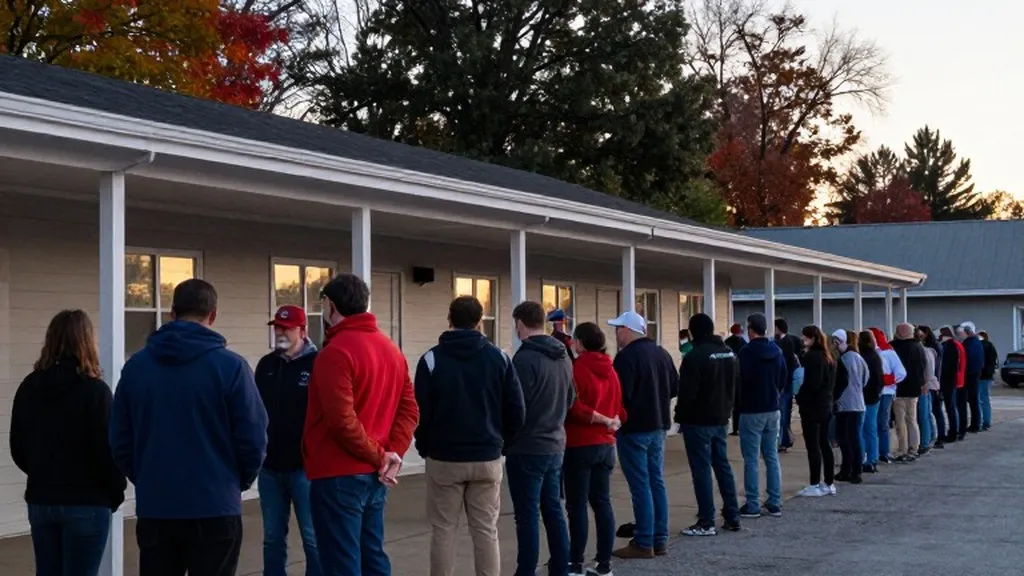
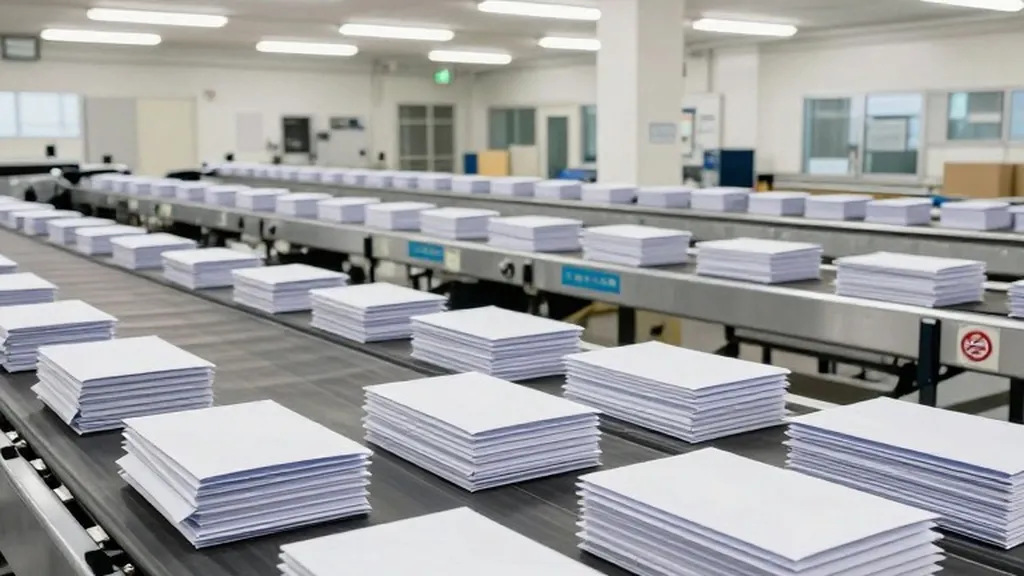
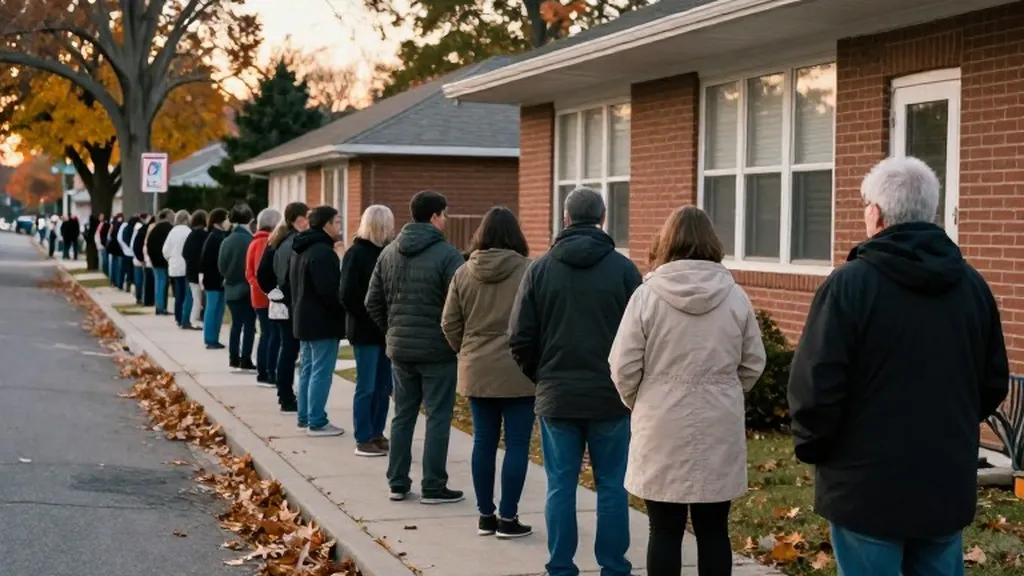
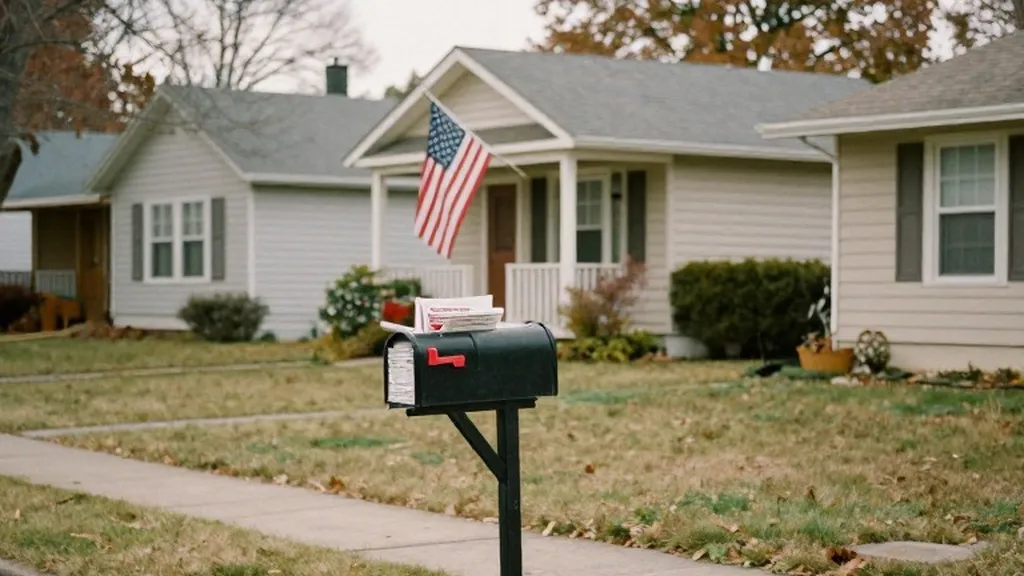
The election administration has also been a point of contention. The U.S. Postal Service added hours, staff, and special lines to ensure mail ballots are counted on time. In California, a judge ordered the administration to stop demanding that election officials segregate ballots cast by people on its lists of suspected noncitizens. These legal battles add another layer of complexity to an already tense election day. More than 57 million people had already voted as of Monday, surpassing the early vote of four years ago in many closely watched states.