Democrats seize both chambers as voters punish Trump administration
A historic wave election shifts control of the House and Senate to Democrats, who vow to tackle costs and oversight despite Republican money advantages.
By Tomas Rahman ·
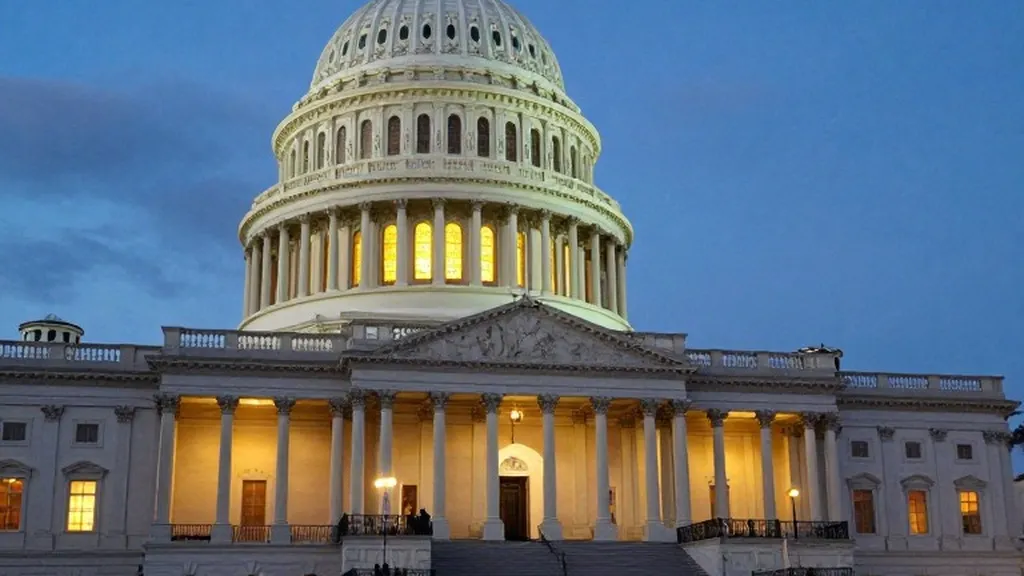
The 2026 midterm elections have concluded with a decisive shift in power, as Democrats secured majorities in both the United States House and Senate. According to results compiled as of 4:00 PM ET on November 6, Democrats hold at least a 250-157 majority in the House and a 54-44 majority in the Senate. This outcome marks the first time since before the 2010 elections that Democrats control a majority of governorships, state legislative chambers, and state government trifectas. The results reflect a broad national rejection of the Republican administration, driven by voter frustration over the cost of living and the ongoing war in Iran.
Democratic Representative Suzan DelBene, chair of the Democratic Congressional Campaign Committee, noted that momentum was firmly on her party's side. She stated that the American people are angry and want change. The Associated Press Voter Poll indicated that the electorate was deeply unhappy with the country's direction, with about three-quarters of voters feeling angry or dissatisfied with the current trajectory. Government corruption and the cost of living were cited as crucial issues by roughly half of voters, surpassing immigration enforcement and the war in Iran in importance. This sentiment translated into a wave of victories that defied maps widely seen as favoring the Republican Party earlier in the year.
In the United States Senate, Democrats gained seven seats, all of which were previously held by Republicans. This net gain allowed them to overcome the initial 53-47 Republican majority. The seats changing party hands were located in Iowa, Kansas, Maine, North Carolina, Ohio, South Carolina, and Texas. Notably, Kansas has not sent a Democrat to the U.S. Senate since 1932, a streak that ended with the election of Rev. Adam Hamilton. Georgia voters also made history by electing Keisha Lance Bottoms as the state's first Democratic senator in over two decades. These victories in red states underscore the broad appeal of the Democratic platform among voters concerned with economic stability.
The United States House saw an even more dramatic swing. Democrats gained at least 41 seats, flipping 42 seats from Republicans and one from an independent. This shift reversed the 220-215 Republican majority established in the 2024 elections. Despite the Republican Party's significant financial advantage, with Republican-affiliated groups spending roughly 60% more than their Democratic counterparts in Senate races, they failed to retain control. Elon Musk spent nearly half a billion dollars on the midterms, but the record expenditure yielded little for the world's richest man. The Democratic gains suggest that voter dissatisfaction outweighed the impact of heavy Republican spending in most competitive districts.
Statewide races mirrored the federal trend, with Democrats winning 22 of the 36 gubernatorial races on the ballot. Five states changed party control, all moving from Republican to Democratic hands. Democrats also won a majority of state legislative chambers, capturing 46 of the 88 seats up for election. This trifecta control in numerous states provides Democrats with a stronger legislative platform to implement policy changes and oversee state-level administration. The shift in state governments is expected to influence areas such as healthcare access and education funding, key concerns for many voters who participated in the election.
President Donald Trump, whose party suffered a significant defeat, is expected to face increased oversight from the new Democratic Congress. The administration has already faced scrutiny over its handling of domestic policies, including immigration and infrastructure projects. In Washington, a federal judge appointed a former U.S. attorney to investigate whether government officials misled the court in a lawsuit challenging the renovation of the East Potomac Golf Course. This legal battle highlights the tensions between the administration and the judiciary, as well as the potential for increased legislative scrutiny in the coming months. The new congressional majority will likely prioritize hearings on these and other executive actions.
The election results also signal a renewed focus on the cost of living, a central theme of the campaign. Consumer prices rose 3.6% in September from a year earlier, according to the Commerce Department, contradicting President Trump's recent claims that inflation was solved. With Democrats now controlling both chambers, they are positioned to introduce legislation aimed at curbing costs and expanding healthcare access. The new majority in the Senate, led by figures who campaigned on lowering costs, will work alongside the House to draft and pass bills addressing these economic pressures. This legislative agenda is expected to be a primary focus during the lame duck session and the start of the new congressional term.
Republicans are already beginning to take stock of the upsets and what comes next for their party. Strategists have called for a shakeup in White House personnel, with President Trump replacing Chief of Staff Susie Wiles with Stephen Miller, a hardline architect of his immigration agenda. This move signals a potential intensification of the administration's domestic policies, even as it faces a more hostile Congress. The new Democratic leadership, including Elizabeth Warren, who is expected to have increased power over Wall Street, will likely push for regulatory reforms. The dynamic between the executive and legislative branches is set to become more adversarial, with both sides vying for control over the national agenda.
The historic nature of the election is further highlighted by the diverse slate of winners, including a record number of women and candidates of color. In Los Angeles, Democratic socialist-backed candidate Nithya Raman defeated incumbent Karen Bass in a closely fought mayoral race. In Georgia, Keisha Lance Bottoms became the first Black woman governor in the country. These changes in local and state leadership reflect a broader trend of reshaping political representation across the United States. The new faces in power bring fresh perspectives to the challenges facing the nation, from economic recovery to foreign policy, as they prepare to take office in January.