Trump's $5,000 dividend now faces a Democratic Congress
Democrats won majorities in both chambers, leaving the president's Dallas promise to buy votes with a difficult path to legislative approval.
By Meera Fletcher ·
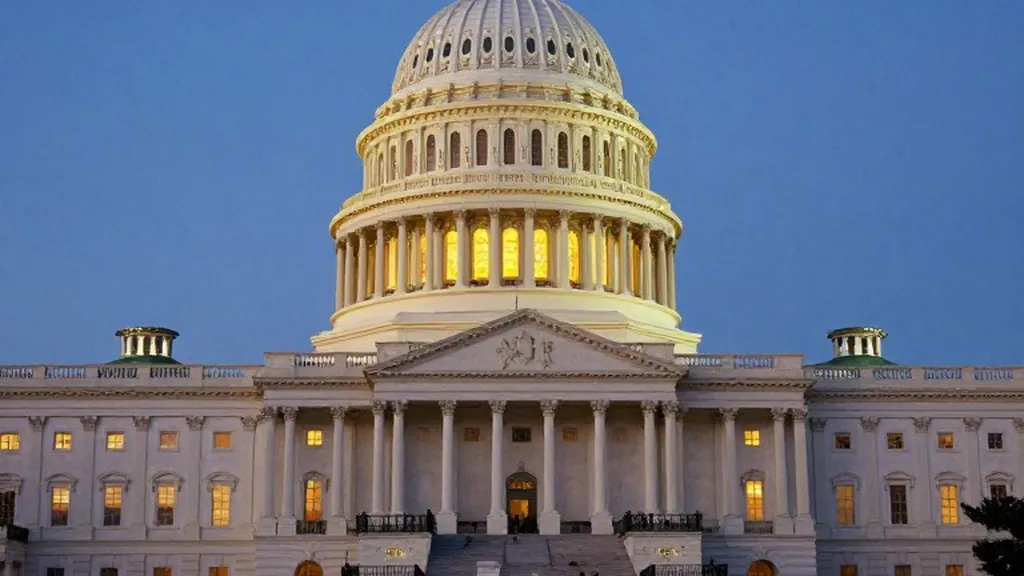
President Donald Trump promised a $5,000 payment to every adult American citizen if Republicans maintained control of Congress, a pledge that has now become a test for the new Democratic-led legislature. The president made the offer at the Republican Midterm Convention in Dallas, calling it the Trump Dividend. He stated that if the party won, voters would win with them and receive the cash. The promise was explicitly tied to the outcome of the November elections, creating a direct link between partisan control and individual financial gain. For the first time in decades, the party opposing the president now holds the keys to that promise.
The election results confirmed a significant shift in power. Democrats won majorities in both the U.S. House and the Senate. In the House, Democrats secured at least 250 seats against 157 for Republicans. In the Senate, they captured at least 54 seats to 44. This margin gives the new leadership substantial control over the legislative agenda. The victory was widely interpreted as a referendum on the administration's handling of the economy and the war in Iran. Voters expressed frustration with high prices and a desire for stronger checks on the executive branch.
Before the election, House Speaker Mike Johnson said the dividend needed congressional approval. He described the idea as creative but noted that Congress would have to act. Trump initially suggested the process might not require such steps, though he did not specify how the administration could spend over $1 trillion without lawmakers' authorization. Johnson pledged to work through the details, saying the House would find consensus. Now that Democrats hold the majority, the burden of passage has shifted to the new leadership, who must decide whether to honor the promise or block it.
Fiscal experts raised concerns about the cost even when Republicans held power. The payment could cost more than $1 trillion, a figure that would strain the national budget. The country is already facing a nearly $1.8 trillion annual deficit. Kenneth Rogoff, a former chief economist at the International Monetary Fund, warned that the spending would increase the odds of a debt crisis. Erica York of the Tax Foundation noted that the cost would consume almost all projected tariff revenue over a decade. These economic hurdles make the promise difficult to fund without new taxes or significant spending cuts elsewhere.
The source of the money remains a point of contention. Trump cited tariff revenues as a potential funding source. However, the administration did not include a separate tariff dividend in the One Big Beautiful Bill Act, which became law in 2025. Sen. Bernie Moreno of Ohio said he would introduce legislation to fund the proposal. Political analysts doubted that such a bill could reach the 60-vote supermajority needed in the Senate. With Democrats now in the majority, the legislative path is even more complex. The new chamber must determine if the promise is a binding commitment or a campaign tactic that can be revisited.
Bipartisan criticism emerged immediately after the announcement. Some Republicans questioned the price tag. Texas Congressman Chip Roy wrote that dependency is evil and soul-sucking in all its forms. Democrats viewed the move as an attempt to buy votes. The timing of the promise, just weeks before the election, fueled skepticism about its sincerity. Election law experts noted that while the promise is likely legal under the First Amendment, its feasibility is a separate issue. Rick Hasen of UCLA Law said courts would likely protect the statement as campaign rhetoric, but that does not guarantee the checks will actually be sent.
The new Democratic leadership faces a strategic decision. House Democratic Leader Hakeem Jeffries and Senate Majority Leader Chuck Schumer are now in positions of power. They must balance the appeal of a direct payment to constituents with the need to manage the deficit. The promise was made by the president, not the party, but it was a central part of the Republican campaign. Ignoring it entirely could be seen as punishing voters who supported the administration. Honoring it could set a precedent for future executive spending. The new leaders will likely seek to negotiate the terms, potentially tying the dividend to specific policy concessions or budget reforms.
The economic backdrop remains challenging. Consumer prices rose 3.6% in September from a year earlier. Gasoline prices are rising due to the war in Iran, and wages are struggling to keep pace with inflation. Trump claimed in an interview that inflation was solved, but the data suggests a more persistent problem. The cost of living is a top concern for voters. A $5,000 check could provide immediate relief for many households, but it may not address the underlying inflationary pressures. The new Congress will need to address these structural issues alongside any one-time payments.
The promise also highlights the shifting dynamics of the midterm cycle. Democrats won a plurality of state government trifectas and a majority of governorships. This gives them more leverage in negotiations with the White House. The administration has shown a willingness to use budgetary tools to advance its agenda. With Democrats in control of the purse strings, they can use appropriations bills to rein in executive actions. The Trump Dividend will be one of the first major tests of this new power balance. The outcome will signal how the two parties intend to work together or against each other in the coming years.
The legal framework for the payment is straightforward but the political process is complex. Any proposal involving sending checks to Americans requires congressional approval. Sen. Moreno's bill was expected to be introduced immediately after the election. Now, Democrats must decide if they will take up the measure or if they will propose their own version. The process may involve hearings and debate on the funding source. The administration has not provided a formal plan for how the money would be distributed. This lack of detail gives the new Congress room to shape the policy to its own priorities.