Trump's $5,000 Dividend Was a Gambit That Just Cost Republicans Congress
The president's promise of checks for every adult citizen failed to secure a GOP majority, leaving Democrats to ask how the money would be raised.
By Tomas Rahman ·

President Donald Trump stood before a crowd at the Republican Midterm Convention in Dallas and made a bold promise to voters. He pledged to send a $5,000 check to every adult citizen in the United States if his party retained control of both the House of Representatives and the Senate. The offer, branded as the Trump Dividend, was intended to energize the base and signal economic success. However, the strategy did not prevent a sweeping Democratic victory on Tuesday, November 3.
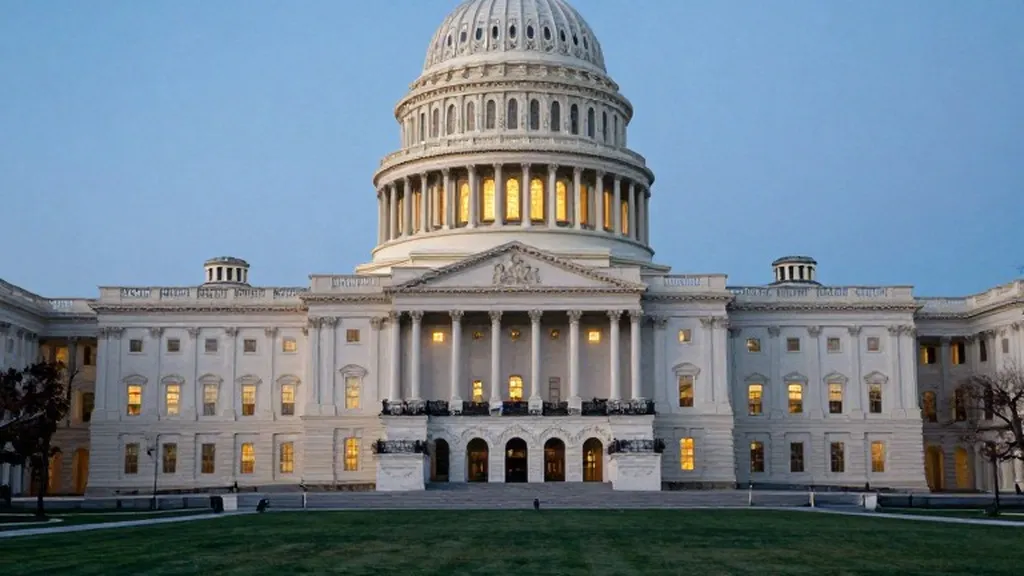
According to the Associated Press, Democrats have secured majorities in both chambers of Congress. The House majority is well past the 218 seats needed for control, and Senate Democrats hold at least 54 of 100 seats. This result leaves the $5,000 dividend as a conditional promise that the president had said would require congressional approval if the Republicans had won. Now that the Democrats hold the keys to the legislative process, the path to funding the checks has become significantly more complicated.
House Speaker Mike Johnson, who has decided not to seek reelection as party leader, had stated on Sunday that the proposal needed congressional approval. He described the idea as creative and committed to working through it to find consensus. Trump initially suggested that Congress might not need to authorize the payments, but he did not specify how the administration would spend more than $1 trillion without lawmakers' sign-off. With the change in party control, the burden of passage now falls on a Democratic Congress that faces its own 100-day agenda.
The potential cost of the dividend is staggering. The U.S. Census Bureau estimates there are approximately 245 million U.S. citizen adults. Giving each of them a $5,000 check would cost about $1.2 trillion. This sum would place further strains on the country's nearly $1.8 trillion annual budget deficit. Fiscal experts have cast doubt on the plan, noting that the administration has announced no formal plan for how the payments would be distributed or funded.
PolitiFact examined the proposal and found that the biggest payment is far from certain. The fact-checkers noted that while the White House cited tariff revenues as a potential funding source, lawmakers did not include a separate tariff dividend in the One Big Beautiful Bill Act that became law in 2025. The Tax Foundation estimated that the new tariffs would generate about $208 billion in revenue in 2026, a fraction of the cost of the dividend checks. This math has led some economists to describe the plan as a difficult sell to a skeptical electorate.
Democratic leaders are already framing the dividend as a symbol of the administration's priorities. House Democratic Leader Hakeem Jeffries, who is poised to become the next Speaker of the House, emphasized that Democrats will work to deliver on the dramatic change voters requested. The new majority is expected to focus on lowering the costs of gas and groceries, as well as reversing cuts to healthcare programs. The dividend, which was pitched as a reward for staying home or voting Republican, now serves as a point of contrast for the incoming Democratic leadership.
Vice President JD Vance blamed the war in Iran for the Republican losses, suggesting that the conflict and rising fuel prices weighed heavily on voters. Trump has also acknowledged the role of the war in the defeat, noting that the conflict played a part in the sweeping loss. The AP Voter Poll indicated that voters were deeply unhappy with the country's direction, with about three-quarters feeling angry or dissatisfied. The economy, specifically inflation and the cost of living, was cited as a crucial issue by a majority of those surveyed.
The promise of the dividend had already faced criticism from within the GOP before the election. Texas Congressman Chip Roy questioned the idea, writing that dependency is evil in all its forms. Other fiscal hawks worried that such a large payout would exacerbate inflation concerns. Now that the Democrats control the purse strings, they may use the dividend as an example of the administration's desire to spend without a clear funding source. The new Congress will have the opportunity to scrutinize every dollar of the deficit, including the potential $1.2 trillion tab associated with the Trump Dividend.
Trump has promised similar payments in the past, including a $2,000 tariff dividend in November 2025 and a $5,000 DOGE dividend proposed by Elon Musk. Neither of those checks ever materialized. The $5,000 dividend was unique in its explicit conditionality, tied directly to the outcome of the midterm elections. By linking the payment to a specific political victory, the president created a clear benchmark for his party's performance. That benchmark was not met, leaving the promise as a campaign promise rather than a policy reality.
Democratic Senator Ron Wyden, the top Democrat on the Senate Finance Committee, has already signaled a robust oversight agenda. He described his approach with the single word subpoenas, suggesting that the new majority will look closely at the administration's spending and decision-making. The dividend, with its complex funding questions and lack of a formal legislative plan, is likely to be a central topic in those early hearings. The incoming Congress will have the power to force the administration to clarify its financial strategies and account for its promises.
The election results also saw Democrats win governorships in states like Texas and Georgia, further expanding their influence over state budgets and policies. This broader control gives Democrats more leverage in negotiations with the White House. As the lame-duck session begins, the administration will face a Congress that is eager to assert its coequal powers. The $5,000 dividend, once a centerpiece of the Republican campaign, now serves as a reminder of the economic pressures that drove voters to the polls this Tuesday.