French Police Deploy 70,000 Officers as 400,000 March for School Reforms
A nationwide mobilization of nearly half a million citizens has intensified pressure on the French government to address educational infrastructure and policing tactics.
By Aiko Yamamoto ·
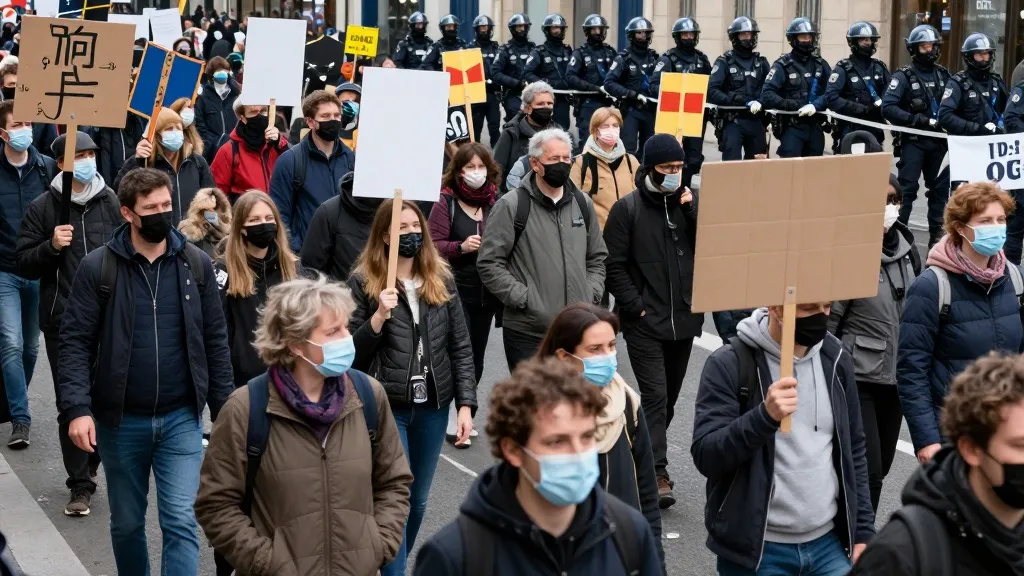
More than 70,000 police officers were deployed across France on Saturday to manage a nationwide mobilization that government officials estimate attracted at least 400,000 demonstrators. Trade union leaders, however, calculated that the total number of marchers was double that figure. This massive turnout marked the second major weekend of protest in a row, occurring as the government sought to prevent a recurrence of the violence seen in the previous week, which resulted in hundreds of shops being looted and at least 2,700 arrests.
The current crisis traces its origins to mid-September, when high school students aged 15 to 18 began organizing against severe staff shortages and deteriorating infrastructure. Complaints focused on leaking roofs, crumbling walls, and overcrowded classrooms lacking sufficient seating. What began as a specific student grievance has since expanded into the largest youth movement in years. Teachers, parents, and trade unions have joined the ranks, transforming localized complaints into a broad coalition demanding systemic change.
In Paris, at least 110,000 people marched along the eastern edge of the city. The atmosphere remained largely relaxed for much of the afternoon, with brass bands providing music and families participating in large numbers. Participants carried banners with slogans such as "Oppression breeds rebellion" and "The right to protest." While many marchers supported the students, broader discontent was evident regarding the high cost of living and what participants described as heavy-handed policing tactics over the past month.
Tensions escalated at the end of the Paris route near the Porte de Vincennes. Groups of masked men dressed in black, who appeared distinct from the main peaceful crowd, threw glass bottles and stones at officers. Police responded with teargas, water cannon, and stun grenades, while a bin was set on fire and fireworks were launched toward the officers. Similar clashes involving bin fires and teargas occurred in Marseille, Lyon, Lille, Montpellier, Nantes, and Toulouse.
The government has faced criticism for banning non-union demonstrations it deems illegitimate and for keeping protesters away from city centers. Nadège, a 43-year-old communications worker who was teargassed the previous weekend, stated that she returned to the streets to defend the legal right to protest in France. A 21-year-old science student noted that many feel the country is moving toward an authoritarian regime that suppresses democratic expression. Police investigations are currently underway after several children and protesters were injured by explosive weapons.
Looking ahead, Jérôme Rodrigues, a prominent figure from the 2018 yellow vest movement, indicated that demonstrations are likely to continue every weekend. He argued that the government is pushing protesters to the edges of cities to keep them away from places of power. In Orléans, thousands shouted anti-fascist slogans against a National Rally party congress, criticizing both President Emmanuel Macron and Marine Le Pen. Interior Minister Laurent Nunez reported 135 arrests nationwide, with confiscated items including slingshots, steel balls, and an airsoft weapon.
The coming weeks will likely see continued friction as the government balances its desire to maintain order with the public's demand for political solutions. With President Macron entering his final months in office, the movement's persistence suggests that the issues of education funding and civil liberties will remain central to the national political discourse until the presidential transition is complete.
Source: The Guardian