Voters Focus on Prices and Economy in Tight 2026 Midterm Race
AP-NORC polling shows economic concerns dominate as voters weigh in on Congress amid tariff impacts and high living costs.
By Tomas Rahman ·
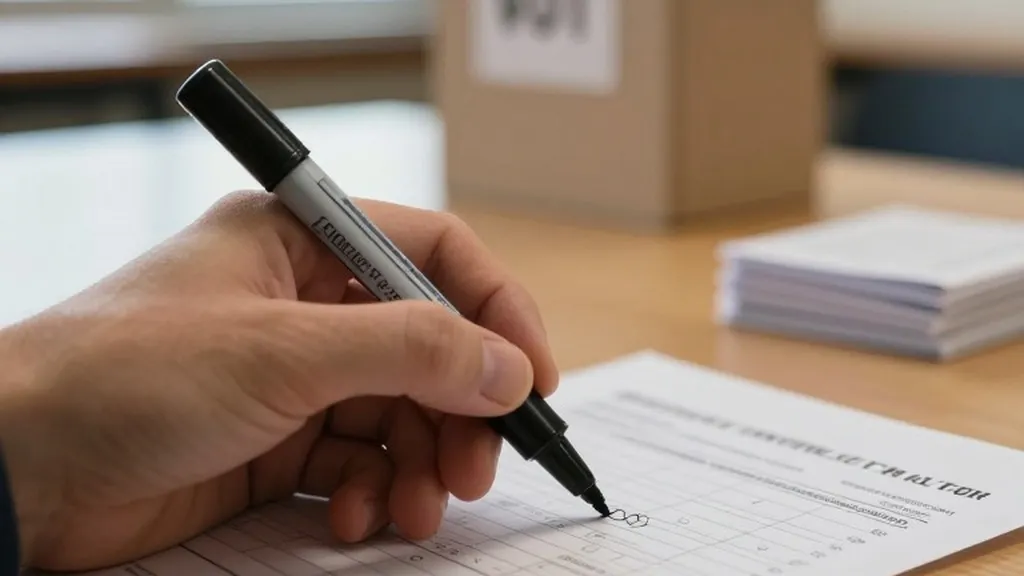
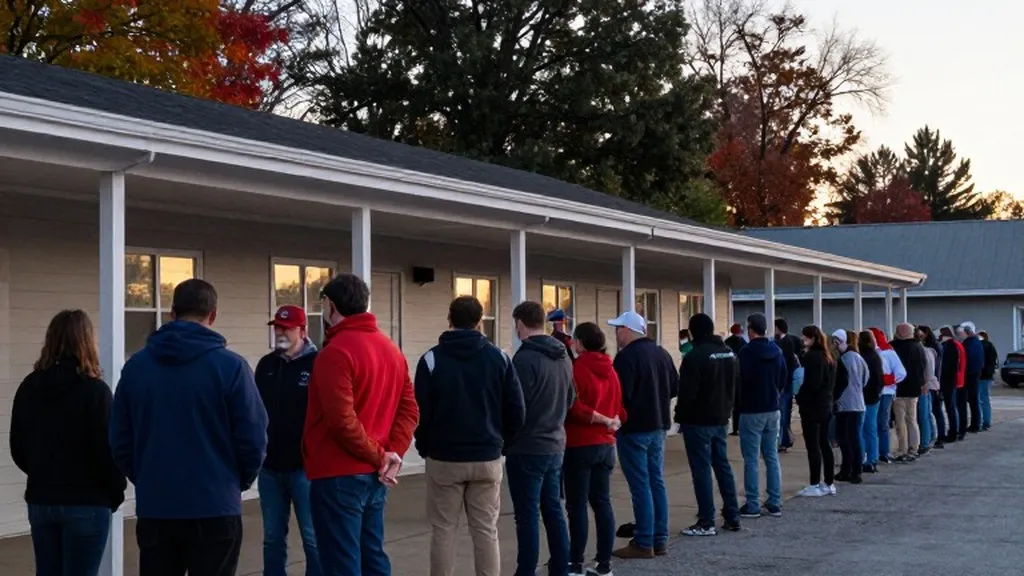
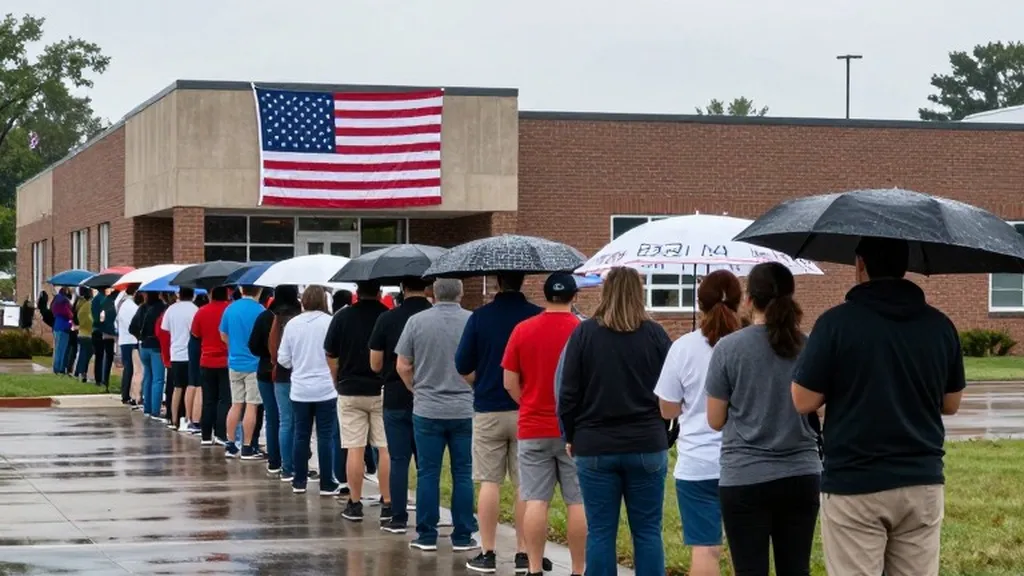
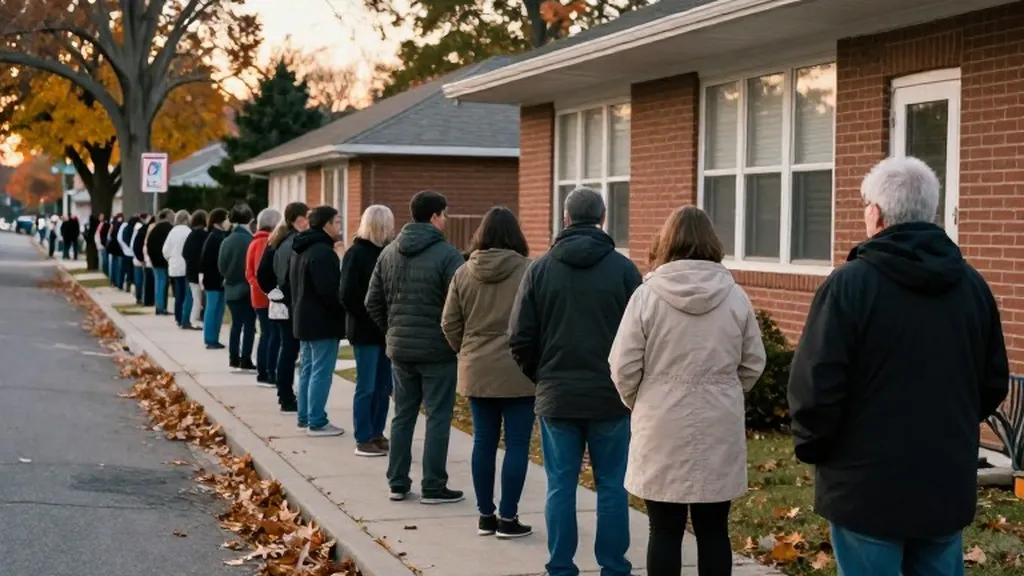
Voters heading to polling places across the country on Tuesday, November 3, are prioritizing the cost of living and the state of the economy as the defining issues of the 2026 midterm election. According to polling conducted by the Associated Press and NORC at the University of Chicago, the economic strain is palpable, with 25% of U.S. adults approving of President Donald Trump's handling of the economy. This figure sits below the 35% who approve of his overall job performance, indicating that financial concerns are a distinct and potent force in this election. The AP describes the day as a referendum on the administration's second term, noting that many voters are struggling with high prices and are angry over an unpopular war with Iran.
The economic anxiety is particularly visible in key battleground states where voters are weighing the impact of tariffs and inflation on their daily lives. In Raleigh, North Carolina, James Moore, a 57-year-old librarian, articulated the sentiment shared by many in the state. He noted that he is paying more taxes, more for healthcare, and more for everything else. His comments reflect the broader frustration captured in the AP-NORC data, where about seven in 10 U.S. adults say the country is heading in the wrong direction. Most of these respondents blame the president for the high prices they are experiencing at the grocery store and at the gas pump.
In contrast, some voters in swing districts are maintaining their support for the administration despite the economic headwinds. Mark Barker of Palm Beach Gardens, Florida, told the AP that he has been following President Trump closely and believes he is doing an awesome job. Barker's perspective highlights the divide within the electorate, where loyalty to the president can sometimes outweigh economic dissatisfaction. However, the AP notes that Republicans were bracing to lose the House and fighting hard to hold the Senate, acknowledging that one or two seats could tip the balance in either chamber. Democrats, meanwhile, were described as cautiously optimistic about their chances of gaining control.
The stakes of this election extend beyond simple party control. If Democrats win even one chamber of Congress, investigations and possible impeachment proceedings are likely to become a central focus of the legislative agenda. House Democratic Leader Hakeem Jeffries has outlined a 100-day agenda that prioritizes the cost of living and oversight of the administration. A strong Democratic performance would also boost the profiles of potential 2028 candidates such as Gavin Newsom, JB Pritzker, and Pete Buttigieg, while potentially complicating the path for Vice President JD Vance. The results will determine who controls the legislative agenda for the final two years of the current presidential term.
Money has played a significant role in shaping the campaign landscape, with the 2026 elections likely to be the most expensive in history. Republican committees outraised and outspent their Democratic counterparts, aided by Trump-affiliated groups and significant contributions from Elon Musk. An analysis of AdImpact data by the AP revealed that 88.1% of Republican general election TV ad spending went to states and districts that President Trump won in 2024. This included more than $850 million in spending in areas where he won by 10 points or more, signaling a strategy to lock in support in solidly Republican areas while also contesting competitive districts.
The impact of tariffs and economic policy is a central theme in several Senate races. In Maine, a state that has become competitive due to economic strain and tariffs, Senator Susan Collins is facing a challenge from Democratic former state Senate President Troy Jackson. The AP notes that the AP-NORC polling and local reporting suggest that voters in states like Maine are feeling the pinch of rising costs. Similarly, in Michigan, the open Senate seat is a toss-up or leaning Democratic, with the race featuring former Representative Mike Rogers and Democrat Abdul El-Sayed. The economic message is resonating with voters who feel that their wallets are suffering under the current administration's policies.
In North Carolina, the open Senate seat has drawn significant attention, with former Governor Roy Cooper challenging former Republican National Committee chair Michael Whatley. The state is one of six using new congressional maps after mid-decade redistricting, a factor that could influence the outcome. The AP reports that the race is closely watched as a bellwether for the broader economic mood in the South. Meanwhile, in Georgia, Senator Jon Ossoff is facing off against Republican Representative Mike Collins in a state that voted for Trump by a 2.2 percentage point margin in 2024. The economic issues are expected to play a major role in this contest as well.
The election administration has been marked by legal challenges and logistical efforts to ensure that all votes are counted. A federal judge temporarily barred the Trump administration from carrying out a plan to prevent noncitizen voting, a move that critics say risks disenfranchising eligible voters. The U.S. Postal Service has added hours, staff, and special lines to ensure that mail ballots are counted on time. These administrative hurdles add a layer of complexity to an election that is already focused on the economy and the direction of the country.
As polls open, the atmosphere is charged with anticipation. More than 57 million people had already voted as of Monday, surpassing the early vote totals from four years ago in many closely watched states. This high level of early participation suggests that voters are highly engaged with the issues at stake. The AP notes that the election is not just about who wins seats, but about the fundamental direction of the country in terms of economic policy and governance. The results will provide a clear signal about the level of support for the administration's approach to tariffs, trade, and the overall economy.